


Dr. Sony Sherpa (MBBS)
In addition to her clinical experience, Dr. Sherpa is a published medical researcher and holistic health advocate. Her dual expertise in emergency care and alternative therapies brings a unique lens to medically reviewed content—ensuring it is both accurate and accessible.
If you have just been told you have endometriosis, you may be sitting with a blend of relief, fear, and a very specific question: What does this mean for your chances of having a baby? You are not alone at that moment. Endometriosis affects about one in ten women of reproductive age, and among people who are struggling to get pregnant, as many as three to five in ten live with this diagnosis.
You might feel like everyone around you is moving on with their lives while you are stuck in medical appointments, pain flare-ups, and endless online searches. That feeling is real and valid. At the same time, your diagnosis gives you something powerful, a name for what is happening inside your body, and clear next steps based on data from large studies, international guidelines, and IVF outcomes in people just like you.
In this guide, we will walk through how endometriosis affects fertility, what your real chances look like with and without IVF, and how treatments such as surgery, medical therapy, and assisted reproduction can fit together in a plan that matches your age, symptoms, and goals.
Endometriosis can make it harder to get pregnant naturally by causing inflammation, scar tissue, and changes in egg quality and the uterine lining. Even with moderate or severe disease, many people still conceive, and IVF cumulative live birth rates are around 32 percent, similar to other infertility causes. Your best plan usually combines careful diagnosis, symptom control, and timely use of IVF when age or ovarian reserve makes time feel short.
Next step: If you have been trying for 6 to 12 months, ask your doctor for a fertility-focused review that includes ovarian reserve testing, imaging by an endometriosis expert, and a clear discussion of surgery versus IVF timing.
What the Latest Research Shows
Recent studies of hundreds to thousands of IVF cycles in women with endometriosis show that, although these patients often produce slightly fewer eggs, their live birth rates per cycle are very close to those of women with other infertility diagnoses. Large cohort and guideline papers from ESHRE and ASRM outline when surgery helps natural conception, when it risks ovarian reserve, and how to choose between another laparoscopy and moving to IVF.
All research citations in this article use PubMed-indexed studies and international guidelines. PMID numbers in the reference list let you or your doctor review the original work in detail.
In This Guide
- Quick Facts About Endometriosis and Fertility
- How Endometriosis Affects Your Body and Fertility
- How Age and Disease Stage Change the Picture
- Pregnancy Outcomes and Obstetric Risks
- Related Conditions That Affect Fertility
- Emotional and Mental Health Impact
- Diagnosis and Fertility Testing
- Treatment Options When You Want a Baby
- Frequently Asked Questions
- Reference List
About 1 in 10 women of reproductive age has endometriosis.
Among those with infertility, the rate rises to 30 to 50 percent.
The average delay from first symptoms to diagnosis is 6.4 to 8 years.
Earlier recognition protects pain control and fertility.
The cumulative live birth rate with IVF in moderate to severe endometriosis is around 32 percent.
Comparable to many non-endometriosis patients.
Quick Facts: Endometriosis and Your Fertility
Here is a snapshot of what endometriosis means for your chances of pregnancy and your overall health.
- Prevalence: Endometriosis affects about one in ten women and people assigned female at birth in their reproductive years.
- Diagnostic delay: The average person waits more than six years from the start of symptoms to a firm diagnosis, which can delay both pain treatment and fertility planning.
- Infertility link: Between 30 and 50 percent of people with endometriosis experience trouble conceiving.
- Subtypes: Doctors usually describe superficial peritoneal disease, ovarian endometriomas, and deep infiltrating endometriosis, sometimes involving the bowel, bladder, or uterosacral ligaments.
- IVF outcomes: In moderate to severe disease, cumulative live birth rates with IVF hover around 32 to 33.3 percent, which is very similar to success rates in patients with tubal factor infertility.
- Surgical impact: In early-stage disease, laparoscopic excision can double natural pregnancy rates compared with no surgery.
- Mental health: About one-third of women with endometriosis report depression, and anxiety is also more common than in the general population.
Latest Research Insights
32 percent vs. 37 percent, IVF success stays close: In a study of almost 600 women, those with moderate to severe endometriosis had a cumulative live birth rate of about 32 percent, compared with 37 percent in women with other fertility issues. Egg numbers were slightly lower, but the overall chance per woman stayed very similar. For you, this means that endometriosis alone does not automatically put you at a major disadvantage in IVF. Source: Reproductive BioMedicine Online PMID: 37429766.
Seven vs. eight eggs, same baby chances: Another IVF study of 716 women found that those with endometriosis produced on average one fewer egg, but live birth and miscarriage rates matched those of women with tubal infertility. Once a good embryo is available for the transfer, your chance of taking home a baby looks very similar. Source: Gynecological Endocrinology PMID: 37139851.
39 percent vs. 48 percent, when adenomyosis matters: In more than 1,300 frozen embryo transfer cycles, women with endometriosis alone had a 39 percent first transfer live birth rate, compared with 48 percent in women without uterine disease. When adenomyosis was present as well, live birth dropped to 25 percent. If you have both conditions, your clinic will usually pay closer attention to uterine treatment before transfer. Source: Scientific Reports PMID: 37185812.
Similar embryos, the question is the uterus: A recent review shows that embryo quality and chromosome health look similar in women with and without endometriosis. The primary unknown is how well the uterine lining accepts the embryo. Knowing this helps you and your doctor focus on uterine health and transfer timing, not just egg quality. Source: Best Practice & Research Clinical Obstetrics & Gynaecology PMID: 38183768.
These findings come from peer-reviewed research. Your personal results depend on your age, ovarian reserve, and overall health, so discuss what they mean for you with your fertility specialist.
How Endometriosis Affects Your Body and Fertility
If you want to understand why endometriosis can interfere with conception, it helps to picture what is happening inside your pelvis each month. The leading theory is retrograde menstruation, where tissue similar to the uterine lining flows backwards through the fallopian tubes into the pelvic cavity.
These “implants” attach to organs and continue to respond to hormonal shifts. Each month, they thicken and bleed, but because this blood is trapped inside the body, it leads to chronic inflammation and the formation of adhesions (scar tissue). In terms of fertility, these adhesions can physically block the fallopian tubes or create an inflammatory environment that impacts egg and sperm health.
Several mechanisms then start to work against your fertility.
- Anatomical changes: Scar tissue can create thin or thick webs that bind your ovaries, tubes, and uterus together. If a tube is kinked or blocked, the egg and sperm cannot meet easily, and the risk of ectopic pregnancy rises.
- Inflamed pelvic fluid: Many people with endometriosis have an excess of peritoneal fluid (the natural lubricant in the pelvis). In a healthy system, this fluid supports reproductive organs; however, in those with endometriosis, it often contains high levels of inflammatory proteins called cytokines (such as IL-1, IL-6, and TNF-alpha) and growth factors like vascular endothelial growth factor (VEGF). This creates a “toxic” or “harsh” chemical environment. Instead of a safe passage, the fluid becomes a barrier that can damage eggs, hinder sperm movement, or prevent an embryo from successfully implanting.
- Egg number and quality: Endometriomas on the ovary expose nearby tissue to oxidative stress. This can damage healthy follicles and reduce ovarian reserve. Studies show AMH levels dropping by roughly 18.4 to 42.9 percent, depending on disease stage.
- Uterine lining problems: Endometriosis is associated with progesterone resistance in the endometrium. That means your uterine lining may not respond properly to progesterone, so it does not become the receptive surface that an embryo needs to implant and grow.
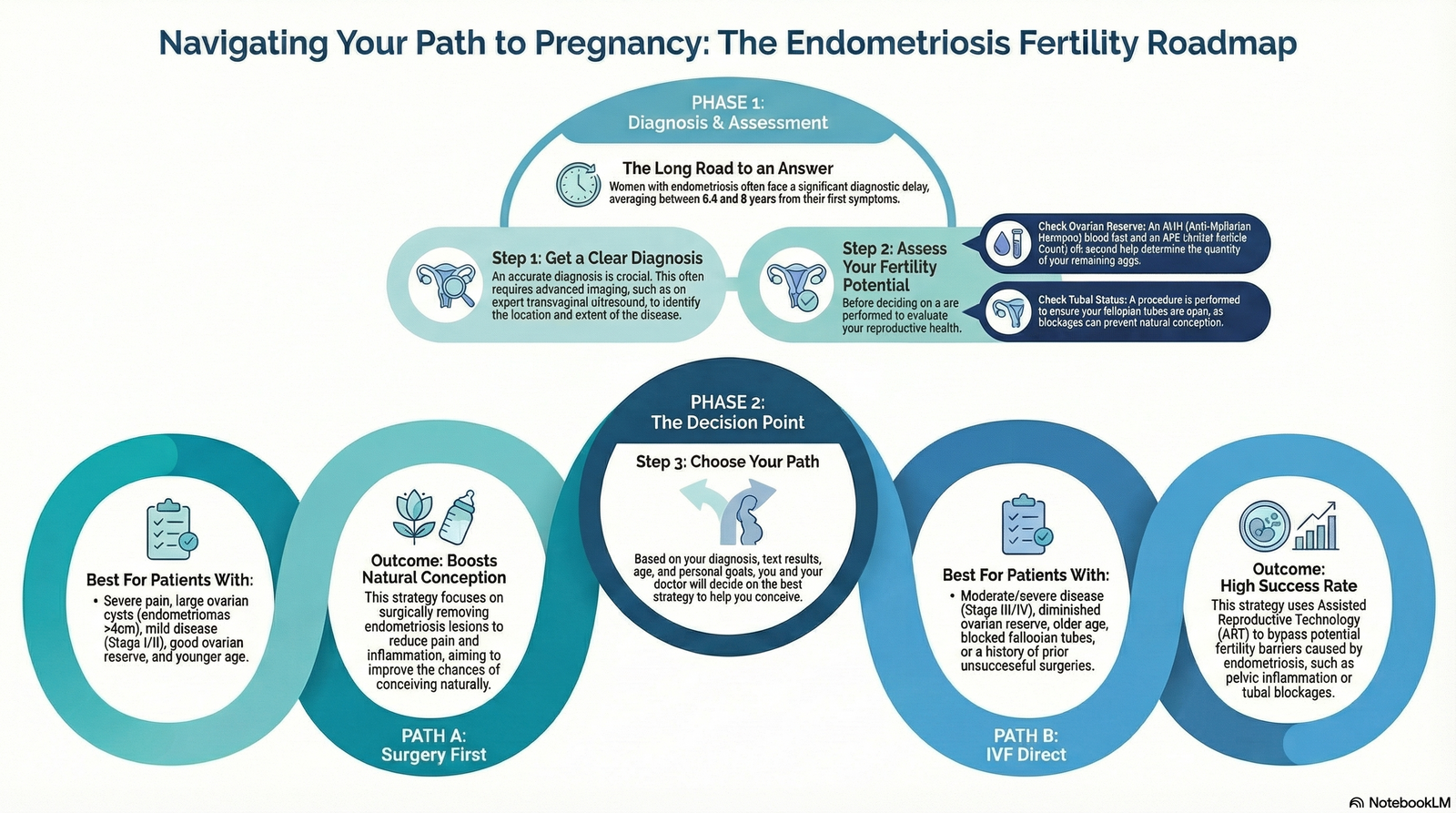
Navigating your path to pregnancy if you are diagnosed with endometriosis.
| Factor | How Endometriosis Interferes |
|---|---|
| Egg number | Endometriomas damage nearby follicles and lower ovarian reserve. |
| Fertilization | Inflamed pelvic fluid exposes eggs and sperm to toxic chemicals. |
| Implantation | Progesterone resistance and inflammation reduce endometrial receptivity. |
| Tubal function | Adhesions distort the tubes, so eggs and sperm struggle to meet. |
How Age and Disease Stage Change the Picture
People often ask whether endometriosis always gets worse. The answer is more nuanced than a simple yes or no. Large surgical series show that the most severe stages of disease, stages III and IV, are most common between ages 25 and 35. After that, the average stage does not rise much further, but the operations themselves become more complex because scar tissue continues to build.
For you, that means two parallel clocks are running. Your natural fertility declines with age in the same pattern as everyone else, and surgery becomes technically harder and riskier as lesions and adhesions accumulate. Understanding the timing of both can help you use the years in front of you as wisely as possible.
Adolescent endometriosis is another piece of the puzzle. Among teenagers with significant pelvic pain who go to surgery, about 64 percent are found to have the disease. Their lesions often look clear, white, or bright red rather than chocolate brown, and they sit on the surface of tissues. Surgeons who are not used to these appearances can miss them. If you had severe period pain as a teenager that doctors dismissed, your current disease may have been quietly progressing for years.
What Experts Recommend for Your Care
About 50 percent lower IVF births after some surgery, think twice: A meta-analysis of 19 studies found no clear benefit to having surgery for endometriosis before IVF. When higher bias studies were removed, live births per IVF cycle looked about half as high in patients who had surgery first. This finding supports careful case-by-case decisions rather than routine surgery before IVF. Source: Reproductive Sciences PMID: 38168857.
1,836 IVF cycles; what predicts success: A 2025 study used machine learning on 1,836 IVF cycles in women with endometriosis and found that age, AMH, antral follicle count, infertility duration, disease stage, stimulation protocol, and number of embryos transferred were the key drivers of live birth. These are factors you and your doctor can discuss and often adjust. Source: Journal of Assisted Reproduction and Genetics PMID: 40986161.
Clear stepwise plan, ESHRE guidance: The 2022 ESHRE guideline recommends using the Endometriosis Fertility Index to estimate natural pregnancy chances, offering surgery mainly for pain or mild disease, and moving earlier to medically assisted reproduction when chances of natural conception are low. Source: ESHRE Endometriosis Guideline 2022.
ASRM view on surgery vs. IVF: The ASRM committee opinion notes that both laparoscopy and IVF can help and that decisions should reflect age, stage, symptoms, and prior attempts. For many people with moderate or severe disease, IVF offers the most efficient route to pregnancy. Source: ASRM Committee Opinion: Endometriosis and Infertility.
These insights are meant to guide conversations with your specialist, not replace personalised advice. Bring the questions that matter most to you to your next appointment.
Pregnancy Outcomes and Obstetric Risks
When you do see a positive pregnancy test, it is natural to feel joy and worry simultaneously. Many women with endometriosis have completely straightforward pregnancies and healthy babies. At the same time, studies show higher rates of certain complications that you and your obstetric team should be aware of.
- Preterm birth: The risk of delivering before 37 weeks is higher in women with endometriosis, and the relative risk is even higher for birth before 33 weeks.
- Placenta previa: Endometriosis, especially when severe, is strongly linked with placenta previa, where the placenta covers or approaches the cervix. Some studies report an eight- to nearly twelve-fold increase in risk.
- Severe maternal complications: Endometriosis raises the chance of severe problems around delivery, such as heavy bleeding that requires transfusion, disseminated intravascular coagulation, heart issues during surgery, or emergency hysterectomy.
- Miscarriage and recurrent loss: Women with endometriosis have a higher miscarriage rate than those without, and those with three or more losses are more likely to have underlying endometriosis.
Related Conditions That Affect Fertility
Endometriosis often travels with other conditions that can make conception and pregnancy more difficult.
Adenomyosis. In adenomyosis, endometrial tissue grows into the muscle wall of the uterus. It often causes heavy, painful periods and an enlarged uterus. When adenomyosis and endometriosis appear together, live birth rates drop. One study reported live birth around 25 percent in women who had both, even with modern IVF and frozen embryo transfer strategies.
Chronic endometritis. Chronic endometritis is a long-lasting, low-grade inflammation of the uterine lining, usually caused by bacteria. It shows up in about 29.67 percent of women with recurrent pregnancy loss. The encouraging news is that specific antibiotics cure it in about 87.9 percent of cases, and live birth rates rise once the infection clears.
The Emotional and Mental Health Impact
Living with constant or unpredictable pain, heavy bleeding, and fertility worries is exhausting. Research backs up what you may feel every day. About 33.6 percent of women with endometriosis meet criteria for depression, and anxiety is common, especially in those with severe pain during sex.
If you recognize yourself in these numbers, nothing is wrong with your resilience. Your brain and body are responding to real physical stress and real losses. Support from a therapist who understands chronic illness, connecting with others who have endometriosis, and honest conversations with your partner can become just as important as surgery or IVF medications.
Diagnosis and Fertility Testing
Painful periods and pelvic pain often get dismissed as normal, so you may have spent years being told that everything was fine. When you are ready to look at fertility more closely, a structured assessment helps cut through that noise.
Pelvic Examination
Your doctor may start with a gentle internal examination using one gloved finger in the vagina. They feel along the back vaginal wall and the uterosacral ligaments for small, hard nodules. This exam picks up deep disease in roughly 50 to 78 percent of cases. A normal exam does not rule out endometriosis, but a positive exam is an important clue.
Imaging
- Expert transvaginal ultrasound: When done by a specialist, a transvaginal ultrasound is the main imaging tool. It detects ovarian endometriomas in more than nine out of ten cases and identifies rectal or rectovaginal nodules with a sensitivity of around 92 to 93 percent. It also shows the classic “kissing ovaries” sign, where both ovaries are stuck together behind the uterus, a marker of severe disease.
- MRI: Magnetic resonance imaging is especially helpful for mapping deep-infiltrating lesions before complex surgery or when ultrasound views are limited. Sensitivity for deep disease is in the low to mid-ninety percent range.
Ovarian Reserve and Tubal Testing
When you want to understand your fertility window, your team will usually combine hormone tests and ultrasound scans with checks on your uterus and tubes.
- Ovarian reserve: Many clinics test FSH, AMH, and estradiol on cycle days 2 to 4, then add an antral follicle count on ultrasound. A typical FSH range is about 2 to 8.9 IU per liter. AMH above 1.2 ng per milliliter is often reassuring, and an antral follicle count of 7 to 10 follicles in each ovary suggests a reasonable reserve for your age.
- Tubal patency: To see if your fallopian tubes are open, you may have a hysterosalpingogram (HSG), an X-ray where dye flows through the tubes, or a saline sonohysterogram (SHG), which uses ultrasound and salt water. If fluid spills out of both tube ends, the tubes are likely open.
Emerging Biomarkers
Researchers are working on blood and tissue markers that would make diagnosis less invasive. One model, called EMScore, uses nine genes measured in a blood sample and reached an accuracy of 0.942 in one study. Another marker, BCL6, shows high expression in the uterine lining of many women with endometriosis and has a reported positive predictive value of 96 percent for the disease. These tests are still moving toward wider clinical use, but they hint at a future with fewer diagnostic surgeries.
Treatment Options When You Want a Baby
Your treatment path should align with your symptoms, age, disease stage, and timeline for pregnancy. While there is no “one-size-fits-all” protocol, your team can identify patterns and strategies that tend to yield the best results for your specific situation.
Medical Management
- Hormonal suppression: Combined birth control pills and progestin-only medications such as dienogest often reduce pain and slow lesion growth. They can protect your quality of life and ovaries before treatment, but you can't take them while trying to conceive because they prevent ovulation.
- GnRH agonists: Medications such as nafarelin and leuprolide switch off ovarian hormone production and create a temporary, reversible menopause-like state. They shrink lesions and calm symptoms. If you take them for more than six months, you need to add back therapy, for example, low-dose norethisterone acetate, to protect your bones and manage hot flushes.
- Non-hormonal options: Cabergoline, a dopamine agonist, is being studied as a way to reduce pain by limiting blood vessel growth in lesions. Because it does not directly suppress ovulation, it could one day play a role in fertility-focused plans, but it is not yet a standard treatment.
Surgery
Laparoscopic surgery uses small incisions and a camera to remove or destroy visible endometriosis. The goal in fertility-preserving surgery is to clear the disease while keeping as much normal ovarian and pelvic tissue as possible.
- Early stage disease: In Stage I and II endometriosis, surgery offers a modest but real boost in natural pregnancy rates. A major trial estimated that for every 12 patients who undergo laparoscopic excision or ablation, one extra spontaneous pregnancy occurs compared with no surgery.
- Ovarian endometriomas: For cysts larger than about 4 centimetres, most guidelines favour surgical removal rather than simple drainage, because drained cysts tend to come back. Every removal takes some healthy ovarian tissue, though, so you and your surgeon need to balance cyst size, pain, access for egg retrieval, and your ovarian reserve.
- Recurrence: Even after good surgery, endometriosis returns in a significant share of patients. Recurrence rates are about 20 percent at two years and 40 to 50 percent at five years. Around 28 percent of patients need another surgery within ten years.
Assisted Reproductive Technology (ART)
When natural conception and surgery have not led to pregnancy, or when time feels very tight because of age or low ovarian reserve, IVF becomes the main tool.
| Group | Cumulative Live Birth Rate |
|---|---|
| Endometriosis (moderate to severe) | About 32 to 33.3 percent per IVF journey |
| Other infertility causes | About 37 percent per IVF journey |
| Endometriosis with adenomyosis | Around 25 percent in some studies |
- IVF success rates: For moderate to severe endometriosis, cumulative live birth rates with IVF across fresh and frozen transfers sit at roughly 32 percent, only a little lower than rates in women without endometriosis.
- Egg numbers: On average, women with endometriosis produce about one fewer egg per stimulation cycle than those with tubal factor infertility. Once embryos are created, the chances of that embryo leading to a healthy baby are nearly identical.
- Freeze-all and frozen transfer: Many clinics favor a freeze-all approach followed by frozen embryo transfer. This clinical strategy allows your hormone levels settle and allows for detailed treatment of the uterine lining before transfer.
- ICSI: Intracytoplasmic sperm injection (ICSI) often improves fertilization rates for those with endometriosis. Research suggests that this method (where a single sperm is injected directly into an egg) can lead to fertilization rates roughly 1.45 times higher than conventional IVF (where sperm and egg are left to interact on their own in a dish).
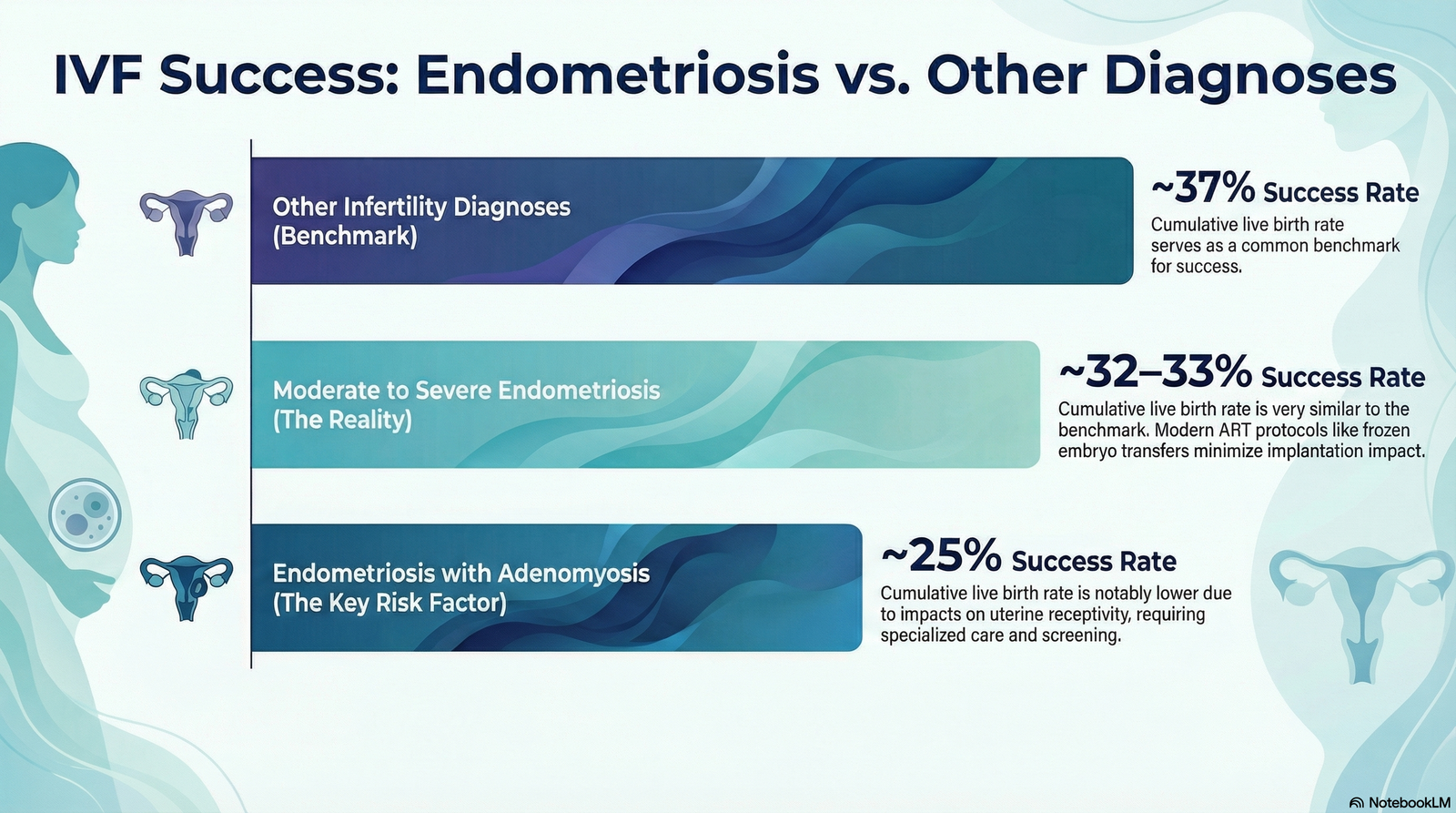
IVF success rates comparison: endometriosis vs. other infertility diagnoses
Choosing Clinics and Treatment Pathways
Once you understand your diagnosis and basic options, your next big decision is where and how to seek treatment. Some people prioritize staying close to home, especially when pain is severe or travel is difficult. Others compare clinics across different cities or countries to balance cost, success rates, and waiting times.
When you explore clinics’ websites, focus on a few key details. Check how many IVF cycles they do each year, whether they report cumulative live births per started cycle, and whether they publish separate results for endometriosis patients. Ask whether they have a dedicated endometriosis surgery team or strong partnerships with surgeons (if complex operations are needed before IVF).
OVU Expert Guidance
If you feel overwhelmed by clinic websites, offered bundles, and medical terminology, you are not alone. Many patients describe the process of clinic selection as a second full-time job. To make progress, narrow your list to two or three clinics with specific expertise in endometriosis. Then, schedule short consultations to compare how well each team listens, explains, and tailors a plan to your unique needs.
Want help comparing clinics and costs?
If all of this feels like more than you can track on your own, OVU advisors can help you collect itemised quotes from verified clinics, understand what each package really includes, and map out a realistic timeline at no cost to you.

Why trust this guide? The OVU commitment
You are probably juggling hope, timelines, and a lot of tabs open in your browser. And you deserve clear, current, human advice. At OVU, we review clinic protocols, compare real quotes, and talk to people who have done this - intended parents and gestational carriers - so we can give you practical steps, not just theory. If you want help comparing options without sales pressure, we will gather itemized quotes and success data that match your exact situation. You decide, we will bring the info to your table.
Frequently Asked Questions
Does endometriosis automatically mean I am infertile?
No. Roughly 50 to 70 percent of people with endometriosis conceive naturally. The term “infertility” simply refers to having tried for 12 months without success (or six months if you are over 35). It describes a clinical timeframe, not a permanent label or a final outcome.
Will pregnancy cure my endometriosis?
No. Pregnancy often brings temporary relief because the body stops ovulating and menstruating, and high levels of progesterone can suppress disease activity. However, for many people, symptoms return after birth or once breastfeeding stops. It is more accurate to think of pregnancy as a “pause” in disease activity rather than a permanent cure.
Should I have surgery before starting IVF?
Not always. A large meta-analysis found no clear improvement in live birth rates when patients had endometriosis surgery before IVF. In fact, some high-quality studies showed that birth rates were actually lower after surgery. This is likely because surgery on the ovaries can unintentionally reduce the ovarian reserve (the remaining egg supply). Surgery still has a place for treating severe pain, removing large cysts that might block egg retrieval, or investigating suspected cancer, but it is not a strict requirement for a successful IVF outcome.
How likely is endometriosis to come back after surgery?
Recurrence is common because microscopic endometriosis cells may remain even after a successful operation. Research shows that roughly 20% of patients see a return of symptoms within two years, increasing to 40–50% within five years. About 28% of individuals will require another surgery within ten years. While careful surgical technique and postoperative medical therapy can significantly reduce these risks, they do not eliminate them entirely.
Can I use pain medication while trying to conceive?
Yes, but timing is key. Non-steroidal anti-inflammatory drugs (NSAIDs), such as ibuprofen, naproxen, and aspirin, can interfere with the hormones required for the ovary to release an egg. If taken frequently around the time of ovulation, they may cause a temporary delay or “blocked” ovulation.
Does the stage of my endometriosis predict how hard it will be to get pregnant?
Not reliably. The ASRM (American Society for Reproductive Medicine) staging system is based on what a surgeon sees during a laparoscopy (keyhole surgery), such as the size of lesions and the presence of scar tissue. However, this visual “map” doesn’t always reflect your pain levels or your chances of conception. It is very common for someone with Stage I disease to experience long-standing infertility, while someone with Stage IV may conceive quickly once they begin targeted treatment like IVF.
What if my egg quality or reserve is very low?
If your ovaries no longer respond well to stimulation or your FSH (Follicle-Stimulating Hormone) is very high, donor egg IVF becomes an important option. Because donor eggs typically come from young, healthy donors, they often lead to high live birth rates, even for individuals with long-standing endometriosis or those of an older reproductive age. While choosing a donor is a significant emotional step, for many, it is the path that finally brings a baby home.
Reference List 9 sources
Journal Article (Research): Zimmermann A, et al. Impact of moderate to severe endometriosis on cumulative live birth rates in IVF or ICSI cycles. Reproductive BioMedicine Online. 2023. PMID: 37429766. Available from: https://pubmed.ncbi.nlm.nih.gov/37429766/
Journal Article (Research): Bartolacci A, et al. Endometriosis affects the number of retrieved oocytes but not embryo development and live birth in standard IVF. Gynecological Endocrinology. 2023. PMID: 37139851. Available from: https://pubmed.ncbi.nlm.nih.gov/37139851/
Journal Article (Research): Wang Y, et al. Impact of adenomyosis and endometriosis on IVF or ICSI frozen embryo transfer outcomes. Scientific Reports. 2023. PMID: 37185812. Available from: https://pubmed.ncbi.nlm.nih.gov/37185812/
Journal Article (Systematic Review & Meta-Analysis): Bourdon M, et al. Impact of endometriosis surgery on in vitro fertilisation outcomes: systematic review and meta analysis. Reproductive Sciences. 2024. PMID: 38168857. Available from: https://pubmed.ncbi.nlm.nih.gov/38168857/
Journal Article (Review): Racca A, et al. Endometrial receptivity in women with endometriosis. Best Practice & Research Clinical Obstetrics & Gynaecology. 2024. PMID: 38183768. Available from: https://pubmed.ncbi.nlm.nih.gov/38183768/
Journal Article (Research): Zhu L, et al. Machine learning based prediction of live birth after fresh embryo transfer in IVF or ICSI patients with endometriosis. Journal of Assisted Reproduction and Genetics. 2025. PMID: 40986161. Available from: https://pubmed.ncbi.nlm.nih.gov/40986161/
Guideline (Evidence-based): Becker CM, et al. ESHRE guideline: endometriosis. Human Reproduction Open. 2022. PMID: 35350465. Available from: https://pubmed.ncbi.nlm.nih.gov/35350465/
Committee Opinion (Guidance): Practice Committee of the American Society for Reproductive Medicine. Endometriosis and infertility: a committee opinion. Fertility and Sterility. 2012. PMID: 22704630. Available from: https://pubmed.ncbi.nlm.nih.gov/22704630/
Journal Article (Research): Alson S, et al. Endometriosis diagnosed by ultrasound and live birth rates in first IVF or ICSI treatment. Fertility and Sterility. 2024. PMID: 38246403. Available from: https://pubmed.ncbi.nlm.nih.gov/38246403/
Final Thoughts
An endometriosis diagnosis can feel like a heavy weight to carry, especially if you are already worn down by months or years of trying to conceive. You are allowed to feel angry, sad, hopeful, or all three on the same day. None of those reactions means that you are failing at handling this well.
The important thing to hold on to is that many people with endometriosis do go on to have children, often with help from surgery, medical therapy, or IVF. New tests, better imaging, and more refined treatment protocols appear every year. You do not need to fix everything at once. Your next step is to find a team that listens, explains your options clearly, and works with you to build a plan that respects your body and your timeline.
Endometriosis is a complex lock. It may take several tools and some time to find the right combination. The door to parenthood is still open, and you deserve care that helps you walk toward it with as much clarity and support as possible.