


Dr. Sony Sherpa (MBBS)
In addition to her clinical experience, Dr. Sherpa is a published medical researcher and holistic health advocate. Her dual expertise in emergency care and alternative therapies brings a unique lens to medically reviewed content—ensuring it is both accurate and accessible.
If you are looking at fertility treatment options, it can feel like you are learning an entirely new language while simultaneously making some of the biggest decisions of your life. The process is often challenging, exhausting, and overwhelming, especially if you have no prior experience with clinical protocols or fertility care. If you have envisaged receiving cross-border fertility care, then your nervous tension may be more intense as you need to learn the legal framework for medically assisted reproduction, arrange your trip, book the tickets and accommodation, prepare the documents, complete everything urgent, and take time off work.
It can even make you feel like a bundle of nerves lost in the legal hurdles and sophisticated nuances of each option, such as sex selection of an embryo, elective single embryo transfer or double transfer, fresh or vitrified-thawed transfer. You may also wonder if assisted hatching, endometrial receptivity test, or simulation (mock) transfer will be necessary to resolve your case. And then, the hardest and most challenging essence of any cycle: which bundle of services to choose and how to secure your fixed-cost initial pricing while having some backups to cover at least one undesirable scenario and receiving one more transfer attempt or complementary vitrification of embryos you think you might need to succeed.
That hustling and bustling blend of hope, pressure, and anxiety, time limits, frustration, and, simultaneously, inspiration is very real, and you are not alone in feeling it and having no way to hush all these feelings down until you take the first steps towards making the decision.
Statistically, about 15% of couples experience infertility, and 1 in 5 women aged 20–49 with no prior births find they are unable to conceive after a year of trying. While data indicate a constantly increasing global issue with natural conception, modern reproductive medicine offers a range of proven techniques. Professional bodies, such as the American Society for Reproductive Medicine (ASRM) and the European Society of Human Reproduction and Embryology (ESHRE), publish clear guidance on how to use them safely and effectively, while providing recommendations on how to tailor these solutions to each unique situation.
This guide walks you through the main techniques used in 2026, from simpler options like ovulation induction (OI) and intrauterine insemination (IUI) to lab-intensive approaches such as IVF, ICSI, preimplantation genetic testing (PGT–A, PGT–M, PGT–SR), in vitro maturation (IVM), assisted hatching (AH), and genetic testing. The goal is to give you numbers and a practical context you can take into a detailed conversation with your own specialist.
Most solo mothers, heterosexual couples, and same-gender female couples (provided there are no underlying fertility barriers) begin with lower-cost options like ovulation induction (OI) and intrauterine insemination (IUI). If pregnancy does not occur within a few cycles, the next step is typically IVF. While IUI offers per-cycle success rates of 10–20% (cumulative 40–60% over multiple attempts), IVF provides live birth rates of approximately 50% per cycle in younger patients. Beyond the basics, specialized laboratory techniques allow for a highly personalized approach to fertility care. Intracytoplasmic sperm injection (ICSI) is used when a clear sperm factor is present to facilitate fertilization, while PGT–A is essential for those facing recurrent pregnancy loss by screening for chromosomal abnormalities. For patients with known chromosomal rearrangements or translocations, PGT–SR is vital for identifying balanced embryos, whereas PGT–M is essential when one or both partners carry specific genetic conditions they wish to avoid passing on. Furthermore, sex selection may be medically indicated in cases where it is necessary to prevent the transmission of sex-linked genetic disorders and limit the risks of completing a transfer with an affected embryo.
Next step: Use this data to pre-blueprint the conversation with your doctor about which technique best aligns with your age, diagnosis, and fertility care budget.
What the latest research shows
Recent studies and clinical guidelines from Human Reproduction Update, Acta Obstetricia et Gynecologica Scandinavica, Fertility and Sterility, and BMJ Open have reshaped how clinics utilize IUI, IVF, ICSI, and PGT. Large meta-analyses now indicate that stimulated IUI can achieve cumulative live birth rates comparable to IVF in cases of unexplained infertility, that routine ICSI does not improve outcomes when sperm parameters are normal, and that PGT–A offers the most benefit to selected high-risk patients rather than being a universal requirement.
All research citations include PubMed links, allowing you and your doctor to review the original studies if you wish to go deeper.
In This Guide
- Quick Overview of Treatment Options
- Ovulation Induction (OI)
- Intrauterine Insemination (IUI)
- Natural, Modified Natural, and Medicated IVF
- Mini –IVF and Mild Stimulation
- ICSI: When You Really Need It
- PGT –A, PGT–M, and PGT–SR
- Embryo Transfer Choices
- Ovarian Stimulation Protocols
- Sperm Retrieval Options
- Endometrial Receptivity Testing (ERA)
- How to Choose the Right Protocol
- Treatment Add-Ons: What Is Worth It
- Frequently Asked Questions
Unexplained infertility: about 50% vs. 43% cumulative live birth.
IUI often remains a cost-effective first step.
No benefit in enhancing live birth rate when the results of sperm analysis is normal.
Best reserved for clear male factor infertility or lab reasons.
Raising live births and lowering miscarriage rates in some high-risk groups.
No routine benefit for all IVF patients.
Quick Overview of Treatment Options
If you want to see the big picture before diving into the details, this comparison table outlines which techniques are most appropriate for different diagnoses, their expected success rates, and estimated cost ranges.
| Technique | Primary Indication | Success Rate (Live Birth) | Estimated Cost |
|---|---|---|---|
| Ovulation Induction (OI) | Ovulatory dysfunction (anovulation), polycystic ovarian syndrome (PCOS), unexplained infertility | 20–27% per cycle (letrozole). | $100–$3,000 |
| Intrauterine Insemination (IUI) | Unexplained or mild male factor infertility | 10–20% per cycle, cumulative success rate can reach 40–60%. | $500–$5,500 |
| In Vitro Fertilization (IVF) | Blocked fallopian tubes, endometriosis, advanced maternal age | About 50% per cycle in younger patients. | $10,000–$20,000 |
| Intracytoplasmic sperm injection (ICSI) | Severe male factor infertility | 70–80% fertilization rate, live birth depends on age and embryo quality. | $1,500–$3,000 add-on to core IVF bundle |
| PGT–A | Recurrent pregnancy loss, advanced age, single embryo transfer | Implantation rate is approximately 80% for tested euploid embryos, however, it can be slightly lower, depending on maternal age, the quality of the uterine environment (such as endometrial receptivity), and the specific laboratory protocols used for vitrification and thawing. | $3,000–$6,000 per cycle |
Latest Research Insights
50% vs. 43% – IVF Is Not Always Faster Than IUI: A large analysis of randomized trials in unexplained infertility found a cumulative live birth rate of about 50% with IVF and 43% with stimulated IUI over similar time frames. You do not always have to jump straight to IVF to move forward, so you and your doctor can weigh cost and invasiveness instead of assuming IVF always works faster. Source: Human Reproduction Update (PMID: 38148104).
18 Trials, 3,249 Cycles – No Live Birth Gain With ICSI: A meta-analysis of 18 randomized trials in non-male factor infertility showed that ICSI did not increase live birth rates compared with standard IVF, even though it reduced the risk of total fertilization failure. If sperm parameters are normal, paying for ICSI usually does not raise your chance of taking home a baby. Source: Acta Obstetricia et Gynecologica Scandinavica (PMID: 37930100).
7% vs. 9% – No Advantage of ICSI in Low Egg Yield: In older women with three or fewer eggs, research indicates a cumulative live birth rate of approximately 7% with ICSI compared to 9% with traditional IVF per retrieval. While ICSI may improve fertilization numbers in the lab, it does not necessarily improve the final live birth result. Therefore, for those with low egg numbers, the use of ICSI should be a thoughtful clinical decision based on sperm quality rather than a routine add-on. Source: BMJ Open (PMID: 39542474).
62% vs. 41% – PGT–A in Recurrent Loss: Across multiple studies, PGT–A in recurrent pregnancy loss often raised live birth per transfer from around 40% to about 60% and lowered miscarriage rates. If you have had repeated losses and produce several embryos, PGT–A can sometimes turn repeated heartbreak into a more focused path toward a healthy birth. Source: Frontiers in Medicine (PMID: 38384413).
These findings are based on peer-reviewed research. However, because your results depend on your unique situation, age, diagnosis, and treatment protocol, it is essential to review these figures with your specialist to see how they apply to your tailored plan.
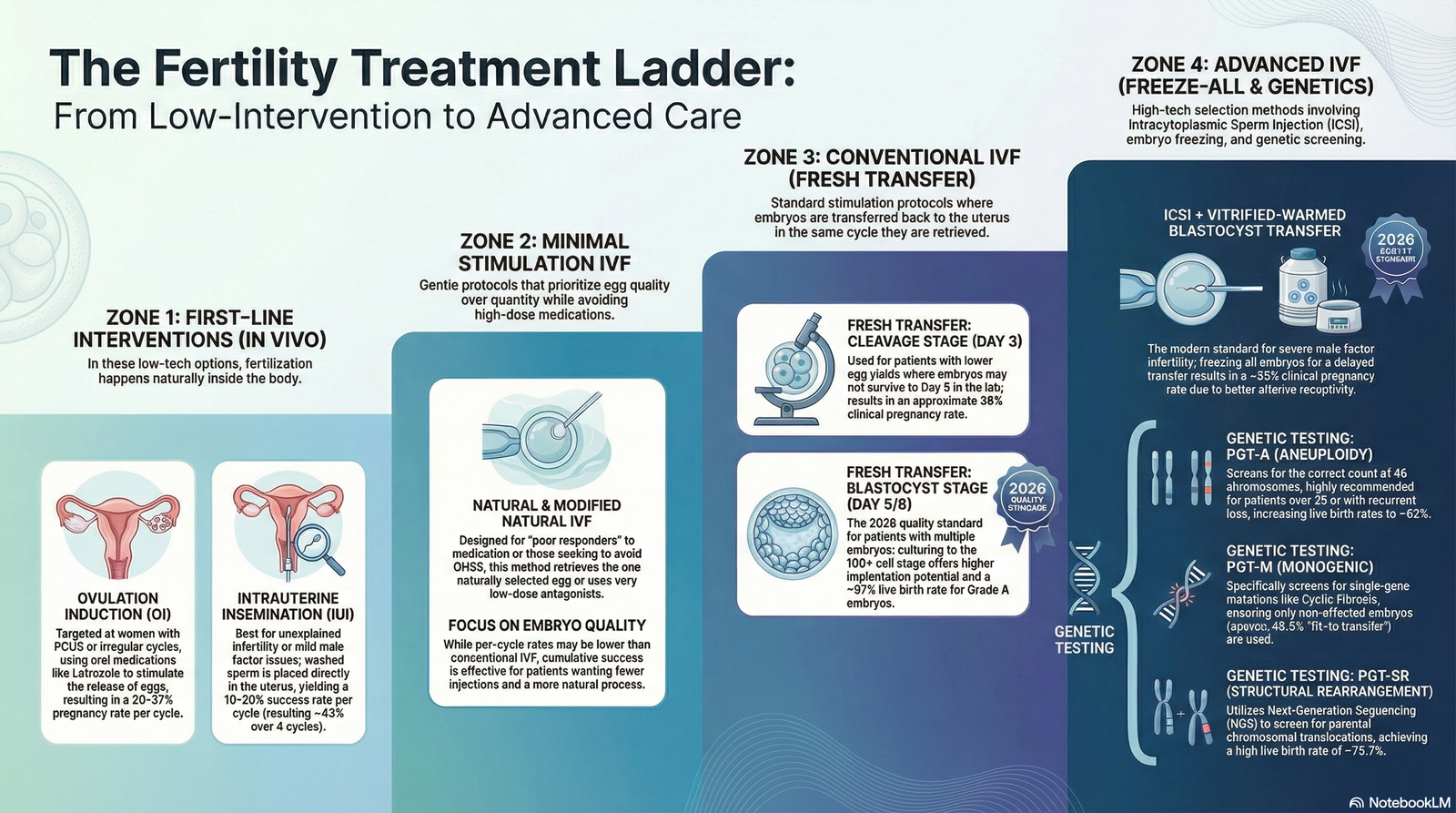
Fertility treatment landscape 2026, from low-intervention options like IUI to full IVF with ICSI and PGT-A.
Ovulation Induction (OI): Non-Invasive, Low-Tech Starting Point
If your main issue is irregular ovulation or PCOS, your care team will often suggest ovulation induction first. This approach uses oral or injectable medication to encourage at least one follicle to grow and ovulate at a predictable time. The process is closely monitored via ultrasound scans (routinely performed during pre-booked visits) and blood tests to confirm the “trigger” window, which makes timed intercourse or IUI significantly more effective.
Clomiphene citrate was the classic first-line drug for many years; however, in more recent studies, letrozole has outperformed clomiphene in many PCOS patients. Letrozole leads to ovulation in about 70–84% of cycles and pregnancy in roughly 20–27% of attempts. Notably, in cases of “clomiphene-resistant” PCOS, letrozole has proven its efficacy by maintaining that same 20–27% pregnancy rate. It also supports a healthy endometrial thickness of around 7–9 mm, which is considered optimal for successful implantation.
When clinics use oral agents for superovulation, where the goal is to produce more than one follicle, letrozole has reached pregnancy rates of around 16.7%, compared to approximately 5.6% for clomiphene in some data sets. It is also important to consider safety: clomiphene carries a 10–20% risk of twins or higher-order multiples. In contrast, aromatase inhibitors such as anastrozole or letrozole usually lead to fewer follicles and lower estrogen levels, providing a safer alternative for those who wish to limit the chance of a multiple pregnancy.
IUI (Intrauterine Insemination): What to Expect and What It Costs
If you are not ready for IVF or if your diagnosis, such as mild male factor infertility, cervical mucus issues, or the use of donor sperm, doesn’t yet require it, IUI is the logical next step. Often paired with the ovulation induction mentioned above, IUI involves your care team “washing” and preparing a sperm sample to concentrate the most motile cells. The prepared sperm is placed directly into the uterus during your specific “trigger” window, bypassing the cervix to significantly increase the number of sperm that reach the fallopian tubes for natural fertilization.
The 10 Steps of an IUI Cycle
- History and planning: You share your medical and reproductive history and previous tests.
- Baseline consultation: The clinic checks semen analysis, basic blood work, Pap smear, and often AMH.
- Tubal assessment: Tests such as HSG or HyCoSy confirm that at least one tube is open.
- Ovarian stimulation: Starting around day 3, you take oral medication or low-dose injections for 8–12 days.
- Monitoring: You attend 2–3 ultrasound scans and blood test appointments so the team can track follicle growth.
- Trigger shot: When at least one follicle reaches about 18–20 mm, you take an hCG shot to trigger ovulation.
- Sperm preparation: The lab washes the semen to concentrate the best-moving sperm.
- Insemination procedure: Usually performed about 36 hours after the trigger shot, a thin catheter is used to place the prepared sperm into your uterus. The visit usually lasts 30 minutes (the procedure takes around 15 minutes) and does not require anesthesia.
- Fertilization: If timing lines up, sperm meets egg in your fallopian tube within the next day.
- Pregnancy test: About two weeks later, a beta hCG blood test checks for pregnancy.
IUI Success Rates and Costs
IUI tends to work best for unexplained infertility, cases with at least one open tube, and mildly normal semen parameters. A major meta-analysis found that for couples with unexplained infertility, the cumulative live birth rate reached 43% with stimulated IUI compared to 50% with IVF over multiple cycles. Interestingly, IVF did not always provide a significant speed advantage in this specific group.
Your age remains a primary driver of the outcome:
- Under 30: ~20–25% live births per cycle
- 30–35: ~15–20% per cycle
- 35–39: ~10–15% per cycle
- 40 and older: ~5–8% per cycle
Medicated IUI cycles usually cost between $1,000 and $4,000 (using oral meds like Letrozole), but can reach $5,500+ if injectable medications are required. Research also suggests that adding vaginal progesterone after insemination in stimulated cycles can increase live birth rates from 9% to 12% per cycle (a small but significant boost for a relatively low-cost addition).
More Evidence to Guide Your Choices
89 to 123 per 1,000 – Progesterone Boosts IUI Results: In stimulated IUI cycles, adding vaginal progesterone raised the chance of a live birth from 9 in 100 to 12 in 100 cycles. While this is a small improvement, it is an evidence-based optimization you can discuss with your care team. Source: Acta Obstetricia et Gynecologica Scandinavica (PMID: 38961556).
More Than 30 to 1 – Routine ICSI Not Worth It: The ASRM (American Society for Reproductive Medicine) estimates that clinics would need to perform ICSI on more than 30 non-male-factor cycles to prevent just one unexpected case of complete fertilization failure. For most couples with normal sperm parameters, this extra cost and lab intervention does not improve live birth rates; the only common exception is when planning for PGT (Genetic Testing), where ICSI is often required to ensure that stray sperm DNA doesn’t interfere with the test results. Source: Fertility and Sterility (PMID: 32654822).
Older Patients Benefit Most From PGT-A: The ASRM notes that PGT-A can raise the ongoing pregnancy rate per transfer for patients between the ages of 35 and 40+, especially when clinics aim for a single embryo transfer. By identifying which embryo is chromosomally balanced (euploid), PGT-A gives you the confidence to transfer one embryo at a time. For those in this age range with several blastocysts, this approach helps you reach a live birth with fewer total transfers and a significantly lower risk of miscarriage. Source: Fertility and Sterility (PMID: 38762806).
1,003 Couples – Mixed Results for PGT-A in Recurrent Loss: In a study of more than 1,000 couples with recurrent pregnancy loss, PGT-A did not increase the cumulative chance of a live birth over time. This reminds us that while PGT-A is a powerful screening tool, it may not address the underlying causes of recurrent loss in every patient. Source: Chinese Medical Journal (PMID: 38630915).
These studies show averages. Your own numbers depend on your age, egg count, and other health factors, so use them as a starting point, not a final verdict.
Natural, Modified Natural, and Medicated IVF
Once you move into IVF, you still have choices about how intense stimulation should be. The main difference between approaches is how many injections you take and how many eggs you hope to collect.
- Natural cycle IVF: Your clinic tracks your body’s natural selection of a single egg without using stimulation drugs, entirely removing the risk of ovarian hyperstimulation syndrome (OHSS). The downside is a high cancellation rate, reported up to about 71%, because ovulation sometimes happens before retrieval, or the egg is not usable. To eliminate the risk of cycle cancellation because of spontaneous ovulation, many clinics now offer a “Modified Natural” cycle, which uses minimal medication to better control the timing of the retrieval.
- Modified natural IVF (mnIVF): This option keeps stimulation gentle by adding a GnRH antagonist late in the follicular phase to block premature ovulation. Your doctor may also add small doses of gonadotropins to support the growth of the lead follicle. By using these minimal medications, you significantly reduce the high cancellation risk of a natural cycle while keeping medication costs and OHSS risks much lower than traditional IVF.
- Medicated or conventional IVF: You take higher doses of gonadotropins so several follicles grow at once. This means more injections, higher cost, and more monitoring. It also usually means more eggs, more embryos to choose from, and more embryos to freeze.
If you are a younger poor responder, very high doses may not give you more eggs than moderate doses. In such cases, natural or mild stimulation that has been modified may prove to be more effective. For poor responders who still make three or fewer eggs even at high doses, live birth rates in modified natural cycles can be under 1%. In those cases, your team may talk to you about donor eggs as a realistic route to pregnancy. Alternatively, if it becomes clear during monitoring that only 1–2 follicles are developing, your care team may offer to convert to IUI before the retrieval is even scheduled.
| Approach | Medication Load | Typical Egg Count | Who It Fits Best |
|---|---|---|---|
| Natural IVF | Very low | 1 egg | Patients who want minimal drugs and accept higher cancellation rates |
| Modified Natural IVF | Low | 1–3 eggs | Poor responders who do not benefit from high doses |
| Conventional IVF | Moderate to high | 8–15 eggs | Normal responders seeking more embryos and good freezing options |
Mini IVF and Mild Stimulation
Mini IVF (or “micro IVF”) typically uses oral medications such as Letrozole, which can be combined with low-dose injections to develop a small cohort of oocytes rather than trying to reach double-digit numbers. Mild stimulation follows a similar logic but usually relies on moderate injectable doses, around 150 IU per day, instead of the very high doses (300–450 IU) used in conventional IVF.
This can be a good fit if you have PCOS and want to reduce the risk of OHSS or if you have a low ovarian reserve and know that you won’t see a significant “boost” of oocyte-containing follicles from high-dose drugs. Research suggests that more isn’t always better: while high doses might double your total embryo count, they rarely double the number of healthy, chromosomally normal embryos. In many normal responders, mild stimulation using 150 IU per day has produced delivery rates close to 39%, which is similar to standard high-dose cycles, but with lower risk and lower cost.
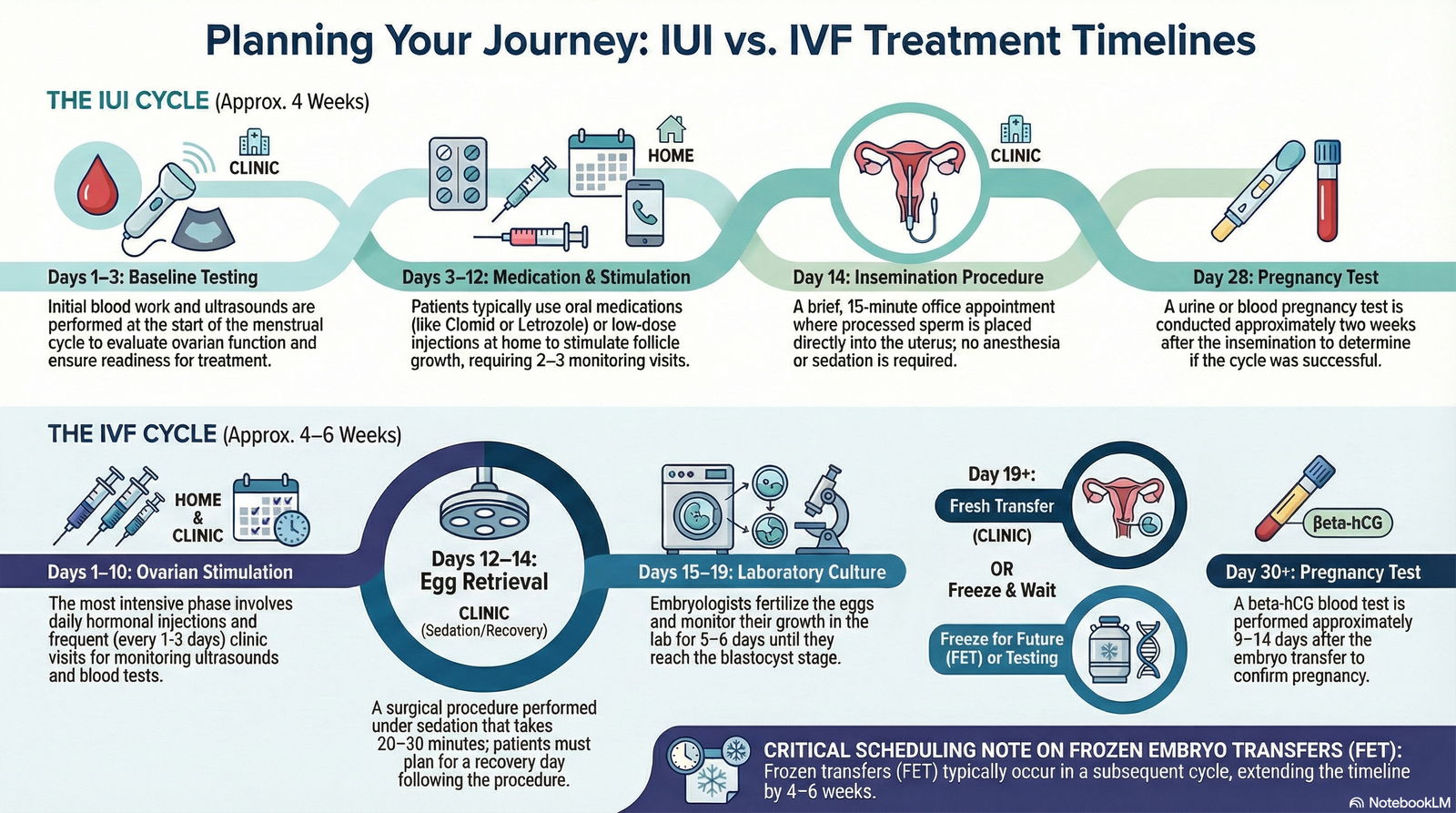
Typical timelines for IUI and IVF in 2026, from first consultation through stimulation, retrieval, transfer, and pregnancy test.
ICSI: When You Really Need It
ICSI (Intracytoplasmic Sperm Injection) is a sophisticated lab technique used during IVF where an embryologist manually injects a single, high-quality sperm into each mature egg. This technique transformed the outcomes for couples facing severe male factor infertility, such as very low sperm counts or poor motility, and is essential for cycles using surgically retrieved sperm. While not necessary for everyone, it is the gold standard for overcoming significant barriers to natural fertilization in the lab.
When ICSI Makes Sense
- Severe male factor infertility: very low sperm count or motility, or very poor morphology.
- Surgical sperm retrieval: sperm collected with PESA, MESA, TESA, or TESE and used in IVF.
- Specific lab reasons: cycles that use PGT, cycles using previously frozen eggs, or cycles with prior total fertilization failure in standard IVF.
ICSI vs. IVF: Impact on Outcomes
When semen parameters are normal, studies have not shown a clear live birth advantage for ICSI. In split cycles, where half of the retrieved eggs are fertilized via ICSI and the other half via conventional IVF, blastocyst formation rates remain similar. Unlike ICSI, where the embryologist injects a single motile sperm into a single mature egg to fertilize it, in a conventional fertilization droplet, one mature egg is placed with roughly 50,000 to 100,000 motile sperm, allowing the “strongest” sperm to naturally penetrate it. One analysis reported that about 54.8% of these conventionally fertilized eggs reached the blastocyst stage, compared to 50.2% for those using ICSI.
Guidance from the ASRM highlights that you would need to perform ICSI on more than 30 non-male-factor cycles just to prevent one “surprise” case of zero fertilization. For most couples, the added cost and lab intervention represent a poor trade-off. Even in older patients with three or fewer mature eggs, a group often steered toward ICSI, research found cumulative live birth rates per retrieval were about 9% with conventional IVF and 7% with ICSI, further debunking the idea that ICSI is a backup for low egg counts.
If you do not have a clear male factor infertility diagnosis and there has been no previous fertilization failure, conventional IVF remains the standard starting point.
PGT-A, PGT-M, and PGT-SR: Where Genetic Testing Fits
Preimplantation genetic testing happens in the IVF lab after fertilization and before transfer. Doctors use it for different reasons, and each type of test answers a different question.
- PGT-A (Aneuploidy Screening): tests embryos for the correct number of chromosomes (46 total, or 23 pairs), identifying those with extra or missing chromosomes (aneuploid embryos). This tool is most effective for patients of advanced maternal age or those with a history of recurrent miscarriage, as it identifies euploid (chromosomally balanced) embryos. By selecting a healthy embryo for a single embryo transfer, PGT-A reduces the risk of miscarriage and shortens the “time to pregnancy” by avoiding transfers that are biologically destined to fail.
- PGT-M (Monogenic Diseases): screens embryos for a specific single-gene condition known to run in your family, such as cystic fibrosis or certain hereditary cancer syndromes. Because the lab must screen for both the specific inherited mutation and general chromosomal health, the attrition rate is high. Typically, in large series, only one-third of embryos remain fit for transfer after accounting for the cumulative impact of these two filters.
- PGT-SR (Structural Rearrangements): screens embryos from parents with balanced chromosomal translocations. Modern NGS-based PGT-SR provides a much clearer view of embryo health than older FISH-based methods. This improved accuracy has raised live birth rates to more than 70% in some groups, a significant jump from the 50% success rates seen previously.
PGT-A Benefits and Limits
In recurrent pregnancy loss and recurrent implantation failure, a systematic review found that PGT-A often raised live birth rates and lowered miscarriage rates, especially in older patients and those with several embryos available. In these groups, PGT-A can turn many failed transfers into a smaller number of well-targeted ones.
The same review and later work also showed that benefits thin out in patients with very few embryos or in those who have already gone through several unsuccessful PGT-A cycles. In some cases, especially in donor egg cycles and younger, good-prognosis patients, PGT-A has not improved overall live birth and may even reduce it by discarding embryos that could have implanted.
This evidence is why ASRM does not recommend PGT-A as a routine test for all IVF cycles. It is a selective tool that is most effective when age and history align with the risk that PGT-A is designed to reduce.
Embryo Transfer Choices: Stage, Fresh vs. Frozen, and Number
Blastocyst vs. Day 3 Transfer
On day 3 after retrieval, embryos are at the cleavage stage. By day 5 or 6, they reach the blastocyst stage, featuring a clear inner cell mass (which will develop into the fetus) and a trophectoderm layer (which will become the placenta). Many clinics now aim for blastocyst transfer when possible because the extra two days act as a natural “stress test”, allowing the lab to identify which embryos have the highest implantation potency and developmental potential.
Meta-analyses show that, for the same number of embryos transferred, blastocyst transfer yields higher live birth rates than day 3 transfer, with an odds ratio of around 1.35 in favor of blastocysts. Trophectoderm grading further refines these predictions: a Grade A trophectoderm has been linked with live birth rates around 57%, compared with about 25% for Grade C.
The tradeoff is the risk of attrition: fewer embryos survive in culture to day 5 or 6, and some cycles may end with no blastocysts available to transfer. For many couples, the superior selection and higher success rates of surviving blastocysts outweigh this risk, but it remains a critical point of discussion with your medical team.
Fresh vs. Frozen Transfer
On day 3 after retrieval, embryos are at the cleavage stage. By day 5 or 6, they reach the blastocyst stage, featuring a clear inner cell mass (which will develop into the fetus) and a trophectoderm layer (which will form the placenta). Many clinics now aim for blastocyst transfer when possible because the extra two days act as a natural “stress test”, allowing the lab to identify which embryos have the highest implantation potency and developmental potential.
Frozen embryo transfers (FET) happen later: embryos are first created and then vitrified (flash-frozen) for future use. Modern vitrification technology and vitrified-thaw protocols have made frozen transfers significantly more effective than the “slow-freeze” methods of a decade ago.
In large datasets, vitrified-warmed blastocyst transfers show clinical pregnancy rates of around 55.1%, compared with about 36.4% for fresh transfers. This is often because high-response cycles can create a hormonal environment that is less than ideal for immediate implantation. Many clinics now freeze all embryos in high-response cycles and plan transfers in natural or artificially prepared cycles once hormone levels have returned to baseline and the uterine lining is perfectly synchronized with the embryo.
Single vs. Multiple Embryo Transfer
In the past, transferring multiple embryos at once was a standard practice in many clinics. This drove high rates of twins and triplets, with all the complications that come with multiple pregnancy for both the prospective mother and her babies. However, this situation was changed once the new guidelines on limiting the number of embryos for transfer were envisaged, approved, and implemented.
In 2026, elective single embryo transfer (eSET) is widely seen as best practice in good-prognosis patients. In one study, mandatory single blastocyst transfer reduced multiple gestation from 43.8% to 14.6%, while cumulative pregnancy rates (representing the total success across sequential single transfers) stayed high, specifically between 74% and 77%. For younger women with good-quality embryos, eSET can maintain pregnancy rates near 63% while cutting twin rates from roughly 35% to 19%.
Ovarian Stimulation Protocols: Matching the Plan to Your Ovaries
Ovarian stimulation protocols vary in how they control your hormones and how long they last. Your doctor chooses the protocol based on your age, AMH, antral follicle count, body size, and prior response.
- Long agonist protocol: You use a GnRH agonist for 2–3 weeks to quiet your cycle, then begin stimulation. This approach gives tight control but requires more injections and monitoring.
- Antagonist protocol: Now very common. You start gonadotropins early in the cycle and add a GnRH antagonist once your lead follicles reach around 13–14 mm. This protocol is shorter and has a lower risk of OHSS.
- Microdose agonist flare: Used in some poor responders. A tiny dose of agonist at the start of stimulation gives a flare of FSH and LH that can help recruit follicles.
- DuoStim (Double Stimulation): For patients with very low ovarian reserve, this strategy involves two stimulation and retrieval phases within a single menstrual cycle. By performing one retrieval in the follicular phase and a second in the luteal phase, clinicians can take advantage of multiple “waves” of egg growth to collect a higher number of eggs in a shorter timeframe.
Sperm Retrieval Options: PESA, MESA, TESA, TESE, and micro-TESE
If there is no sperm in the ejaculate, your doctor can sometimes find sperm inside the reproductive tract and use it for IVF with ICSI.
- PESA (Percutaneous Epididymal Sperm Aspiration): A needle draws sperm from the epididymis through the skin. This technique is often effective in men with obstructive azoospermia.
- MESA (Microsurgical Epididymal Sperm Aspiration): A surgeon opens the epididymis under a microscope and collects fluid rich in sperm. In some reports, MESA cycles reached pregnancy rates around 25.5%, compared with 12.5% with TESE.
- TESA (Testicular Sperm Aspiration): A thin needle is inserted directly into the testicle to draw sperm from the testicular tissue. This procedure is often used when sperm cannot be found in the epididymis or when there is a total blockage preventing sperm from entering the ejaculate.
- TESE and micro-TESE: The surgeon removes small pieces of testicular tissue. Micro-TESE uses a microscope to locate areas where sperm production still occurs in non-obstructive azoospermia. These very challenging cases report retrieval rates around 45% and live birth rates around 13%.
These procedures can feel intimidating. Ask your urologist or reproductive endocrinologist for center-specific numbers, because success varies with diagnosis and lab experience.
Endometrial Receptivity Testing (ERA)
Implantation needs both a competent embryo and a receptive endometrium. The ERA test looks at the expression of more than 200 genes in a small endometrial biopsy. The lab then classifies your sample as pre-receptive, receptive, or post-receptive and suggests an adjusted transfer timing if needed.
Patients with several failed good-quality transfers sometimes find that ERA shifts their transfer window and leads to implantation. In larger unselected populations, however, performing ERA before the first frozen transfer has not improved live birth rates compared with standard timing. Both groups have shown live birth at around 44–45% per transfer.
Because of these findings, many clinics reserve ERA for cases with repeated unexplained implantation failure rather than using it by default.
How to Choose the Right Protocol
There is no single “best” protocol for everyone. The most effective plan is a tailored strategy that balances your clinical data (such as age, ovarian reserve, and hormonal profile) with your specific diagnosis. A truly comprehensive protocol also accounts for your past response to stimulation and your emotional and financial bandwidth.
This approach “blueprints” several strategies. These might include mini-IVF (low-stim) for those at risk of over-responding or DuoStim for low responders to maximize egg yield in a single cycle. It should also outline clear paths for your embryos, such as whether to perform a fresh transfer, vitrify (flash-freeze) oocytes or embryos for future use, or utilize Preimplantation Genetic Testing (PGT). Ultimately, the “right” protocol is not just the one that produces the highest egg yield; it is the one that offers the highest chance of a healthy live birth while remaining aligned with your unique situation.
- If you have been diagnosed with polycystic ovary syndrome (PCOS): In vitro maturation, where doctors collect immature eggs and mature them in the lab, can reach pregnancy rates near 40% in some centers while avoiding ovarian hyperstimulation syndrome (OHSS) entirely. This can be a strong option if you have very high antral follicle counts or have reacted badly to stimulation before.
- If you are a poor responder: Studies that compared low-dose stimulation at 150 IU with high dose at 450 IU have found similar pregnancy rates, often around 13–15%. The low-dose path costs less, uses fewer injections, and feels easier on your body.
- If you have recurrent loss: In carefully selected patients with recurrent pregnancy loss, PGT-A has raised delivery rates per cycle from about 67.5% to about 84.7% in some series. The key is having enough embryos to test and a realistic picture of how many euploid embryos you are likely to get at your age.
Treatment Add-ons: What Is Worth It?
Fertility clinics sometimes offer various bundles of add-ons that can be synchronized with the core bundles of services. When you are desperate to hear the good news, it is easy to say yes to all of them. It helps to know what the evidence says, as many of these “extras” involve high costs but have not yet been proven to increase the chances of a live birth.
- Time-lapse imaging (TLI): Embryos grow in incubators equipped with built-in cameras, allowing the lab to monitor development continuously without ever removing them from their controlled environment. This prevents the “stress” of temperature and pH fluctuations that occur during manual checks. While some selection algorithms using TLI report implantation rates above 70% for chosen embryos, high-quality evidence that TLI alone significantly raises overall live birth rates compared to standard incubators is still limited.
- Platelet-activating factor (PAF) in IUI: In one trial of couples with normal semen, adding PAF during sperm wash raised cumulative pregnancy rates from about 28.6% to about 53.9%. Not all clinics offer this yet, so ask if they have local data.
- Laser-assisted ICSI (LA-ICSI): In patients with fragile eggs or past poor fertilization, opening a tiny hole in the zona pellucida with a laser before ICSI has improved fertilization and embryo quality in some studies.
Want help comparing clinics and costs?
If researching all these options feels like a second full time job, our advisors can collect clear, itemized quotes from verified clinics, explain how protocols differ, and help you map a realistic timeline at no cost to you.

Why trust this guide? The OVU commitment
You are probably juggling hope, timelines, and a lot of tabs open in your browser. And you deserve clear, current, human advice. At OVU, we review clinic protocols, compare real quotes, and talk to people who have done this - intended parents and gestational carriers - so we can give you practical steps, not just theory. If you want help comparing options without sales pressure, we will gather itemized quotes and success data that match your exact situation. You decide, we will bring the info to your table.
Frequently Asked Questions
Should I try IUI before IVF?
If your tubes are open and semen analysis looks at least mildly normal, most doctors suggest trying three or four stimulated IUI cycles first, especially in unexplained infertility. Cumulative live birth rates around 40–60% are common after several IUIs in the right group. If pregnancy has not happened by then, it usually makes sense to move to IVF rather than repeat more IUIs.
Do we need ICSI if we do not have male factor issues?
In most cases, no. When semen parameters are normal, randomized trials show no clear live birth advantage for ICSI over standard IVF. Guidelines estimate that more than 30 extra ICSI cycles are needed to avoid one surprise case of zero fertilization. For many couples, conventional IVF is the better balance of cost and benefit unless there is a clear reason to add ICSI.
Does PGT-A guarantee a healthy baby?
PGT-A screens for chromosomal abnormalities (aneuploidy) and significantly lowers the risk of transferring embryos with an incorrect number of chromosomes. However, it does not check for every possible genetic condition or structural birth defect and cannot promise a healthy child. While PGT-A improves implantation rates and reduces the risk of miscarriage in specific groups, especially for patients over age 35, it does not guarantee success. Furthermore, when used broadly across all IVF patients, it does not always increase the total live birth rate per egg retrieval; it often simply helps you reach a successful pregnancy (or an unsuccessful result) faster by avoiding embryos that were never destined to implant.
How do doctors decide my stimulation dose?
Your fertility care team looks at your age, AMH level, antral follicle count (AFC), and any prior response to stimulation to create a personalized stimulation plan. Large datasets suggest that very high doses do not always produce better outcomes and are sometimes linked to lower live birth rates due to an impact on egg quality. Many clinics now favor milder or moderate doses that aim for a good number of eggs while prioritizing safety and the highest potential for a healthy pregnancy.
Are add-ons like ERA and assisted hatching worth paying for?
For most first IVF cycles, it is probably not necessary. Data show that assisted hatching does not clearly improve live birth rates in typical fresh cycles, and ERA (Endometrial Receptivity Analysis) before the first transfer has not raised success rates in broad patient groups compared to standardized timing. These tools may be more reasonable to discuss after several unexplained failed transfers, when your doctor is searching for less common reasons for implantation problems.
Can lifestyle changes really shift my odds?
They can help. Some studies found that patients who reduced or stopped using caffeine and alcohol before treatment had higher conception and live birth rates than current users. You do not need to live perfectly, but focusing on nutritional support, consistent sleep, and stress management, while also cutting back on smoking and alcohol, will give your body a better environment to respond well.
When is it time to stop treatment or change direction?
This is one of the most difficult questions, and there is no single right answer. Many people consider changing fertility treatment options after several failed IVF cycles with no euploid embryos or after repeated miscarriages despite using PGT-A. At that point, your clinical team may discuss alternatives like donor eggs, donor sperm, donor embryos, surrogacy, or adoption. It is entirely valid to weigh your emotional health, relationship, and finances as heavily as the medical statistics when making this decision.
Reference List 8 sources
Journal Article (Systematic Review & Meta-Analysis): Lai S, Wang R, van Wely M, et al. IVF versus IUI with ovarian stimulation for unexplained infertility: a collaborative individual participant data meta-analysis. Human Reproduction Update. 2024;30(2):174-185. PMID: 38148104. Available from: https://pubmed.ncbi.nlm.nih.gov/38148104/
Journal Article (Systematic Review & Meta-Analysis): Chronopoulou C, et al. Optimizing intrauterine insemination: a systematic review and meta-analysis of the effectiveness and safety of clinical treatment add-ons. Acta Obstetricia et Gynecologica Scandinavica. 2024;103(10):1919-1932. PMID: 38961556. Available from: https://pubmed.ncbi.nlm.nih.gov/38961556/
Journal Article (Systematic Review): Mei Y, Lin Y, Chen Y, et al. Preimplantation genetic testing for aneuploidy optimizes reproductive outcomes in recurrent reproductive failure: a systematic review. Frontiers in Medicine. 2024;11:1233962. PMID: 38384413. Available from: https://pubmed.ncbi.nlm.nih.gov/38384413/
Journal Article (Research): Zhao S, Lyu Q, et al. Preimplantation genetic testing for aneuploidy could not improve cumulative live birth rate among 1003 couples with recurrent pregnancy loss. Chinese Medical Journal (English). 2024;137(??):[pages not specified]. PMID: 38630915. Available from: https://pubmed.ncbi.nlm.nih.gov/38630915/
Journal Article (Systematic Review & Meta-Analysis): [Authors]. Efficacy of intracytoplasmic sperm injection in women with non-male factor infertility: a systematic review and meta-analysis. Acta Obstetricia et Gynecologica Scandinavica. 2023;[volume and pages not specified]. PMID: 37930100. Available from: https://pubmed.ncbi.nlm.nih.gov/37930100/
Journal Article (Comparative Study): Li Y, Zhang Y, Wang Z, Sui H, Ma Y, Cao Z. Effects of intracytoplasmic sperm injection versus in vitro fertilisation on pregnancy outcomes in older women with non-male factor infertility and a low number of oocytes retrieved: a retrospective cohort study. BMJ Open. 2024;14(11):e084013. PMID: 39542474. Available from: https://pubmed.ncbi.nlm.nih.gov/39542474/
Committee Opinion (Guidance): Practice Committees of the American Society for Reproductive Medicine and the Society for Assisted Reproductive Technology. Intracytoplasmic sperm injection (ICSI) for non-male factor indications: a committee opinion. Fertility and Sterility. 2020;114(2):239-245. PMID: 32654822. Available from: https://pubmed.ncbi.nlm.nih.gov/32654822/
Committee Opinion (Guidance): Practice Committee of the American Society for Reproductive Medicine. The use of preimplantation genetic testing for aneuploidy: a committee opinion. Fertility and Sterility. 2024;122(1):121-130. PMID: 38762806. Available from: https://pubmed.ncbi.nlm.nih.gov/38762806/
Final Thoughts
Fertility treatment in 2026 is more flexible and more evidence-based than it has ever been. You have options that range from simple ovulation induction with tablets and timed intercourse to advanced, highly tailored, personalized IVF cycles with milder stimulation, preimplantation genetic testing, sophisticated lab techniques, and the “power of one” (single embryo transfer).
The common thread through all of this is personalization. The right plan is the one that matches your clinical data, your values, and your financial resources. You deserve a care team that explains the trade-offs clearly and listens to what matters most to you, prioritizing your long-term health over a clinic success rate chart.
If you feel overwhelmed, that is understandable. Take this information in stages, bring your questions to your next visit, and let your doctor walk you through the practical path ahead. Remember: you are the most important member of your care team. You are allowed to pause, to change your mind, and to seek a second opinion whenever you need one.
Ready to explore your best next step?
You do not have to compare every clinic and protocol on your own. If you want a clearer picture of realistic costs, timelines, and likely success rates, you can start by talking with an OVU advisor and turning this information into a clear plan.