


Dr. Sony Sherpa (MBBS)
In addition to her clinical experience, Dr. Sherpa is a published medical researcher and holistic health advocate. Her dual expertise in emergency care and alternative therapies brings a unique lens to medically reviewed content—ensuring it is both accurate and accessible.
If you and your partner have been trying to grow your family without success, you may feel frustrated, ashamed, or deeply isolated. You are not alone. Around 15% to 17.5% of couples worldwide face infertility. In about half of all cases, a male factor is involved, and in roughly 25% to 30% of couples, the challenge stems entirely from the male side.
While this news can feel like a blow to your confidence, it does not close the door on having a child. Male infertility is a medical condition that doctors can investigate and often treat or bypass using sophisticated protocols. When you understand why this is happening, you can make clear decisions instead of guessing.
These decisions are backed by a high success rate. Large studies show that more than half of men with infertility have a cause that can be treated or managed with modern fertility care, including local and cross-border options. Guidelines from groups like the American Urological Association (AUA) and the American Society for Reproductive Medicine (ASRM) now give clear pathways for testing and treatment, foreseeing a more personalized approach to each case of male infertility and pre-blueprinting evidence-based protocols that boost the chances of successful conception. This article walks you through what male factor infertility really means, how doctors diagnose it, and which options can move you toward a pregnancy.
Male factor infertility means your sperm count, motility (movement), morphology (shape), or transport is low enough to reduce the chance of pregnancy. In about 50% of infertile couples, a male factor is involved, and in up to 30%, it is the only cause. Most men can improve their odds through lifestyle changes, surgery such as varicocele repair, hormone treatment, or assisted reproduction techniques like in vitro fertilization (IVF) with intracytoplasmic sperm injection (ICSI), which is a method where a single sperm is injected directly into an egg. Notably, even with a zero sperm count in the ejaculate, many men still become biological fathers using testicular sperm retrieval and the intracytoplasmic sperm injection (ICSI) technique.
Next steps: If you haven’t conceived after 12 months (or 6 months if the partner intending to carry a baby is over 35), it’s time for a proactive check-up. Schedule a consultation at a fertility center that offers a comprehensive assessment for both partners, including a dedicated male reproductive specialist. This specialized workup usually begins with a detailed health history and a semen analysis, the gold standard for evaluating male fertility. These initial insights allow your specialists to look beyond the surface, identifying whether hormonal balances, physical blockages, or lifestyle factors are impacting your success. A few elite clinics with in-house genetic laboratories now offer advanced male fertility screening as part of their routine care. Beyond standard testing, these centers utilize a sophisticated 369-gene panel to evaluate sperm DNA fragmentation and chromosomal integrity. By analyzing the critical genes responsible for spermatogenesis (the formation of healthy sperm), this dedicated approach ensures that no stone is left unturned in understanding your reproductive health. While this test represents an additional financial investment, undergoing it early in your journey provides a deeper level of diagnostic certainty. By moving past the frustration of “unexplained” infertility, your fertility care team will choose a targeted protocol that aligns with your genetic profile, potentially saving months of trial and error and preventing the emotional and financial exhaustion of failed IVF cycles.
What the Latest Research Shows
Recent research has reshaped how doctors think about male factor infertility. Large studies now show that severe sperm problems, such as very low count and motility or non-obstructive azoospermia, lower cumulative live birth rates, while milder semen abnormalities often do not. For men with high sperm DNA fragmentation, using testicular rather than ejaculated sperm for ICSI can triple live birth rates and cut miscarriages by more than half.
At the same time, guideline updates from AUA and ASRM clarify who needs genetic testing, when to consider testicular sperm in non-azoospermic men, and how to balance surgery versus going straight to IVF. This article is based on those guidelines and high-quality cohort studies, so you can see where you fit and which questions to raise with your doctor.
In This Guide
In as many as 30% of cases, only male causes are identified.
Only male cause is diagnosed in up to 30% of cases.
New sperm take about 70 days to develop.
More than half of men have a treatable condition.
About 4 in 10 men in fertility clinics screen positive for depression.
Support and counseling help you cope with infertility anxiety and depression.
Male Factor Infertility at a Glance
A typical ejaculate contains around 200 million sperm. Out of these, maybe 15 to 45 million are healthy enough to fertilize an egg, and only a few dozen ever reach the egg. When doctors say you have male factor infertility, they usually mean that one or more of these building blocks are off: sperm count, movement, shape, or the plumbing that carries sperm out.
Four major patterns show up again and again in semen analyses:
- Oligospermia (low count): fewer than about 15 to 20 million sperm per milliliter.
- Azoospermia (zero sperm count): no sperm detected in the ejaculate. This may come from a blockage in the tubes or a production failure inside the testes.
- Asthenozoospermia (poor motility): fewer than about 40% of sperm move forward in a useful way.
- Teratozoospermia (abnormal shape): a low percentage of sperm with normal oval heads and long tails. Labs use different cutoffs, but most use 4% or more as a reassuring minimum under strict criteria.
Latest Research Insights on Male Factor
3x Higher Odds of Live Birth, Testicular Sperm for High DFI: In men with very high sperm DNA damage, ICSI using testicular sperm led to about three times more live births and sharply fewer miscarriages than ICSI with ejaculated sperm. This tells you that even when ejaculated samples look poor on paper, doctors can still find better quality sperm upstream in the testes. Source: Translational Andrology and Urology (PMID: 38196694).
Severe Male Factor Infertility Linked to 8% Lower Success Rate: In a study of nearly 15,000 IVF and ICSI cycles, researchers found that men with very low sperm counts and motility had a cumulative live birth rate of approximately 66%, compared to 75% for those with normal sperm parameters. This 8-to-9% gap in successful pregnancies per 100 cycles serves as a benchmark for setting realistic expectations if a semen analysis falls within the “severe” range. Source: Human Reproduction Open (PMID: 41394017).
Non-Obstructive Azoospermia, Higher Miscarriage Risk: Men whose testes make very few sperm but are not blocked had similar access to treatment but lower live birth rates and about double the miscarriage rate compared with controls. If you have this diagnosis, you still have a real chance to have a baby, but you and your team may want closer monitoring and a clear plan B. Source: Human Reproduction Open (PMID: 41394017).
Non-Indicated ICSI, About 20% Lower Live Birth Odds: A large United States registry analysis found that using ICSI in couples without male factor lowered blastocyst availability and reduced live birth odds by about 20% in fresh cycles, compared with conventional IVF insemination. For you, this means ICSI works best when there is a clear reason, not as a default option. Source: F&S Reports (PMID: 38524206).
These findings come from peer-reviewed research. Your personal results depend on your age, health, and treatment protocol selected for your unique case, so always discuss them with your fertility care specialist.
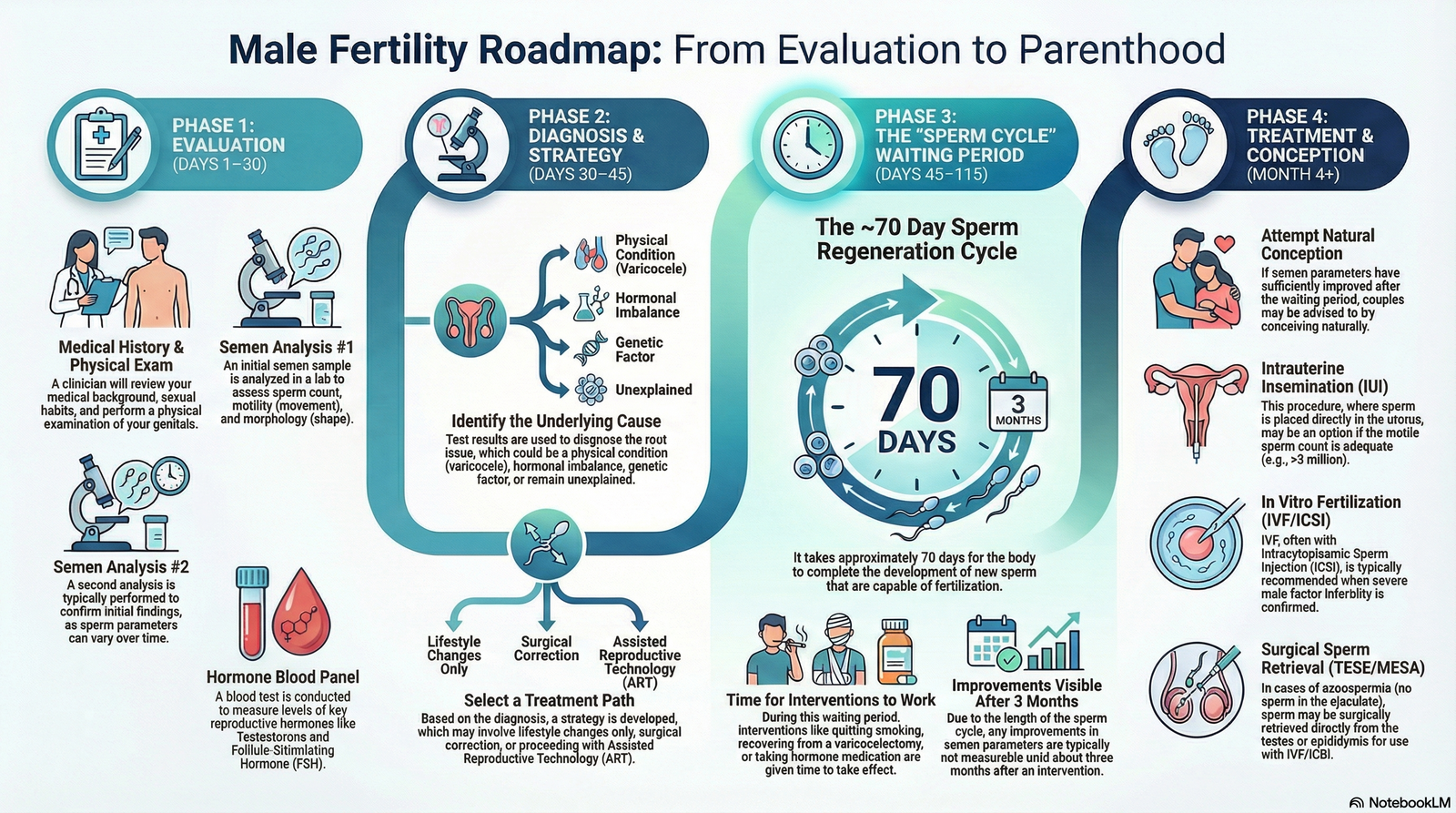
The roadmap for male infertility covers everything from evaluation and lifestyle changes to treatment and assisted reproduction.
| Type of Male Factor | Main Problem | Typical Next Step |
|---|---|---|
| Mild to Moderate Abnormalities | Slightly low count or motility, borderline shape | Lifestyle changes, repeat semen tests, IUI or IVF if needed |
| Severe Oligospermia or Oligoasthenoteratozoospermia (OAT) | Very low count and motility | Varicocele repair (if present), testicular sperm testing, and IVF with ICSI (intracytoplasmic sperm injection) |
| Obstructive Azoospermia | Normal production, blocked tubes | Surgical reconstruction or sperm retrieval from the epididymis or testis for ICSI |
| Non-Obstructive Azoospermia | Production failure in the testes | Hormone workup, micro-TESE to search for sperm, consider donor sperm if no sperm cells are found |
How Male Infertility Is Diagnosed
For the most efficient path to pregnancy, you and your partner should be evaluated simultaneously. That saves time and avoids the common pattern where a woman goes through months of testing before anyone looks closely at the male side. A standard male infertility evaluation has several layers, moving from foundational screenings to sophisticated diagnostic deep-dives.
1. Medical History and Physical Exam
Your doctor will ask about how long you have been trying, how often you have sex, whether you use lubricants, and whether you have any erection or ejaculation problems. They will ask about childhood issues like undescended testes or torsion, past infections, injuries, hernia or scrotal surgery, and exposure to heat, toxins, or anabolic steroids.
During the physical exam, the doctor checks your penis, testicles, and scrotum. They feel for varicoceles, measure testicular size, and confirm that the vas deferens is present on both sides. This part of the visit can feel awkward, but it gives important clues about what is going on.
2. Semen Analysis
The semen analysis is the cornerstone of male fertility testing. You abstain from ejaculation for 2 to 7 days, then provide a sample by masturbation into a sterile cup in a private room or at home if the lab allows quick transport. Because semen quality swings from day to day, doctors rely on at least two good-quality samples, usually about a month apart.
On a standard semen report, your doctor looks at:
- Volume: usually between about 1.5 and 5 milliliters.
- Concentration: sperm per milliliter. Older WHO cutoffs used 20 million per milliliter as a reference; newer ones use a slightly lower threshold, but the idea is similar.
- Motility: how many sperm move forward in a useful way.
- Morphology: what percentage of sperm have a normal shape by strict criteria.
One abnormal test does not define you as infertile. Your doctor looks for a pattern across at least two tests and then combines that picture with your history and physical exam.
3. Hormone and Blood Testing
A blood test for testosterone and follicle-stimulating hormone (FSH) gives a quick read on how well your brain and testes are talking to each other. Low testosterone and low or normal FSH suggest the brain is under-signaling the testes. Very high FSH with small, firm testes points toward testicular failure. Many clinics also look at LH, prolactin, thyroid function, and screen for infections like HIV or hepatitis before procedures.
4. Genetic Testing
If your sperm count is very low, often under about 1 to 5 million per milliliter, your doctor will likely recommend genetic tests. A karyotype evaluates your chromosomes for major abnormalities, such as Klinefelter syndrome, and validates or identifies chromosomal translocations. Y-chromosome microdeletion testing looks for missing segments in the AZF (azoospermia factor) regions that control sperm production.
If your semen volume is very low and the vas deferens seems absent, your team will suspect congenital bilateral absence of the vas deferens (CBAVD). In that case, both you and your partner usually get tested for Cystic Fibrosis gene mutations before moving forward.
5. Imaging and Testicular Sampling
- Scrotal ultrasound shows varicoceles, cysts, and testicular size and texture using sound waves.
- Transrectal ultrasound (TRUS) helps find blockages in the ejaculatory ducts or seminal vesicles.
- A testicular biopsy or sperm extraction can tell your doctor whether sperm are being produced inside the testes. If they are present in tissue but not in the ejaculate, a blockage is likely.
- MRI of the brain comes into play if hormone levels strongly suggest a pituitary or hypothalamic problem.
What Diagnosis Means for Your Chances
28–31% Live Birth per Cycle, Surgical Sperm Retrieval Holds Up: A registry study of more than 214,000 ICSI cycles found live birth rates per cycle of about 28.5% with ejaculated sperm, 30.6% with epididymal sperm, and 28.7% with testicular sperm. For you, this means that if you need surgical sperm retrieval, your odds per cycle are similar to those of men using ejaculated sperm. Source: Fertility and Sterility (PMID: 36592648).
DNA Damage Lowers Embryo Quality More Than Pregnancy Rate: In a study of 870 ICSI cycles, higher sperm DNA fragmentation was linked to poorer semen quality, fewer top-quality day 5 blastocysts, and lower high fertilization rates. Once a good blastocyst was transferred, however, pregnancy rates stayed similar. This tells you that improving DNA quality mainly helps earlier in the process by giving you more good embryos. Source: International Journal of Molecular Sciences (PMID: 40869243).
Guidelines Now Recognize Testicular Sperm in Select Non-Azoospermic Men: The 2024 AUA and ASRM guideline amendment introduces new thresholds for Y-chromosome testing and offers guidance on using testicular sperm in some non-azoospermic men with repeated failures. For you, this means more structured options if ejaculated sperm and standard ICSI are not working. Source: AUA/ASRM Male Infertility Guideline Amendment 2024.
These data sets help you and your doctor move beyond guesswork and base your plan on large real-world cohorts.
Lifestyle, Stress, and DNA Fragmentation
Understanding your diagnosis is just the first step. The next question is: what can you change about yourself? Factors like diet, stress, and heat exposure can cause invisible DNA damage inside sperm, affecting your success rates more than you might expect.
Smoking, Marijuana, and Heat
Smoking: Heavy cigarette use lowers sperm concentration by roughly 22% on average. In one study of infertile men who smoked at least 20 cigarettes a day, quitting for about three months increased the total sperm count from roughly 45 million to 65 million, a jump of about 44%. Volume and concentration also improved. That improvement lines up nicely with the 70-day sperm development timeline.
Marijuana: Research results here are mixed, but several human studies show lower sperm counts and more abnormal shapes in regular users. If you are already facing male factor infertility, cutting back or stopping is a low-risk way to protect the sperm you still make.
Heat: Your testicles hang outside your body for a reason. They work best a few degrees cooler than your core temperature. Long hot baths, frequent sauna use, hot tubs, or sitting with a warm laptop on your lap for hours at a time can sharply reduce sperm production while that habit continues. Cooling things down gives new sperm a better growth environment over the next couple of months.
Stress and Hormone Balance
Ongoing stress does more than wear you down emotionally. It changes hormone signals from your brain to your testes. Men with the highest perceived stress scores often show total sperm counts that are about 30% lower than those of men with the least stress, even after adjusting for other factors. You cannot remove all stress from your life, but you can protect yourself by using counseling, exercise, and sleep routines to keep your nervous system from sitting in alarm mode all the time.
Sperm DNA Fragmentation and Miscarriage Risk
Standard semen analysis does not measure the integrity of the DNA packaged inside your sperm. Sperm DNA fragmentation tests fill that gap. Labs usually report a DFI percentage. Many clinics consider values above about 20% to 30% as high.
High DFI links with:
- Lower fertilization and pregnancy rates in some IVF and ICSI studies.
- Slower or abnormal embryo development.
- Higher miscarriage risk, sometimes roughly double.
- Higher rates of preeclampsia in some IVF pregnancies when DFI is 30% or higher.
The encouraging part is that each 1 point increase in DFI only nudges fertilization odds down a little. When clinics combine lifestyle changes, antioxidant strategies in selected men, and better sperm selection techniques, they often pull DFI down and improve embryo quality without needing exotic treatments.
Treatment Options and Success Rates
Once your team identifies the main cause or causes of your male factor infertility, you can discuss the options. These usually fall into three groups: medical or hormone therapy, surgery, and assisted reproduction.
Medical and Hormone Therapy
If your problem starts in the brain or pituitary, and your testes are structurally healthy, your doctor may diagnose hypogonadotropic hypogonadism (HH). In this setting, your brain does not send enough LH and FSH to the testes. Doctors treat this with injections of hCG, which acts like LH, and sometimes FSH, to stimulate sperm production directly.
It is important to know that standard testosterone therapy by injection or gel usually shuts down sperm production in this scenario, because the brain senses high testosterone and turns off LH and FSH. If you want children, only take testosterone under the care of a team that understands this trade-off and has a plan to preserve or restore sperm production.
Surgical Treatments: Varicocele and Blockages
Varicocelectomy: For men with a clear varicocele and abnormal semen tests, repairing the varicocele can boost pregnancy odds. In some studies, couples reached pregnancy rates of about 42% after surgery, versus about 17% when the varicocele was left alone. Your age, your partner’s age, and how long you have been trying still matter, but this gives you a sense of the potential benefit.
Reconstructive surgery for blockages: If you have an obstructive problem, such as a vasectomy, scarring, or epididymal blockage, microsurgery can reconnect the tubes. In other cases, your surgeon may bypass the blockage by retrieving sperm directly from the epididymis or testis and using them for ICSI.
Assisted Reproductive Technology (ART)
Intrauterine insemination (IUI): In IUI, the lab washes and concentrates your sperm, and your clinician places them directly into your partner’s uterus through a thin catheter timed with ovulation. IUI works best when the total motile sperm count after processing is at least about 5 million. It becomes less effective as counts fall below that.
IVF and ICSI: In conventional IVF, sperm and eggs meet in a dish, and fertilization happens naturally. In ICSI, an embryologist selects a single sperm and injects it into an egg. ICSI bypasses many male factor issues, including low count, low motility, and abnormal morphology. It also allows doctors to use sperm from testicular or epididymal retrieval.
For couples without any male factor, big registry studies show that ICSI does not improve outcomes and can lower live birth odds compared with IVF. For couples with a clear male factor, ICSI is the tool that often makes biological parenthood possible.
The Testicular Sperm Advantage in High DFI
If your ejaculated sperm samples show high DNA fragmentation, your clinic may offer testicular sperm retrieval. Several meta-analyses now show that in men with a high sperm DNA fragmentation index (DFI), testicular sperm for ICSI leads to higher clinical pregnancy and live birth rates and lower miscarriage rates than ejaculated sperm. In some pooled data, live birth odds are roughly three times higher with testicular sperm in this specific high DFI group.
Supplements and Nutrition
The supplement aisle is crowded with products that promise better sperm. Real data are more complex. In men with clearly increased oxidative stress, such as those who smoke heavily or have varicoceles, targeted antioxidant use can improve semen parameters. At the same time, very high doses, such as 3,500 milligrams per day of carnitine in animal models, create reductive stress and actually damage sperm DNA in otherwise healthy males.
Because the supplement industry is largely unregulated, it is safer to treat these products with the same rigor as any other medication. By partnering with a male fertility specialist, you can determine exactly which antioxidants your situation requires, along with the precise dosage and duration. This guarantees a targeted improvement in your sperm quality while eliminating the risk of an inadvertent hormonal or chemical imbalance.
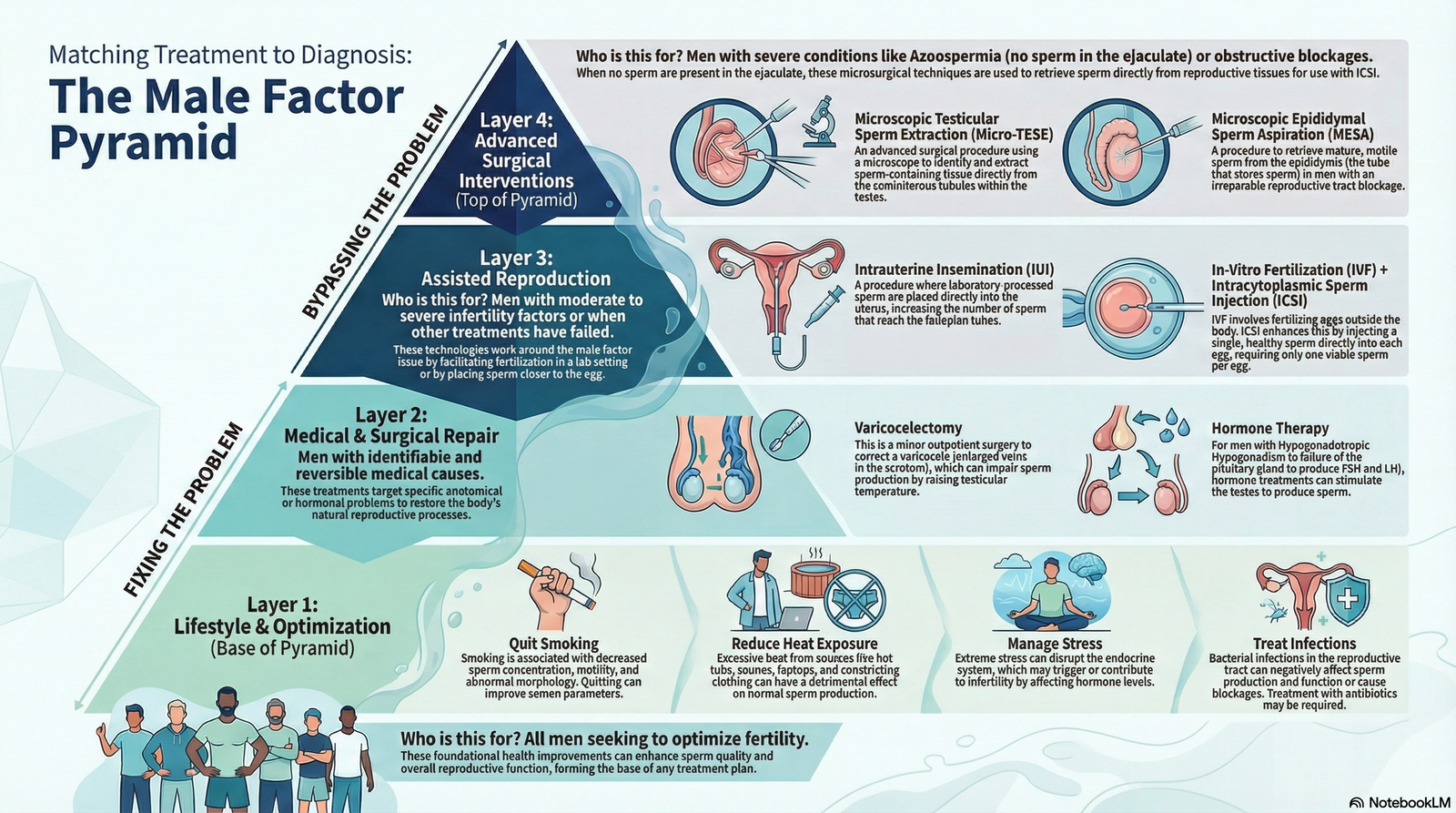
How lifestyle changes, surgery, and assisted reproduction fit together in treating male factor infertility.
Choosing Clinics and Planning Your Next Steps
Once you understand your diagnosis and main options, the next big question is where to go for care. You are not just choosing a clinic. You are choosing a lab, a surgical team, and a support system that will walk with you through a very personal process.
When you compare clinics, look at:
- Experience with male factor: ask how many micro-TESE, varicocelectomy, or surgical sperm retrieval cases they handle each year.
- Lab quality: ICSI and advanced sperm selection rely on an experienced embryology team with stable staffing.
- Support services: access to counseling, nutrition support, and transparent cost estimates make a big difference when you feel overwhelmed.
- Clear communication: you should leave each visit understanding your numbers, your plan, and what comes next.
How to Use This Information with Your Doctor
When you sit down with your fertility specialist, bring a short list of questions. For example, what is the most likely cause of my sperm problem? Can lifestyle changes alone realistically move my numbers? Would I benefit from repairing a varicocele before IVF? Do my results suggest I should consider sperm DNA testing or testicular sperm? How do the success rates in this clinic compare for men with my profile?
Approaching the visit with clear questions puts you back in the driver’s seat and helps your doctor tailor the plan to you instead of following a one-size-fits-all template.
Want help comparing clinics and costs?
If keeping track of tests, treatments, and price lists feels like a full-time job, OVU advisors can collect clear, itemized quotes from verified clinics and outline timelines that match your situation, at no cost to you.

Why trust this guide? The OVU commitment
You are probably juggling hope, timelines, and a lot of tabs open in your browser. And you deserve clear, current, human advice. At OVU, we review clinic protocols, compare real quotes, and talk to people who have done this - intended parents and gestational carriers - so we can give you practical steps, not just theory. If you want help comparing options without sales pressure, we will gather itemized quotes and success data that match your exact situation. You decide, we will bring the info to your table.
Frequently Asked Questions
Does using a laptop on my lap really harm my sperm?
Yes. Laptops emit significant heat, and your testicles are designed to function best at a temperature a few degrees cooler than the rest of your body. Prolonged exposure to a warm device on your lap raises scrotal temperature, which can sharply reduce sperm production. Transitioning to a desk, stand, or external keyboard is a simple yet effective way to protect both your fertility and your comfort.
I already have a child. Could I still have male factor infertility now?
Yes. This is known as secondary infertility. Sperm health is dynamic and can decline over time due to age, the introduction of new medications, weight fluctuations, or the development of varicoceles. Even if you have fathered a child in the past, changes in your health or lifestyle habits, such as smoking or increased stress, can impact your current fertility. A fresh evaluation is the only way to confirm your current reproductive health.
If my sperm count is low, will my son also be infertile?
Sometimes, though, it depends entirely on the underlying cause. Specific genetic factors, such as Y-chromosome microdeletions, are passed to all sons and carry a significant risk of infertility. However, for many men with generally low counts, studies show no direct correlation between a father’s semen parameters and his son’s future fertility. Your specialist can help you determine if your diagnosis carries inheritance risks, often through a referral to a genetic counselor.
Can stress alone make me infertile?
Severe stress is rarely the primary cause of infertility, but it can intensify underlying issues. Chronic stress disrupts the delicate hormone balance required for sperm production, with some studies showing a 30% reduction in total sperm count between high and low-stress groups. Integrating stress management skills into your routine not only supports better sperm production but also helps you navigate the emotional demands of fertility treatment with greater resilience.
Is ICSI always better than standard IVF?
No. While ICSI is a sophisticated tool for overcoming male factor challenges, it is not always superior to standard IVF. When semen parameters are normal, data suggest that ICSI does not increase success rates and may even lead to lower live birth odds compared to standard insemination. For couples facing significant male factor issues, ICSI can be the difference between fertilization failure and a healthy embryo. The goal is to avoid over-medicalization and apply ICSI precisely when the diagnosis demands it.
Are children born through ICSI as healthy as naturally conceived children?
Extensive research following ICSI-conceived children through adolescence shows no significant differences in physical health, cognitive development, or motor skills compared to naturally conceived peers. While there is a slight statistical increase in certain rare congenital conditions, studies suggest this is more often linked to the parents’ underlying infertility factors rather than the ICSI procedure itself. Your specialist can provide a personalized review of the data as it applies to your specific diagnosis.
Can I test my sperm at home?
Modern smartphone-based kits offer a convenient way to screen your sperm concentration with surprising accuracy. Some systems feature over 94% reliability for flagging low counts. While these tools provide an excellent “early sense” of your status, they are limited to basic parameters. A professional laboratory semen analysis remains the gold standard, as it provides a comprehensive look at movement (motility) and shape (morphology) that home kits often miss. If you have been trying for 6 to 12 months, a clinical evaluation is a necessary next step.
Reference List 8 sources
Journal Article (Research): Cano-Extremera M, Hervas I, Gisbert Iranzo A, et al. Reproductive outcomes of testicular versus ejaculated sperm for intracytoplasmic sperm injection among men with high levels of DNA fragmentation in semen: systematic review and meta-analysis. Translational Andrology and Urology. 2023;12(12):1785–1800. PMID: 38196694. Available from: https://pubmed.ncbi.nlm.nih.gov/38196694/
Journal Article (Research): Jiang L, Zhou J, Huang H, et al. Do different male infertility factors impact embryological, cumulative pregnancy and neonatal outcomes in IVF/ICSI cycles? A retrospective cohort study. Human Reproduction Open. 2025;2025(4):hoaf073. PMID: 41394017. Available from: https://pubmed.ncbi.nlm.nih.gov/41394017/
Journal Article (Comparative Study): Gingold JA, Wu H, Lieman H, et al. Nonindicated intracytoplasmic sperm injection and outcomes in assisted reproductive technology cycles: analysis of SART data. F&S Reports. 2023;5(1):e.g. 11–20. PMID: 38524206. Available from: https://pubmed.ncbi.nlm.nih.gov/38524206/
Journal Article (Research): Ramaraju GA, et al. Reproductive outcomes after surgical sperm retrieval in couples with male factor infertility: a national cohort study. Fertility and Sterility. 2023;120(2):214–223. PMID: 36592648. Available from: https://pubmed.ncbi.nlm.nih.gov/36592648/
Journal Article (Research): Gill K, Majzoub A, Agarwal A, et al. Sperm DNA fragmentation impairs early embryo development but not clinical pregnancy in ICSI cycles: a retrospective cohort study. International Journal of Molecular Sciences. 2025;26(16):7923. PMID: 40869243. Available from: https://pubmed.ncbi.nlm.nih.gov/40869243/
Journal Article (Research): Kulaksız D, et al. Sperm concentration and semen volume increase after smoking cessation in infertile men: a prospective study. International Journal of Impotence Research. 2022;34(5):472–479. PMID: 35963898. Available from: https://pubmed.ncbi.nlm.nih.gov/35963898/
Practice Guideline (Guidance): Schlegel PN, Sigman M, Collura B, et al. Updates to Diagnosis and Treatment of Infertility in Men: AUA/ASRM Guideline Amendment 2024. The Journal of Urology. 2024;212(6):e.g. 100–110. PMID: 39145501. Available from: https://pubmed.ncbi.nlm.nih.gov/39145501/
Journal Article (Systematic Review & Meta-Analysis): Ribas-Maynou J, Yeste M, Becerra-Tomás N, et al. Clinical implications of sperm DNA damage in IVF and ICSI: updated systematic review and meta-analysis. Biological Reviews. 2021;96(4):1284–1300. PMID: 33644978. Available from: https://pubmed.ncbi.nlm.nih.gov/33644978/
Final Thoughts
Male factor infertility touches both your health and your sense of identity. You might feel embarrassed, angry, or worried about disappointing your partner. None of that makes you weak. It makes you human. Infertility is a medical problem, not a judgment on your masculinity or your value.
The good news is that you have more options today than ever before. Lifestyle optimizations can significantly improve sperm quality within a single 90-day cycle, while microsurgery and hormone therapy can effectively resolve physical blockages or production imbalances. For more complex challenges, IVF and ICSI allow men with low counts, poor motility, or even azoospermia to maintain a genetic connection with their children by using their germ cells to create embryos. Even when ejaculate samples are empty, advanced testicular sperm retrieval remains a highly successful path for a significant number of men.
The most important step you can take right now is simple: ask for a proper evaluation that includes you. When you know your numbers and your diagnosis, you and your doctor can build a plan that fits your life, your budget, and your values. You deserve clear information, honest odds, and care that treats you and your partner as a team.