


Dr. Sony Sherpa (MBBS)
In addition to her clinical experience, Dr. Sherpa is a published medical researcher and holistic health advocate. Her dual expertise in emergency care and alternative therapies brings a unique lens to medically reviewed content—ensuring it is both accurate and accessible.
When you hear the words “unexplained infertility”, it can feel like someone pulled the floor out from under you. You tracked your cycles, stayed healthy, turned up for every test, and then got told that everything looks “normal”. It is completely fair to think, “How can everything be normal when I still do not have a baby?”
Doctors usually define infertility as not getting pregnant after 12 months of regular sex without contraception. For up to 30% of couples who see a fertility specialist, all the standard checks come back fine. Your tubes look open, you are ovulating, and the semen analysis is acceptable, yet pregnancy still does not happen. That is what doctors call unexplained infertility.
This label carries two truths at once. The good news is that there is no obvious blocked tube, no severe sperm problem, and no clear reason to give up. Many couples in this group do go on to have a baby, and large studies suggest that about 1 in 2 couples will succeed with the right plan. The hard part is that you are still left without a clear why, and living with that uncertainty can be emotionally heavy.
Unexplained infertility means your basic tests all look normal, yet pregnancy has not happened after at least 12 months of trying. You still have real chances of natural conception, especially if you are younger, but many couples benefit from a stepwise plan that starts with expectant management or intrauterine insemination (IUI) and then moves to IVF if needed. For couples with a low natural prognosis, IUI with mild ovarian stimulation gives about a 33% live birth rate over six months, compared with about 13% if you keep trying at home.
Next step: Ask your fertility specialist to talk you through your natural conception prognosis and help you decide whether it is time for IUI, IVF, or a few more months of trying on your own.
What the Latest Research Shows
Major professional groups, including the European Society of Human Reproduction and Embryology (ESHRE) and the American Society for Reproductive Medicine (ASRM), now recommend prognosis-based management for unexplained infertility. This means your age, how long you have been trying to conceive, and semen parameters (characteristics of sperm) guide whether you wait, start intrauterine insemination (IUI), or move to in vitro fertilization (IVF).
Guidelines and recent meta-analyses show that, for many couples with a poor chance of natural conception, ovarian stimulation plus IUI raises live birth rates from around 13% to about 33% over six months, while IVF reaches a cumulative live birth rate around 50% for unexplained infertility. These numbers come from large, carefully designed trials and meta-analyses published between 2019 and 2024.
All research citations use PubMed identifiers (PMIDs), so you and your doctor can review the original studies on PubMed.
In This Guide
- What Unexplained Infertility Really Means
- The Male Side: Hidden Sperm Factors
- The Female Side: Beyond “You Ovulate”
- Age and Lifestyle: What You Can and Cannot Control
- Diagnosis and Testing: Building a Proper Workup
- Treatment Options: From Waiting to IVF
- The Emotional Side: You Are Not Alone
- Choosing Clinics and When To Seek Extra Help
- Frequently Asked Questions
15% to 30% of couples seeking fertility care receive an unexplained infertility diagnosis.
Some couples still have at least a 30% chance of conceiving naturally within 12 months.
IUI with stimulation: about 33% live birth vs 13% with waiting. IVF: around 50% cumulative live birth.
What Unexplained Infertility Really Means
If you have been told your infertility is “unexplained”, you might feel as if the clinic has given up on finding answers. In reality, it means that using standard diagnostic tools, we do not see blocked tubes, a clear ovulation problem, or a severe sperm issue. This diagnosis always depends on how deeply your doctor has looked and which specialized tests have been completed. “Unexplained” infertility is often actually a case of mild versions of several factors (like slightly lower egg quality and slightly lower sperm motility) that add up, or a specific issue that isn’t caught on a basic ultrasound. From this perspective, “unexplained” no longer represents a definitive diagnosis but rather serves as a foundation for individualized care.
If no one has checked your tubes, endometriosis, or sperm DNA, the unexplained label rests on a thinner workup. When doctors perform more detailed tests, such as laparoscopy for endometriosis or advanced sperm testing, some couples move out of the unexplained category into a specific diagnosis.
Current research points to several hidden factors that standard tests often miss. These include subtle changes in how the uterus contracts, low‑grade inflammation, hormone patterns in the luteal phase, and microscopic egg and sperm quality issues that routine tests cannot show.
Latest Research Insights
33% vs. 13% – IUI’s Real-World Boost: In couples with unexplained infertility who had a low chance of conceiving naturally, about 1 in 3 had a baby with IUI plus stimulation over six months, compared with about 1 in 8 who just kept trying at home. That is a 20 percentage point difference in live birth rate. Why this matters for you: If your natural chances are low, moving to IUI with medication can give you a clear advantage over simply waiting and hoping. Source: Human Reproduction (PMID: 36331493).
50% vs. 43% – IVF Is Not Always Dramatically Better: When researchers pooled data from almost 1,000 people with unexplained infertility, about half of those using IVF had a baby, compared with around 43% using IUI with stimulation over a similar time. Once they corrected for timing, IVF did not clearly outperform IUI in every case. Why this matters for you: You may not need to jump straight to IVF if you are a good candidate for IUI, especially when cost and invasiveness matter to you. Source: Human Reproduction Update (PMID: 38148104).
30% In 12 Months – When Waiting Is Reasonable: Prognosis tools that combine your age, how long you have been trying, and semen parameters show that some couples still have at least a 30% chance of natural conception over the coming year. For these couples, immediate treatment does not clearly improve live birth rates. Why this matters for you: If your predicted natural chance is good, a period of well‑supported waiting can be safe and can spare you cost and side effects. Source: Human Reproduction Open (PMID: 38716407).
52 Recommendations – Clear Guideline Roadmap: The latest ESHRE guideline on unexplained infertility pulled together 52 evidence‑based recommendations on testing and treatment. It confirms that IUI with mild ovarian stimulation is usually the first treatment step, with IVF used when IUI does not work or when there are extra risk factors. Why this matters for you: Your care can follow a clear, stepwise plan instead of guesswork. Source: Human Reproduction (PMID: 37599566).
These findings are based on peer-reviewed research, but your individual success depends on factors like your age, specific test results, and how long you have been trying to conceive. Use this data as a starting point to discuss with your fertility specialist which treatment path best fits your unique situation.
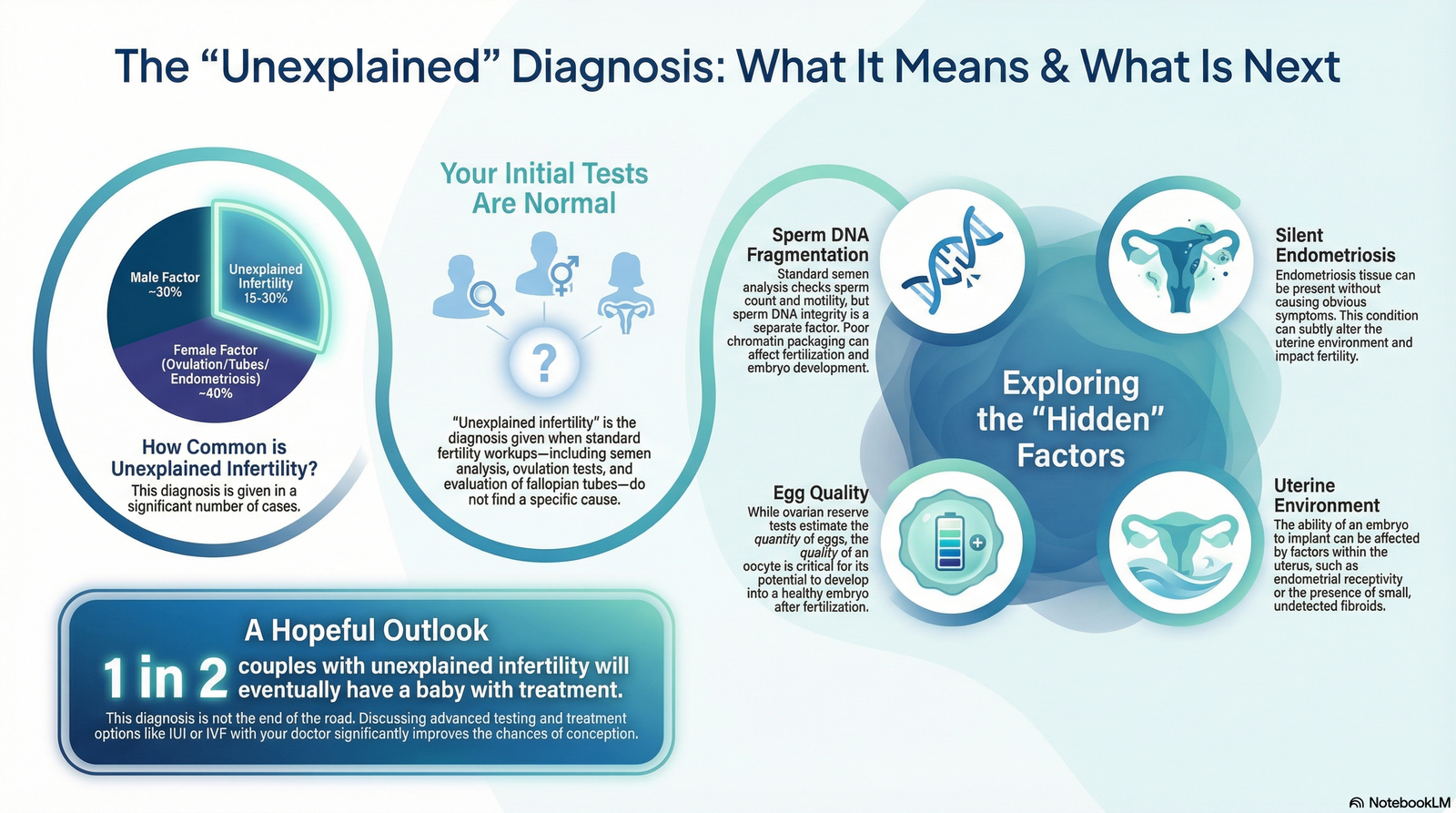
Unexplained infertility overview and treatment pathway.
The term “unexplained” does not mean nothing is wrong. It means the problem sits in places our routine tools do not clearly show. For example, subtle issues in how the uterus contracts can affect how sperm travel and how an embryo implants, even when imaging looks normal. Low vitamin D can link to lower progesterone in the luteal phase and a less receptive uterine lining, even when your cycle looks regular.
Chronic low‑grade inflammation, often picked up through an elevated hs‑CRP, can increase miscarriage risk without changing the initial positive pregnancy test rate. Egg and sperm can also have inner health issues, such as mitochondrial problems or DNA damage, that routine numbers do not reveal.
| Treatment Approach | Who It Suits Best | Typical Live Birth Outcome |
|---|---|---|
| Expectant management | Younger couples with at least 30% natural chance in 12 months | Similar to IUI in good prognosis couples |
| IUI + mild stimulation | Couples with low natural prognosis and open tubes | About 33% over six months versus 13% with waiting |
| IVF | After failed IUI, age over about 38, or added risk factors | Around 50% cumulative live birth across a planned course |
These numbers provide essential context, but they are not promises of individual success. Fertility is deeply personal; your doctor will weigh these statistics against your specific medical history and priorities before recommending the best path forward.
The Male Side: Hidden Sperm Factors
For many years, people assumed fertility problems were mainly a woman’s issue. We now know that about one-third of infertility cases involve the male partner and that about 90% of male infertility comes from low counts, poor movement, or abnormal shapes. Even when a semen analysis looks normal, sperm can still have hidden problems.
Sperm DNA Fragmentation
Sperm carry a vast amount of genetic material in an incredibly small package. To fit, the DNA must be folded and compressed tightly. This process isn’t perfect for every sperm. DNA fragmentation occurs when there are physical breaks or damage inside the genetic code. While these sperm may look normal under a microscope, high levels of fragmentation can make it difficult for an embryo to develop healthily.
High fragmentation levels can:
- Stop embryos from growing well beyond the early cell stages
- Raise miscarriage risk
- Lower fertilization rates, even when sperm look active
Standard semen analysis does not show DNA fragmentation. That is why you can be told everything looks normal on the male side, yet embryos do not grow or pregnancies end early.
Oxidative Stress
Oxidative stress happens when there are too many reactive oxygen species in the semen. These unstable molecules damage membranes and DNA. Smoking, heavy heat exposure, untreated infections, and strong inflammation can all raise oxidative stress.
This damage can show up as fragile membranes, poor movement, and abnormal shapes. Some studies show that targeted antioxidants such as L‑arginine, zinc, vitamin E, and CoQ10, taken for about three months, lower DNA fragmentation and improve semen quality in some men. It is not a universal fix, but for many couples it is a low‑risk step worth discussing with a doctor.
The Female Side: Beyond “You Ovulate, So You Are Fine”
In roughly half of couples, the primary issue lies on the female side. You may bleed every month, ovulate on time, and still struggle to conceive or stay pregnant. Ovulation is only one piece of a complex puzzle.
The Ovarian Reserve: Your Remaining Egg Supply
You are born with all the eggs you will ever have. At birth, your ovarian reserve is extensive, containing 1 to 2 million oocytes. By puberty, this number naturally declines to roughly 300,000 to 500,000. Each month, approximately 1,000 eggs begin the maturation process, but only one is usually released; the rest undergo a natural process of attrition and die off. This occurs regardless of whether you are trying to conceive, pregnant, or on the contraceptive pill.
Doctors look at this egg supply, called “ovarian reserve”, with two main tools:
- AMH (anti‑Müllerian hormone): This blood test measures a hormone produced by your resting follicles. Generally, a higher AMH indicates a larger ovarian reserve. While levels between 1 and 4 ng/ml are typically considered a “normal” range, benchmarks can vary by age and lab. Note that while AMH tells us about egg quantity, it does not measure egg quality.
- Antral follicle count (AFC): A transvaginal ultrasound used to count the small “resting” follicles in each ovary. Antral follicle count test provides a real-time snapshot of your ovarian reserve and helps your doctor predict how your ovaries might respond to fertility medications.
Low AMH often feels terrifying, but it reflects quantity more than quality. Younger women with very low AMH can still conceive. In one study, women under 35 with undetectable AMH had a cumulative live birth rate close to 47% after repeated treatment cycles. AMH tells your doctor how strongly to dose stimulation drugs. It does not directly say whether you can ever get pregnant.
Silent Endometriosis
Endometriosis happens when tissue similar to the uterine lining grows outside the uterus. It can wrap around the ovaries and tubes, create scar tissue, and release inflammatory chemicals.
Between 30% and 50% of women with endometriosis have trouble conceiving. Some have severe pain with periods or sex. Others have almost no pain and only learn about endometriosis when a surgeon looks inside the pelvis during an infertility workup. Even silent endometriosis can interfere with egg pick‑up by the tubes and with implantation.
More Evidence That Helps You Decide
1 in 10 More Pregnancies – Tubal Flush Bonus: Studies of tubal flushing with oil‑based contrast during an HSG found roughly one extra pregnancy for every 10 women treated, compared with water‑based contrast. Why this matters for you: If your tubes are open, an HSG with oil‑based contrast can both check for blockage and slightly boost your chance of conceiving in the following months. Sources: Ultrasound in Obstetrics & Gynecology (PMID: 30740799) and EClinicalMedicine (PMID: 35399811).
1 in 2 Succeed – Overall Treatment Outlook: When researchers combined several trials, about 1 in 2 couples with unexplained infertility eventually had a baby after a planned course of IUI and IVF. Many of the others still had a real chance over time. Why this matters for you: A diagnosis of unexplained infertility does not mean the door is closed. With a clear plan, your overall odds are often encouraging. Source: Human Reproduction Update (PMID: 38148104).
3–4 IUI Cycles First – Common Starting Point: A major North American guideline recommends three to four cycles of oral medication plus IUI as the usual starting treatment, followed by IVF only if those cycles do not work. Why this matters for you: Your plan can have a clear beginning and checkpoint, rather than drifting from cycle to cycle without structure. Source: Fertility and Sterility (PMID: 32106976).
These studies and guidelines describe group averages. Your own plan should still be tailored to your age, test results, and how you feel about time, cost, and intensity of treatment.
Age and Lifestyle: What You Can and Cannot Control
Age is the single strongest predictor of your fertility. You cannot control your birth year, but you can understand what the numbers mean and choose how quickly to move through treatment options.
The Biological Clock In Numbers
- Early 20s: Fertility is at its highest. Around 90% of eggs are chromosomally normal, and the risk of miscarriage stays under 10%.
- Early 30s: Fertility starts to slide. While 75% of eggs are normal, the risk of miscarriage rises to roughly 15% to 20%.
- Early 40s: Only 25% of eggs stay chromosomally normal, and miscarriage risk can reach 50%.
- Mid to late 40s: Natural conception per cycle often falls below 1% to 2%, and more than 90% of eggs carry chromosomal problems.
These figures explain why doctors are more urgent with IVF or donor egg discussions as age rises. They are not meant to scare you. They are a map that helps you decide how quickly to move through your options.
Habits That Affect Fertility
- Smoking: Smoking can lower live birth rates, speed egg loss, and increase sperm DNA damage. Quitting is one of the clearest ways you and your partner can improve your odds.
- Alcohol: Heavy drinking harms a developing baby and lowers fertility. Many clinics suggest strict limits or avoidance during active treatment.
- Sleep: Poor sleep, often measured with a high Pittsburgh Sleep Quality Index score, links to lower ovarian reserve in some women and affects testosterone release in men. Protecting your sleep is part of medical care, not a luxury.
- Hydration: Semen is mostly fluid. Drinking around 2.5 liters of water a day helps maintain semen volume and general health.
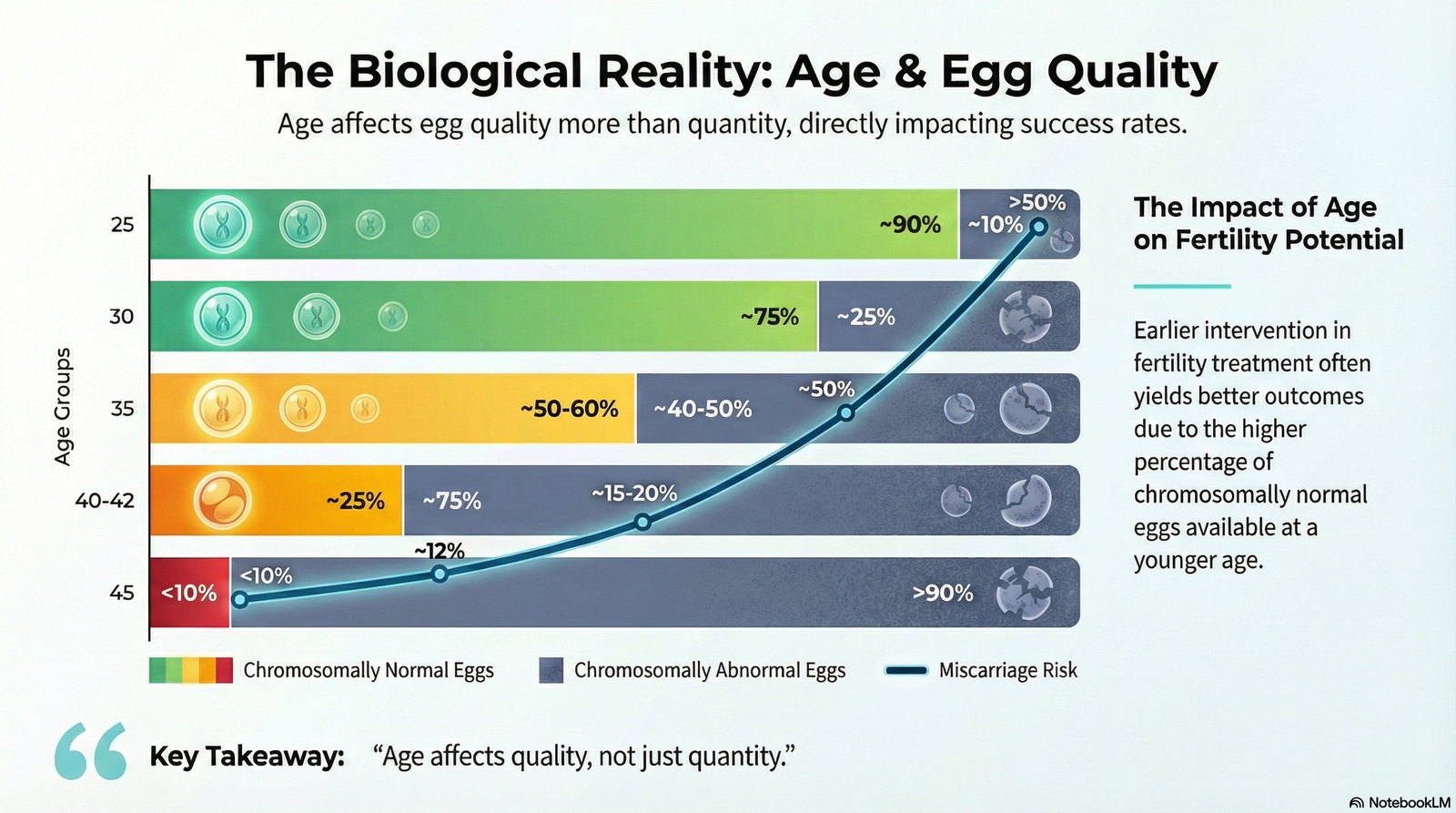
Age, egg quality, and treatment outcomes for unexplained infertility cases.
Diagnosis and Testing: Building a Proper Workup
To move from the vague label of “unexplained” toward a clear plan, you need a structured workup. If you have only been partially tested, check what is missing before concluding that there is no clear cause.
Core Tests Most Couples Need
- Full medical history: Your doctor asks about your cycles, previous pregnancies or losses, sexual habits, past infections, surgeries, and medications. It can feel personal, but it reveals patterns that lab tests alone miss.
- Semen analysis: The lab looks at semen volume, sperm concentration, movement (motility), and shape (morphology). While reference ranges have evolved, modern standards (WHO 6th Edition) generally consider a concentration of 16 million per milliliter, at least 42% motility, and 4% “strict” normal forms as the baseline for a healthy sample.
- Hysterosalpingogram (HSG): A thin catheter passes through the cervix, and dye fills the uterus and tubes. X‑rays show whether the dye spills out of the ends of the tubes, which tells you if they are open.
- Hormone testing: Blood tests on days two through five of your cycle measure FSH, estradiol, and AMH to determine how hard your brain is working to stimulate the ovaries and how much reserve remains.
- Transvaginal ultrasound: An internal scan checks the uterus for fibroids, polyps, or unusual shapes and counts small follicles in the ovaries.
When To Go Deeper
If all of the above look acceptable, but pregnancy still does not happen, your doctor may suggest more targeted tests:
- Sperm DNA fragmentation testing: Measures the percentage of sperm that have damaged DNA. Often used after recurrent miscarriage or repeated failed IVF cycles with good quality embryos.
- Scrotal or transrectal ultrasound: In men, this can detect varicoceles, cysts, and duct blockages that semen analysis cannot show.
- Testicular biopsy: A tiny sample of testicular tissue can show if sperm production is happening inside the testicle when no sperm appears in the ejaculate.
- MRI: High‑resolution imaging helps in complex structural problems, both in men and women.
- Bacterial culture: Semen or cervical swabs can reveal quiet infections such as chlamydia or ureaplasma that impair fertility and are treatable with antibiotics.
How Prognosis Tools Help
Several prediction models, including the Hunault model and later updates, use your age, duration of infertility, previous pregnancies, and sperm data to estimate your chance of natural conception over the next year. These tools have been validated in large groups of couples in Europe, New Zealand, and Australia.
If your predicted chance of natural conception is above about 30% in the next year, guidelines often support a period of expectant management. If it is below 30%, treatment such as IUI with ovarian stimulation, then IVF if needed, becomes more attractive.
Treatment Options: From Waiting To IVF And Beyond
Because the cause of unexplained infertility is not clear, treatment is based on what has been shown to work, rather than on fixing one visible defect. For most couples under age 38, the plan moves in steps, from least to most intensive.
Step 1: Expectant Management With Support
If you are under 35, have patent tubes, reasonable semen parameters, and a prediction model suggests at least a 30% chance of natural conception in the next year, a period of supported waiting can be a real option.
This does not mean you are doing nothing. It means you and your doctor agree to keep trying timed intercourse while you work on sleep, smoking, alcohol, weight, and stress, and you set a clear check‑in point, often six to 12 months later.
Step 2: Ovarian Stimulation With IUI
For many couples with unexplained infertility and a lower natural prognosis, the next step is ovarian stimulation with intrauterine insemination.
In these cycles:
- You take tablets such as clomiphene citrate or letrozole, or low doses of injectable hormones, to grow one or a few extra follicles.
- The clinic tracks follicle growth with ultrasound and blood tests.
- Around ovulation, the team places washed, motile sperm directly into your uterus with a soft catheter.
In couples with a poor prognosis for natural conception, one major trial reported about a 33% live birth rate over six months of IUI with stimulation, compared with 13% in those who continued to try at home without treatment.
The usual recommendation is three to four rounds of IUI. If you are not pregnant after that, it is time to reassess and, oftentimes, consider IVF.
Step 3: IVF, With or Without ICSI
IVF becomes a key option when IUI fails, when age is higher, or when time feels tight. In IVF, doctors stimulate your ovaries more strongly, retrieve several eggs, fertilize them in the lab, and transfer one or sometimes two embryos back into your uterus.
For unexplained infertility, the cumulative live birth rate across a planned IVF course is around 50%. That figure includes all fresh and frozen transfers until you either have a baby or complete the planned number of cycles.
ICSI, where a single sperm is injected directly into each egg, is essential for severe male factor infertility or previous total fertilization failure. In truly unexplained cases with normal semen analysis, routine ICSI does not clearly raise live birth rates over standard IVF and adds cost per cycle. Many clinics reserve ICSI for couples with specific indications.
Step 4: When Surrogacy Becomes Part of the Conversation
In a small share of couples, the main barrier is not getting embryos but carrying a pregnancy. This can include repeated implantation failure, multiple miscarriages despite chromosomally normal embryos, or significant uterine problems or medical conditions that make pregnancy unsafe.
Gestational surrogacy uses embryos created from your eggs and your partner’s sperm, donor eggs, donor sperm or a combination, and places them into another woman’s uterus. She carries the pregnancy and gives birth but is not genetically related to the baby unless donor eggs were used.
Costs depend strongly on where you live and which services you use. As a rough guide, a singleton birth via surrogacy in Cyprus may cost around 69,000 US dollars or slightly less, while in the United States, many intended parents face total costs between about 160,000 and 250,000 US dollars once they add in agency fees, legal work, medical care, and compensation.
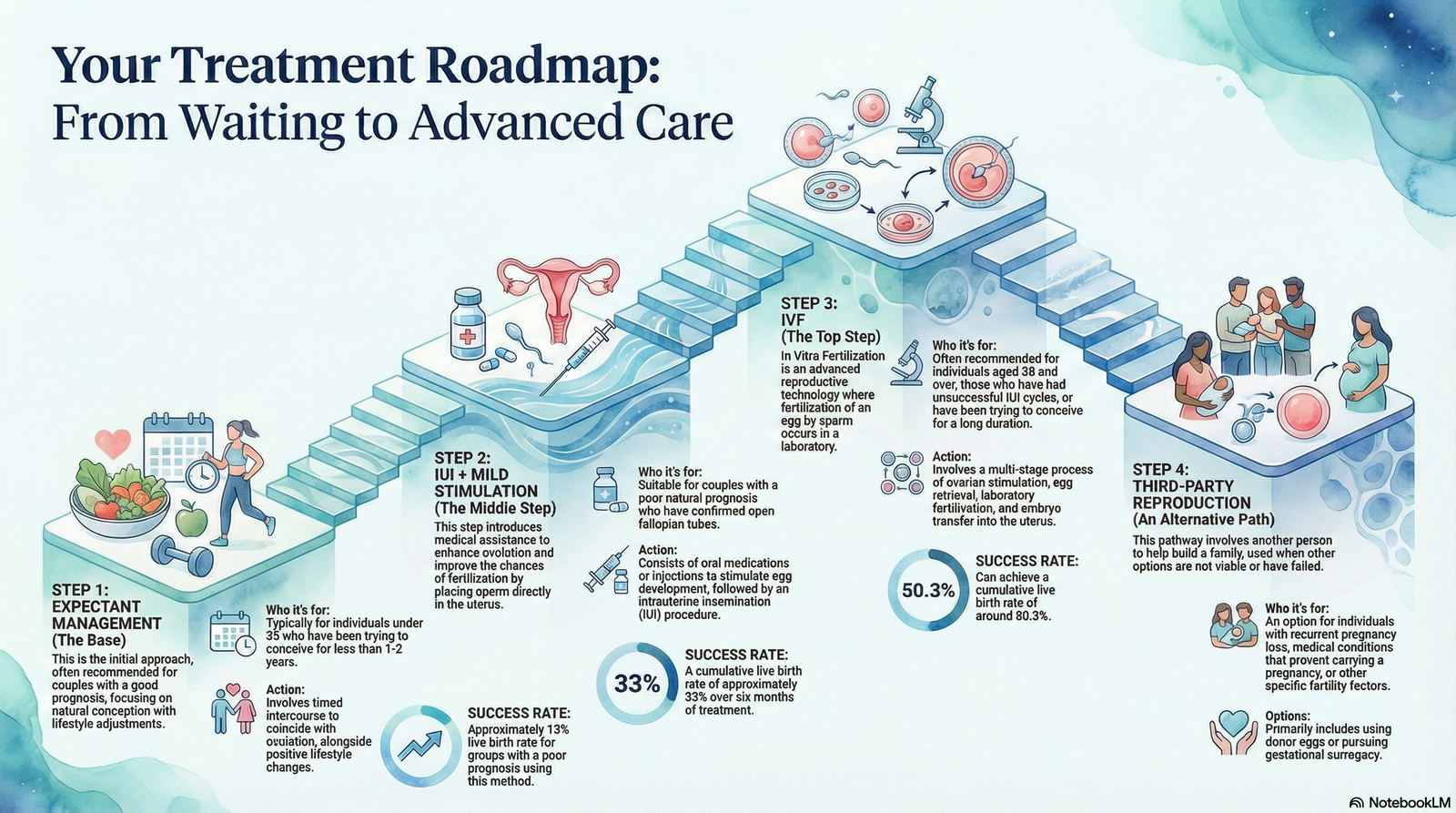
Stepwise path from expectant management to IVF and surrogacy.
Putting It All Together For Your Situation
If you are younger and your predicted natural conception chance is still reasonable, it is often safe to take a few more months before starting treatment. If your natural prognosis is low, data support moving to IUI with mild stimulation, then IVF if IUI does not work. Surrogacy and donor options sit further down the road for a much smaller group.
Your doctor’s job is to share these odds clearly, listen to how you feel about time and intensity, and then build a plan that respects both the science and your emotional bandwidth.
The Emotional Side: You Are Not Broken
Unexplained infertility is more than just a medical label. It is the exhaustion of watching the calendar, the dread of starting a period, and the quiet effort of holding it together at baby showers. It strains relationships, sparks a jealousy you never wanted to feel, and can chip away at your sense of self. If you feel this emotional blend, know that it is a reflection of the difficulty of the journey, not a lack of strength or worth.
If you feel angry at your body, numb around pregnancy announcements, or guilty because you struggle to be happy for friends, you are not a bad person. You have a normal reaction to a painful, uncertain situation.
Those inner “should” statements can be especially harsh. “I should have a baby by now.” “I should be over this.” “I should be stronger.” Try to notice that those thoughts are opinions, not facts. Infertility is a medical disease. You did not cause it by thinking the wrong thoughts or wanting a baby too much.
Ways To Protect Your Mental Health
- Short daily mindfulness: Ten to thirty minutes of simple breathing or a guided meditation can interrupt the constant mental replay of test results and two‑week waits.
- The “one happiness” rule: Build at least one small, enjoyable thing into every day. Take a walk, enjoy a cup of tea or a bottle of fresh juice, connect with someone who understands you and desires to have a conversation with you, attend a yoga class or any other non-intensive class, or watch a show that makes you laugh. Your whole day should not revolve around ovulation strips and patient portals.
- Gentle self‑questioning: When your mind says: “I will never have a baby”, ask yourself, “Is this thought helping me, or only making this feel worse?” You are not denying the fear. You are choosing not to treat it as a guaranteed outcome.
- Professional support: Fertility‑aware therapists, support groups, and online communities can help you feel less alone and give you language for conversations with partners, family, and friends.
Choosing Clinics And When To Seek Extra Help
Once you understand your diagnosis and broad options, the next challenge is to work out where and when to seek treatment. Your choice of clinic has a powerful impact on your journey; even when success rates appear similar on paper, the quality of care, communication, and emotional support can vary widely.
As you compare clinics, pay attention to:
- How clearly they explain success rates for couples like you, not just overall numbers
- Whether they use prediction tools and guidelines from groups like ESHRE and ASRM
- Their approach to IUI versus IVF, and whether they push you quickly into the most expensive options
- What support do they offer for the emotional side, including counselling referrals and support groups
- How transparent they are about itemized costs, including medications, lab work, and optional add‑ons
OVU Expert Guidance
If you feel stuck choosing between waiting, IUI, and IVF, it may help to think in stages. First, ask your clinic to calculate your natural conception prognosis with a validated tool. Next, look at how IUI and IVF change your odds, your timeline, and your costs. Then decide what level of intensity feels acceptable to you for the coming 6 to 12 months timeline.
Many couples feel less overwhelmed when they frame the plan as “the next two or three steps”, not “every possible step I might ever take”. You can always adjust as new information comes in.
Want help comparing clinics and costs?
If this already feels like a full‑time job, you are not imagining it. Our advisors can gather clear, itemized quotes from verified clinics, explain likely timelines, and help you understand your options, at no cost to you.

Why trust this guide? The OVU commitment
You are probably juggling hope, timelines, and a lot of tabs open in your browser. And you deserve clear, current, human advice. At OVU, we review clinic protocols, compare real quotes, and talk to people who have done this - intended parents and gestational carriers - so we can give you practical steps, not just theory. If you want help comparing options without sales pressure, we will gather itemized quotes and success data that match your exact situation. You decide, we will bring the info to your table.
Frequently Asked Questions
Does stress cause my unexplained infertility?
Severe, long‑lasting stress can disrupt hormone patterns and sometimes affect cycles, but research has not proved that stress alone causes unexplained infertility. The stress that follows infertility is very real, though. It can make it harder to keep going with treatment and to cope with everyday life. Getting support for your mental health is part of good fertility care, not a side issue.
My AMH is low. Does that mean I am sterile?
No. Low AMH indicates that your ovaries have fewer eggs remaining and that you may respond less strongly to fertility medications. It does not mean you have a zero chance of pregnancy. Many women, especially younger ones, can still conceive naturally or with treatment despite a low AMH. Your age and overall health are often stronger predictors of success than AMH alone.
Is IUI better than just trying at home?
For couples with a low predicted chance of natural conception, yes. In one major trial, couples with a poor prognosis had about a 33% live birth rate with IUI and medication over six months, compared with 13% when they kept trying without treatment. If your natural prognosis is higher, IUI does not always add much. Your doctor can help you weigh the effort and cost against your personal odds.
Should I skip IUI and go straight to IVF?
For many couples under about 38, it makes sense to do three to four IUI cycles first, because they are less invasive and less expensive. If you are older, have been trying for a long time, or have other risk factors, your doctor may advise moving directly to IVF to save time and increase your per‑cycle odds. The right choice depends on your age, your tests, your budget, and how fast you want to move.
How much does ICSI cost, and do I actually need it?
ICSI often adds around 1,500 US dollars to the lab fees of an IVF cycle. If semen tests are normal and your only diagnosis is unexplained infertility, routine ICSI does not clearly improve your chance of having a baby. It is usually reserved for severe male factor infertility, previous total fertilization failure, or specific lab concerns. Ask your clinic why they recommend ICSI if they do, and how it changes your odds.
Can lifestyle changes still help if the cause is “unexplained”?
Yes. Reducing smoking and alcohol, improving sleep, and managing weight can lower oxidative stress in the body, which improves both sperm DNA and the “microenvironment” surrounding the eggs. While these changes are not a guarantee of pregnancy, they minimize avoidable risk factors and can optimize your body’s response to medical treatments.
What is the vanishing sac phenomenon?
In early scans of multiple pregnancies, one sac sometimes disappears on later ultrasounds. This is called a “vanishing twin” or “vanishing sac”. It shows that even after seeing an early heartbeat, not every embryo will make it to birth. It is common and usually does not mean something is wrong with the remaining baby, but it can be emotionally difficult, especially after infertility.
Reference List 10 sources
Guideline (Research-Based): Romualdi D, Ata B, Bhattacharya S, et al. Evidence-based guideline: unexplained infertility. Human Reproduction. 2023;38(10):1881-1890. PMID: 37599566. Available from: https://pubmed.ncbi.nlm.nih.gov/37599566/
Guideline (Research-Based): Practice Committee of the American Society for Reproductive Medicine. Evidence-based treatments for couples with unexplained infertility: a guideline. Fertility and Sterility. 2020;113(2):305-322. PMID: 32106976. Available from: https://pubmed.ncbi.nlm.nih.gov/32106976/
Journal Article (Research): Lai S, Wang R, van Wely M, et al. IVF versus IUI with ovarian stimulation for unexplained infertility: a collaborative individual participant data meta-analysis. Human Reproduction Update. 2024;30(2):174-185. PMID: 38148104. Available from: https://pubmed.ncbi.nlm.nih.gov/38148104/
Journal Article (Systematic Review & Meta-Analysis): Wessel JA, Danhof NA, van Eekelen R, et al. Ovarian stimulation strategies for intrauterine insemination in couples with unexplained infertility: a systematic review and individual participant data meta-analysis. Human Reproduction Update. 2022;28(5):733-746. PMID: 35587030. Available from: https://pubmed.ncbi.nlm.nih.gov/35587030/
Journal Article (Research): Wessel JA, Mochtar MH, Besselink DE, et al. Expectant management versus IUI in unexplained subfertility and a poor pregnancy prognosis (EXIUI study): a randomized controlled trial. Human Reproduction. 2022;37(12):2808-2816. PMID: 36331493. Available from: https://pubmed.ncbi.nlm.nih.gov/36331493/
Journal Article (Editorial/Overview): Shingshetty L, Wang R, Feng Q, Maheshwari A, Mol BW. Prognosis-based management of unexplained infertility, why not? Human Reproduction Open. 2024;2024(2):hoae015. PMID: 38716407. Available from: https://pubmed.ncbi.nlm.nih.gov/38716407/
Journal Article (Systematic Review & Meta-Analysis): Wang R, Danhof NA, Tjon-Kon-Fat RI, et al. Interventions for unexplained infertility: a systematic review and network meta-analysis. Cochrane Database of Systematic Reviews. 2019;2019(9):CD012692. PMID: 31486548. Available from: https://pubmed.ncbi.nlm.nih.gov/31486548/
Journal Article (Systematic Review & Meta-Analysis): Ayeleke RO, Asseler JD, Cohlen BJ, Veltman-Verhulst SM. Intra-uterine insemination for unexplained subfertility. Cochrane Database of Systematic Reviews. 2020;3(3):CD001838. PMID: 32124980. Available from: https://pubmed.ncbi.nlm.nih.gov/32124980/
Journal Article (Systematic Review & Meta-Analysis): Wang R, Welie N, van Rijswijk J, et al. Effectiveness on fertility outcome of tubal flushing with different contrast media: systematic review and network meta-analysis. Ultrasound in Obstetrics & Gynecology. 2019;54(2):172-181. PMID: 30740799. Available from: https://pubmed.ncbi.nlm.nih.gov/30740799/
Journal Article (Research): Zhang J, Lan W, Wang Y, et al. Ethiodized poppyseed oil-based contrast medium is superior to water-based contrast medium during hysterosalpingography regarding image quality improvement and fertility enhancement: a multicentric randomized and controlled trial. EClinicalMedicine. 2022;46:101363. PMID: 35399811. Available from: https://pubmed.ncbi.nlm.nih.gov/35399811/
Final Thoughts
Unexplained infertility is not only about test results and treatment plans. It is about who you thought you would be by now, the family you imagined, and the patience you never planned to need. It is okay to feel tired of being strong.
Even so, an unexplained infertility diagnosis is not a hopeless case. Many couples find themselves in this exact situation and go on to have a baby with time, treatment, and support. Some succeed with a few extra months of trying and simple lifestyle changes; others require IUI, IVF, or, in some cases, surrogacy or donor options. No matter which path leads you to your child, it doesn't make you any less of a parent.
You do not have to stay positive all the time. You do not have to make peace with every step before you take it. You only need to keep taking the next honest step that feels right for you, ask every question you need to ask, and treat yourself with the same kindness you would offer a close friend in your place.