


Dr. Sony Sherpa (MBBS)
In addition to her clinical experience, Dr. Sherpa is a published medical researcher and holistic health advocate. Her dual expertise in emergency care and alternative therapies brings a unique lens to medically reviewed content—ensuring it is both accurate and accessible.
“Am I fertile or not?” If you have asked yourself this after months of trying, you are not alone. You might be tracking your cycle with apps, reading every symptom, and still feel like you are guessing. Infertility is often silent on the outside, but inside, you live with a lot of worry and unanswered questions. Often, the answer to those questions begins with a single process: ovulation.
That “guessing” usually points to a specific physiological hurdle. Ovulation disorders are the single most common cause of female infertility and account for about 40% to 50% of cases. If you have irregular periods, no periods at all, or a diagnosis such as polycystic ovary syndrome (PCOS), understanding how ovulation works gives you a starting point and, more importantly, a sense of control.
Doctors now have solid data and clear guidelines for many ovulation problems, from polycystic ovary syndrome (PCOS) to premature ovarian insufficiency (POI) and functional hypothalamic amenorrhea (FHA). You are not guessing in the dark. There are specific tests, proven medications, and clear next steps that you and your fertility team can use together.
Ovulation disorders cause up to half of all female infertility. The good news is that many women conceive with targeted treatment such as letrozole, lifestyle changes, and, when needed, assisted reproduction. If your cycles are irregular, very long, very short, or absent, it is time to ask for a focused workup of your hormones, ovaries, and thyroid so you can move from guessing to a clear plan.
Next step: If you are under 35 and have tried for 12 months, or 35 and older and have tried for 6 months, talk to a fertility specialist about an ovulation-focused evaluation.
What the Latest Research Shows
Recent trials in women with PCOS (polycystic ovary syndrome) show that letrozole leads to significantly more live births than clomiphene, approximately 28% compared to 19%. Based on this evidence, international guidelines now recommend letrozole as the first-line treatment for anovulatory PCOS. Furthermore, high-quality studies confirm that stress-focused therapy can successfully restart ovulation in cases of Functional Hypothalamic Amenorrhea (FHA), and that treating high prolactin levels is safe and does not increase the risk of birth defects.
All research citations in this guide include PubMed links, allowing you and your doctor to review the original data together.
In This Guide
Ovulation disorders cause about 40–50% of female infertility cases.
PCOS affects 8–13% of women of reproductive age.
Under 35: after 12 months of trying.
35 or older: after 6 months of trying.
Letrozole is now the recommended first-line tablet for anovulatory PCOS.
It outperforms clomiphene on live birth rates.
What Are Ovulation Disorders?
Your ovaries store and release eggs and also produce ovarian hormones, primarily estrogen and progesterone. At birth, you carry about 1 to 2 million eggs in your ovarian reserve. By puberty, this number drops to around 300,000–500,000. From then on, you lose about 1,000 eggs each month, even if you are on birth control or pregnant.
To know whether you are ovulating, it helps to understand the timing of your eggs. Roughly 14 days after the first day of your period, one of your ovaries releases a mature egg, and this event is known as ovulation. While the ovaries usually release one egg per month, they can occasionally release multiple eggs simultaneously, a phenomenon known as hyperovulation, which is how fraternal twins or triplets are conceived.
Regardless of how many eggs are released, a standard menstrual cycle lasts about 28 days, though anything from 21 to 35 days counts as normal if the pattern is steady for you. If a sperm reaches the egg in the fallopian tube, fertilization happens; if not, the uterine lining sheds, and the cycle starts again.
An ovulation disorder occurs when this timing breaks down. If your cycle consistently falls outside the 21–35 day range or varies wildly, it often means the body is struggling to release an egg. These disorders include cycles with no egg release, very rare ovulation, or ovulation that happens too early or too late to give sperm a fair chance to meet the egg.
Latest Research Insights
27.5% vs. 19.1% – Letrozole Live-Birth Edge: In a large trial of 750 women with PCOS, letrozole led to about 28 live births per 100 women, compared with 19 per 100 using clomiphene. You are roughly one-third more likely to take home a baby with letrozole as first-line ovulation induction. Source: The New England Journal of Medicine (PMID: 25006718).
25% vs. 11% – Real-World Letrozole Gains: A randomized trial from 2016–2020 in Pakistan found letrozole almost doubled live birth rates compared with clomiphene (25% vs. 11%). Pregnancy rates also rose from 15% to 29%, without extra miscarriage or birth defects. This means your chances look better with letrozole even in busy public hospital settings. Source: Pakistan Journal of Medical Sciences (PMID: 38196458).
1.4× Higher Live Birth – Meta-Analysis Verdict: When researchers pooled data from over 3,900 women with PCOS, letrozole gave clearly higher live birth and pregnancy rates than clomiphene. In simple terms, more women got pregnant and delivered using letrozole as their first pill. This backs up using letrozole as the standard first choice when you have PCOS-related ovulation problems. Source: Human Reproduction Update (PMID: 31647106).
“Should Be First-Line” – Guideline Backing: The 2023 international PCOS guideline, written by experts from 71 countries, now recommends letrozole as the first-line drug for women with PCOS and anovulatory infertility. The same guideline reassures you that many women with PCOS ultimately conceive, either naturally or with simple oral ovulation pills. Knowing your treatment is guideline-backed can make your decision feel safer and more confident. Source: European Journal of Endocrinology (PMID: 37580861).
These findings come from peer-reviewed research. Your results depend on your personal situation. Talk with your fertility specialist about how this applies to you.
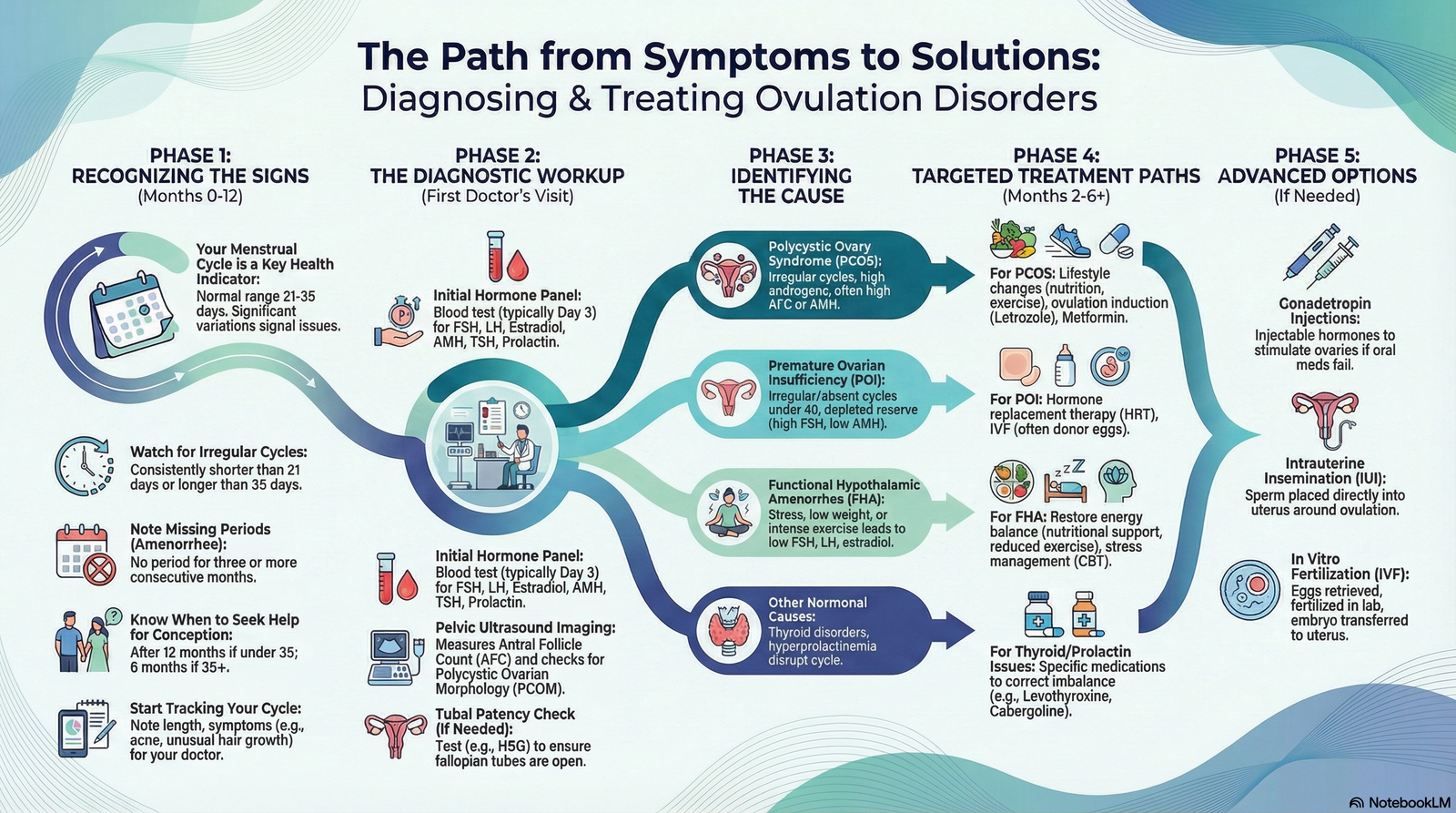
From first symptoms to starting treatment: typical stages in diagnosing and managing ovulation disorders.
Quick Facts at a Glance
Here are a few anchor numbers to help you place your own situation:
- PCOS affects about 8–13% of women of reproductive age worldwide.
- Up to 90% of women with PCOS have chronic anovulation.
- Premature ovarian insufficiency affects about 3.5–3.7% of women.
- In non-hirsute women with 21–35 day cycles, 99.5% of cycles are ovulatory.
PCOS and Ovulation Problems
If you have irregular periods, acne, or extra hair on your face or body, you may already have heard about polycystic ovary syndrome (PCOS). It is the most frequent cause of anovulation. Up to 90% of women with PCOS have chronic anovulation, which means they do not release an egg on a regular basis.
How PCOS Is Diagnosed
Right now, most specialists use the Rotterdam criteria. PCOS is diagnosed when you meet at least two of these three:
- Oligo-ovulation or anovulation: irregular or absent periods.
- Hyperandrogenism: signs such as hirsutism or acne, or blood tests that show elevated testosterone.
- Polycystic ovarian morphology (PCOM): ovaries with many small follicles on ultrasound.
International guidelines updated in 2018 and 2023 changed the ultrasound definition of PCOM. With a high-frequency transducer of 8 MHz or higher, PCOM now means at least 20 follicles in one ovary. With older or lower-frequency probes, the older threshold of 12 follicles still applies.
How PCOS Affects Your Overall Health
PCOS is tightly linked to insulin metabolism and long-term health. About 65–70% of women with PCOS have insulin resistance. High insulin levels then push your ovaries to make more androgens, which worsen symptoms such as irregular cycles and hair growth.
Studies also show that women with PCOS have about 15% higher ferritin levels, which reflect iron storage. This likely comes from less blood loss during periods when cycles are rare or very light.
| Medication | Live births per 100 women with PCOS | Typical use in anovulatory PCOS |
|---|---|---|
| Letrozole | 27.5–28 | First-line ovulation induction tablet |
| Clomiphene citrate | 19 | Older first-line tablet, now the second choice |
These numbers are averages from large trials. Your own chance will depend on your age, BMI, partner’s sperm health, and whether you have other conditions such as thyroid disease or diabetes.
Premature Ovarian Insufficiency (POI)
If you are younger than 40 and your cycles have become irregular, very short, or have stopped, POI is one of the conditions your doctor will look for. POI is different from natural menopause. Menopause usually happens around age 51. In POI, the ovaries lose function earlier and sometimes only on and off.
What POI Means for Your Health
POI affects more than fertility. Without hormone therapy, it carries several long-term risks:
- Heart health: higher risk of cardiovascular disease and shorter life expectancy driven largely by heart disease.
- Bone health: lower bone mineral density and higher risk of osteoporosis and fractures.
- Brain health: higher risk of cognitive decline and dementia.
- Sexual and urinary health: vaginal dryness, painful sex, and urinary symptoms caused by low estrogen.
Family History and Genetics
POI often runs in families. If your mother or sister has POI, your own risk is about 18 times higher than in women without that family history. Because of this, specialists recommend genetic testing for all women with POI that is not caused by surgery or chemotherapy. This testing usually includes:
- Chromosomal analysis (karyotype).
- FMR1 premutation testing for Fragile X, which can link to POI.
More Evidence on Ovulation Disorders
99.5% Ovulate Regularly – What Periods Show: ASRM guidance notes that almost all women with steady, 21–35 day cycles and no excess hair growth are ovulating. If your cycles are regular, your ovulation is very likely fine, and testing can focus on other causes. This helps you avoid unnecessary hormone tests and invasive procedures. Source: Fertility and Sterility (ASRM Committee Opinion) (ASRM 2021 Fertility Evaluation Guideline).
10–13% Women Affected – PCOS Is Common, Treatable: The 2023 international PCOS guideline estimates that about 1 in 8 women worldwide meet PCOS criteria. The same document emphasizes that many women with PCOS do achieve pregnancy, often with simple lifestyle steps and first-line ovulation pills. Knowing PCOS is common and well-studied can make your diagnosis feel less isolating and more manageable. Source: European Journal of Endocrinology (PMID: 37580861).
3 in 4 With Smooth Pregnancies – Prolactin Treatment Safety: In a 20-year cohort of women treated for high prolactin, about 3 in 4 had pregnancies without any complications, whether they used cabergoline or bromocriptine. There was no increase in birth defects or serious newborn problems. If high prolactin is causing your ovulation disorder, this reassures you that correcting it is usually safe for you and your baby. Source: Revista da Associação Médica Brasileira (PMID: 39536251).
24-Hour Cortisol Lowered – CBT’s FHA Impact: In women with functional hypothalamic amenorrhea, cognitive-behavioral therapy lowered round-the-clock cortisol levels and improved key hormones like leptin and TSH. The same research group has shown that CBT can help ovarian activity resume in many women. This means working on stress, eating, and beliefs about control can directly support your brain–ovary connection and bring periods and ovulation back. Source: Fertility and Sterility (PMID: 23507474).
7% Pregnancy With Own Eggs – POI Reality Check: A 2024 study of 139 women with primary ovarian insufficiency found only about 7 in 100 became pregnant using their own eggs through IVF-type treatments. Donor-egg cycles had far higher success, especially for women with very high FSH and very low AMH. If you have POI, this helps you weigh the emotional value of trying with your own eggs against the time, cost, and success of moving earlier to donor eggs. Source: Frontiers in Endocrinology (PMID: 38745952).
These findings come from peer-reviewed research. Your results depend on your personal situation. Discuss what this means for you with your fertility specialist.
Functional Hypothalamic Amenorrhea (FHA)
If your periods stop during stressful periods of life or intense training blocks, FHA is a likely explanation. In the FHA, your brain slows or stops the signals to your ovaries to conserve energy. Your body reads high stress or low fuel as a poor time for pregnancy.
Typical triggers include:
- High exercise load, roughly 65% of women in some studies cite this.
- Severe emotional stress.
- Low energy intake, often linked to strict food rules or eating less than about 1,500 calories per day for a sustained period.
Trials show that cognitive behavioral therapy (CBT) effectively helps women with FHA. In this setting, CBT focuses on thoughts regarding control, body image, eating habits, and stress. Research demonstrates that CBT lowers 24-hour cortisol levels and improves hormone patterns; earlier work from the same group showed that ovulation often resumes once these physiological patterns are restored.
How Ovulation Disorders Are Diagnosed
If you are under 35 and have tried to conceive for 12 months without success, or you are 35 or older and have tried for 6 months, it is time for a fertility evaluation. If you have very irregular or absent cycles, you do not have to wait that long. You can ask for a workup earlier.
Key Hormone Tests
- Day 3 FSH (follicle-stimulating hormone): This hormone comes from your brain and tells your ovaries to mature an egg. A value between 2 and 8.9 IU/L is usually considered normal. Higher levels point to lower ovarian reserve or POI.
- Estradiol (E2): Doctors typically measure this hormone alongside FSH on Day 2 or 3 of the cycle. A high estradiol level early in the cycle (above 60–80 pg/mL) can artificially suppress and “hide“ a high FSH level, potentially indicating issues with ovarian reserve or egg quality.
- Anti-Müllerian hormone (AMH): Produced by the cells surrounding your eggs, AMH reflects your “ovarian reserve,” or the size of your remaining egg supply. Unlike other hormones, AMH is stable throughout the month and can be tested on any day of your cycle. Many clinics view 1.2 ng/mL or higher as a reassuring sign of a healthy ovarian reserve for women under 35. Results below that range call for more careful planning of fertility treatment.
- Progesterone: A progesterone level above 3 ng/mL about a week before your expected period confirms that you ovulated in that cycle.
Imaging and Procedures
- Antral follicle count (AFC): A transvaginal ultrasound counts the small resting follicles in each ovary. A typical total count is around 7–10 follicles. Very low counts suggest a reduced ovarian reserve. Very high counts suggest PCOS.
- Hysterosalpingography (HSG): This is an X-ray with a dye that flows through your uterus and tubes. It shows whether your fallopian tubes are open and whether the uterine cavity looks normal.
- Ovarian MRI: MRI is not a first-line test in adults, but it is gaining interest in teenagers with suspected PCOS because it can show follicles and ovarian size without radiation or invasive probes.
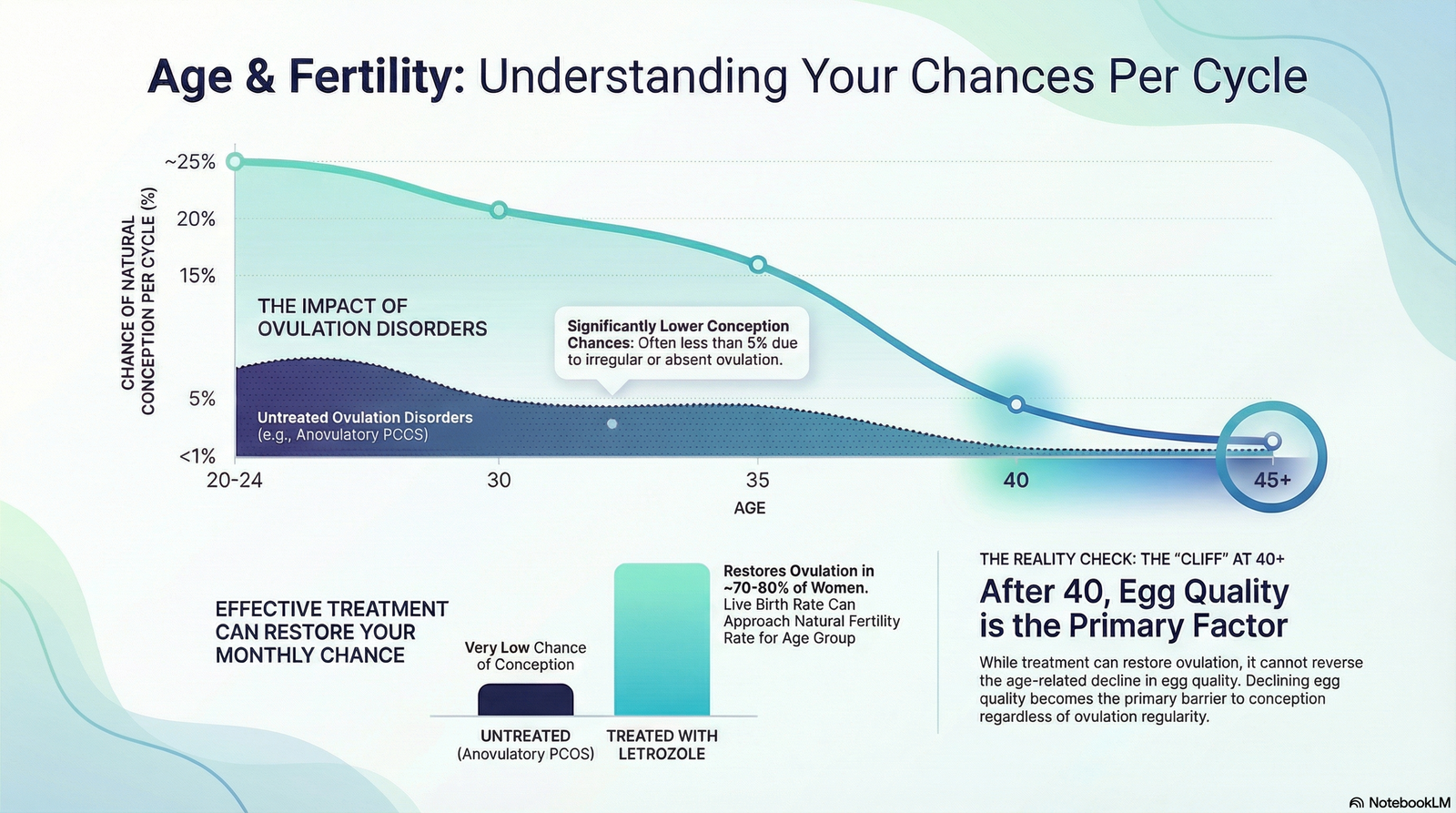
Age, ovulation disorders, and treatment options: how your chances per-cycle change over time.
Treatment Options and Success Rates
The aim of treatment is straightforward. You and your team want to restore reliable ovulation, give sperm and egg a fair chance to meet, and keep the risk of multiples (twins or more) as low as possible. Your specific plan depends on your diagnosis, age, weight, partner's sperm health, and your own priorities.
1. Tablets for Ovulation Induction
- Letrozole: Current international guidelines name letrozole as the first choice for women with PCOS and anovulatory infertility. In the landmark NEJM trial, letrozole led to a 27.5% live birth rate, compared with 19.1% for clomiphene. Real-world data from Pakistan show similar results, with live births in 25.4% of women on letrozole and 10.9% on clomiphene.
- Clomiphene citrate: This long-standing drug makes your brain sense less estrogen and, in turn, pushes out more FSH. Many women ovulate on clomiphene, but live birth rates are lower than with letrozole.
- Combination with metformin: In some studies, adding metformin to letrozole has raised clinical pregnancy rates to about 32.7%, compared with 18.9% for letrozole alone, especially in women with a BMI under 30. Metformin also helps address insulin resistance in PCOS.
2. Gonadotropin Injections
If oral tablets do not lead to ovulation or pregnancy, your doctor may suggest injectable FSH (follicle-stimulating hormone), sometimes combined with LH. These medications stimulate the ovaries directly. Because they are more potent and can prompt the ovaries to produce more than one mature follicle, you will need regular ultrasound scans and hormone monitoring. This careful clinical management reduces the risk of multiple pregnancy and ovarian hyperstimulation syndrome (OHSS) – a serious condition where the ovaries become painfully enlarged and fluid-filled, which can require specialized medical treatment or even emergency surgery to restore function.
3. Assisted Reproductive Technology (ART)
- Intrauterine insemination (IUI): In IUI, the lab washes and concentrates sperm, then places them directly into your uterus around the time of ovulation. IUI is less invasive and less costly than IVF and is often combined with tablets or low-dose gonadotropins.
- In vitro fertilization (IVF): IVF collects mature eggs from your ovaries, mixes them with sperm in the lab, and then transfers an embryo to your uterus. For women with POI, IVF with donor eggs often gives far higher pregnancy and live birth rates than any attempt to use their own eggs. In one recent POI study, only 7.2% of women who used their own eggs conceived, which helps you and your doctor have an honest discussion about when to consider donation.
4. Experimental and Emerging Approaches
Platelet-rich plasma (PRP): Researchers are studying injections of PRP directly into the ovaries in women with poor response or POI. In a 2025 study, intraovarian PRP improved egg maturation from 65.8% to 80.8%, and fertilization from 61.6% to 75.8%. These approaches are still considered experimental and are not part of standard care.
OVU Expert Guidance: When to See a Specialist
If your cycles are irregular, longer than 35 days, shorter than 21 days, or have stopped completely, you do not have to “wait it out” for a year before asking for help. Early testing for hormones, ovarian reserve, and tubal patency lets you use your time and money wisely. A fertility specialist can also help you decide whether it makes sense to start with tablets, move to IUI, or go straight to IVF based on your age, diagnosis, and your goals.
Want help comparing clinics and costs?
If this feels like a full-time job, and it often does, our advisors can collect clear, itemized quotes from verified clinics and map your options and timing with you at no cost.
Emotional and Practical Considerations
Hearing that you have an ovulation disorder can feel heavy and unfair. At the same time, that label often becomes the turning point, because now you and your doctor know what to treat. Many women with PCOS, FHA, POI, thyroid disease, or high prolactin go on to conceive.
Your plan might include lifestyle changes, tablets such as letrozole, injectables, IUI, IVF, or donor eggs. It can also include emotional support and counseling, because this process is demanding. When you understand what is happening with your cycle and you have a clear plan in place, you are not just waiting and hoping. You are taking thoughtful steps toward the pregnancy you want.

Why trust this guide? The OVU commitment
You are probably juggling hope, timelines, and a lot of tabs open in your browser. And you deserve clear, current, human advice. At OVU, we review clinic protocols, compare real quotes, and talk to people who have done this - intended parents and gestational carriers - so we can give you practical steps, not just theory. If you want help comparing options without sales pressure, we will gather itemized quotes and success data that match your exact situation. You decide, we will bring the info to your table.
Frequently Asked Questions
Can you get pregnant with only one working fallopian tube?
Yes. If you have at least one open tube and one functioning ovary, and your periods are regular, pregnancy is possible. The tubes are mobile and can pick up an egg from either side. Your doctor can confirm tubal patency with tests such as HSG.
Does stress cause infertility?
Infertility definitely causes stress, and in FHA, long-term stress and low energy clearly affect ovulation. In FHA, high cortisol levels and low fuel dampen the brain signals that trigger ovulation. Not all stress stops ovulation, but when periods stop in the setting of weight loss, intense exercise, or high pressure, FHA is a strong possibility.
Is “subfertility” different from “infertility”?
In practice, the two words now mean the same thing. Both describe trouble conceiving. “Sterility” is the term for a permanent inability to conceive, such as after removal of both ovaries or tubes.
What does “egg quality” actually mean?
Egg quality refers to the likelihood that an egg can successfully develop into an embryo, implant, and grow into a healthy pregnancy. It is closely tied to age. You can picture each egg as having a “battery” that powers cell division. As you get older, more eggs run out of charge before implantation. This is why age matters so much for treatment decisions.
How do your chances of pregnancy change with age?
In your early 20s, the chance of conception per cycle is about 25%. This declines after 35. By the early 40s, the chance per cycle drops to around 5%. In the mid-to-late 40s, it falls further to about 1–2% per cycle, even when you are still having periods. These figures help you and your doctor decide how fast to move and which treatments to consider.
Can you have regular periods without ovulating?
It can happen, but it is rare. In one classic analysis, 99.5% of women with regular cycles (between 21 and 35 days) who had no signs of hirsutism (excessive hair growth) were ovulating. Essentially, if your cycles are regular and you do not have signs of high androgens (male-pattern hormones), ovulation is very likely.
What are the indirect costs of fertility care?
Beyond the clinic invoices, time and travel add up. One study found that patients spent a median of about $3,125 and around 108 hours on visits, procedures, time off work, and navigating insurance. Understanding this helps you plan not only medically but also financially and emotionally.
Reference List 8 sources
Journal Article (Research): Legro RS, Brzyski RG, Diamond MP, et al. Letrozole versus clomiphene for infertility in the polycystic ovary syndrome. N Engl J Med. 2014;371(2):119-129. PMID: 25006718. Available from: https://pubmed.ncbi.nlm.nih.gov/25006718/
Journal Article (Research): Wasim T, Nasrin T, Zunair J, Irshad S. Efficacy of Letrozole vs Clomiphene Citrate for induction of ovulation in women with polycystic ovarian syndrome. Pak J Med Sci. 2024;40(1 Pt 1):78-83. PMID: 38196458. Available from: https://pubmed.ncbi.nlm.nih.gov/38196458/
Journal Article (Meta-Analysis): Wang R, Li W, Bordewijk EM, et al. First-line ovulation induction for polycystic ovary syndrome: an individual participant data meta-analysis. Hum Reprod Update. 2019;25(6):717-732. PMID: 31647106. Available from: https://pubmed.ncbi.nlm.nih.gov/31647106/
Committee Opinion (Guidance): Teede HJ, Tay CT, Laven JJE, et al. Recommendations from the 2023 International Evidence-based Guideline for the Assessment and Management of Polycystic Ovary Syndrome. Eur J Endocrinol. 2023;189(2):G43-G64. PMID: 37580861. Available from: https://pubmed.ncbi.nlm.nih.gov/37580861/
Committee Opinion (Guidance): Practice Committee of the American Society for Reproductive Medicine. Fertility evaluation of infertile women: a committee opinion. Fertil Steril. 2021;116(5):1255-1265. Available from: https://www.asrm.org/practice-guidance/practice-committee-documents/fertility-evaluation-of-infertile-women-a-committee-opinion-2021/
Journal Article (Research): Berga SL, Loucks TL, et al. Neuroendocrine recovery initiated by cognitive behavioral therapy in women with functional hypothalamic amenorrhea: a randomized, controlled trial. Fertil Steril. 2013;99(7):2084-2091.e1. PMID: 23507474. Available from: https://pubmed.ncbi.nlm.nih.gov/23507474/
Journal Article (Research): Santos AC, Yela DA, Nakamura RM, et al. Does hyperprolactinemia treatment affect pregnancy and perinatal outcomes? Rev Assoc Med Bras (1992). 2024;70(10):e20240634. PMID: 39536251. Available from: https://pubmed.ncbi.nlm.nih.gov/39536251/
Journal Article (Research): Sun B, Li L, Zhang Y, Wang F, Sun Y. Pregnancy outcomes in women with primary ovarian insufficiency in assisted reproductive technology therapy: a retrospective study. Front Endocrinol (Lausanne). 2024;15:1343803. PMID: 38745952. Available from: https://pubmed.ncbi.nlm.nih.gov/38745952/
Final Thoughts
An ovulation disorder diagnosis can feel like a heavy label, but it often becomes the key that unlocks a clear plan. Once you know whether PCOS, POI, FHA, thyroid disease, or high prolactin is involved, you and your team can target the actual problem instead of guessing month after month.
Your story is not over at the diagnosis. Whether your path runs through lifestyle shifts, letrozole, IUI, IVF, or donor eggs, you still have options on the table. By understanding your body’s signals and working with specialists who respect your goals and limits, you can move through this with more confidence and less confusion.
Ready to talk through your options?
You do not have to map this out on your own. Connect with an OVU advisor to review your diagnosis, compare clinics, and sketch out realistic next steps that fit your life.