


Dr. Sony Sherpa (MBBS)
In addition to her clinical experience, Dr. Sherpa is a published medical researcher and holistic health advocate. Her dual expertise in emergency care and alternative therapies brings a unique lens to medically reviewed content—ensuring it is both accurate and accessible.
Diagnosed with PCOS and wondering what it means for your fertility? If you have been struggling to conceive or have just been told you have polycystic ovary syndrome, it is completely normal to feel frustrated, anxious, and unsure of what comes next. You might be asking yourself, “Am I ever going to get pregnant?” or “Why is my body acting this way?”
You are far from alone. Nearly seven million women in the United States face infertility, and PCOS is the most common cause of anovulatory infertility, responsible for about 80% of cases where you are not ovulating. The path can feel complicated, but modern reproductive medicine offers clear, tested treatments that help many women have healthy pregnancies.
In this guide, you will see what the data actually shows, how PCOS affects your reproductive system, and what practical steps you can take to improve your health and your chances of having a baby.
PCOS is a common hormone and metabolic condition that often disrupts ovulation. This can make it harder for you to get pregnant, but many women with PCOS conceive with help from lifestyle changes, ovulation medications, and, when needed, IVF. First-line treatment usually starts with small, realistic changes in weight and activity, combined with medications such as letrozole to trigger ovulation.
Next step: If your cycles are irregular and you have been trying to conceive for 6 to 12 months, book a fertility consult so a specialist can check your hormones, rule out other causes, and build a clear plan with you.
What the latest research shows about PCOS and fertility
Recent studies in journals such as The New England Journal of Medicine, Fertility and Sterility, and BJOG show that women with PCOS respond well to fertility treatments. Letrozole gives higher live birth rates than clomiphene, and non-obese women with PCOS can reach cumulative IVF live birth rates around 74%, compared with about 62% in women without PCOS.
At the same time, these studies confirm higher risks of miscarriage, gestational diabetes, and high blood pressure in pregnancy. This is why current international guidelines treat PCOS as both a fertility and a long-term health condition and recommend close monitoring before and during pregnancy.
In This Guide
PCOS affects about 6–10% of women worldwide, and some studies suggest up to 20%, depending on the criteria.
PCOS accounts for about 80% of anovulatory infertility, but many women conceive with treatment.
Non-obese women with PCOS can reach around 74% cumulative live birth rates after IVF.
Quick Facts About PCOS and Fertility
Here are some numbers that help you see the landscape more clearly before you dive into details.
- Prevalence: PCOS affects about 6% to 10% of women worldwide when doctors use standard criteria, and some studies report rates up to 12% to 20% depending on the population.
- Anovulation: Around 90% to 95% of adults with PCOS have irregular periods or no periods, which is the main reason you may struggle to conceive.
- Insulin resistance: Between 65% and 85% of women with PCOS have insulin resistance that feeds into hormone imbalance.
- Ovulation medication success: In a major trial, 27% of women with PCOS had a live birth on letrozole compared with 19% on clomiphene.
- IVF success: Non-obese women with PCOS reached about 74% cumulative live birth after IVF, compared with about 62% in women without PCOS.
- Diagnostic markers: Current guidelines allow AMH levels to substitute for ultrasound in adults when checking for polycystic ovarian morphology.
How PCOS Affects Ovulation
To understand why PCOS affects your fertility, it helps to know how things work when cycles are regular. Your ovaries have two main jobs: releasing eggs and producing hormones, such as estrogen and progesterone.
Every baby girl is born with her full lifetime supply of immature eggs, about one to two million, each inside a tiny fluid-filled sac called a follicle. By puberty, about 300,000 to 500,000 remain. In a typical 28-day cycle, your brain sends hormones called follicle-stimulating hormone (FSH) and luteinizing hormone (LH) to your ovaries. These hormones recruit a group of follicles. One becomes “dominant,” grows to about 18–30 mm, and then releases a mature egg. That release is known as ovulation.
In PCOS, hormone imbalance gets in the way. Higher androgens, shifts in estrogen, and changes in insulin levels scramble the signals between your brain and your ovaries. Instead of one follicle maturing and releasing an egg, many small follicles, often 20 or more per ovary, start to grow but stall before they mature.
These stalled follicles give the ovary its classic “polycystic” look on ultrasound. Because an egg is not released, your body does not make enough progesterone to trigger a normal, predictable period. That leads to irregular or missing cycles. Without ovulation, there is no egg available for fertilization, so natural conception becomes much harder.
Latest Research Insights
74% vs. 62% – IVF Cumulative Success in PCOS: In one large IVF study, non-obese women with PCOS had about a 74% cumulative live birth rate, compared with about 62% in women without PCOS. Late miscarriages were still more common, around 4 in 100 pregnancies in PCOS versus 2 in 100 without PCOS. This shows that your overall chance of taking home a baby can be higher with PCOS, but you and your clinic should watch the later pregnancy more closely. Source: International Journal of Women’s Health (PMID: 38415060).
27% vs. 19% – Letrozole Live Birth Edge: A landmark trial in women with PCOS found that about 27 in 100 women taking letrozole had a live birth, compared with about 19 in 100 using clomiphene. Ovulation rates were also higher with letrozole, especially in women with a higher BMI. This supports letrozole as a first-choice medication if you are trying to conceive without IVF. Source: The New England Journal of Medicine (PMID: 25006718).
10,472 Pregnancies – IVF Miscarriage Pattern: A review of more than 10,000 IVF pregnancies showed miscarriages in about 26% of pregnancies in women with PCOS, compared with about 15% in women without PCOS. The higher risk showed up for very early and early miscarriages, across both fresh and frozen transfers. Knowing this helps your team plan closer monitoring and consider ways to support the uterine lining and hormones. Source: Archives of Gynecology and Obstetrics (PMID: 36058943).
7,678 Women – IVF Still Works in PCOS: In a study of 7,678 women having their first IVF cycle, women with PCOS produced more eggs and had strong cumulative chances of live birth after using all embryos. Even when pregnancy complications were more frequent, overall live birth chances were good. This means IVF is an effective option for you with PCOS when risks are actively managed. Source: Frontiers in Endocrinology (PMID: 33101210).
These findings come from peer-reviewed research. Your individual results depend on your own health situation, and your fertility specialist can help you understand what these numbers mean for you.
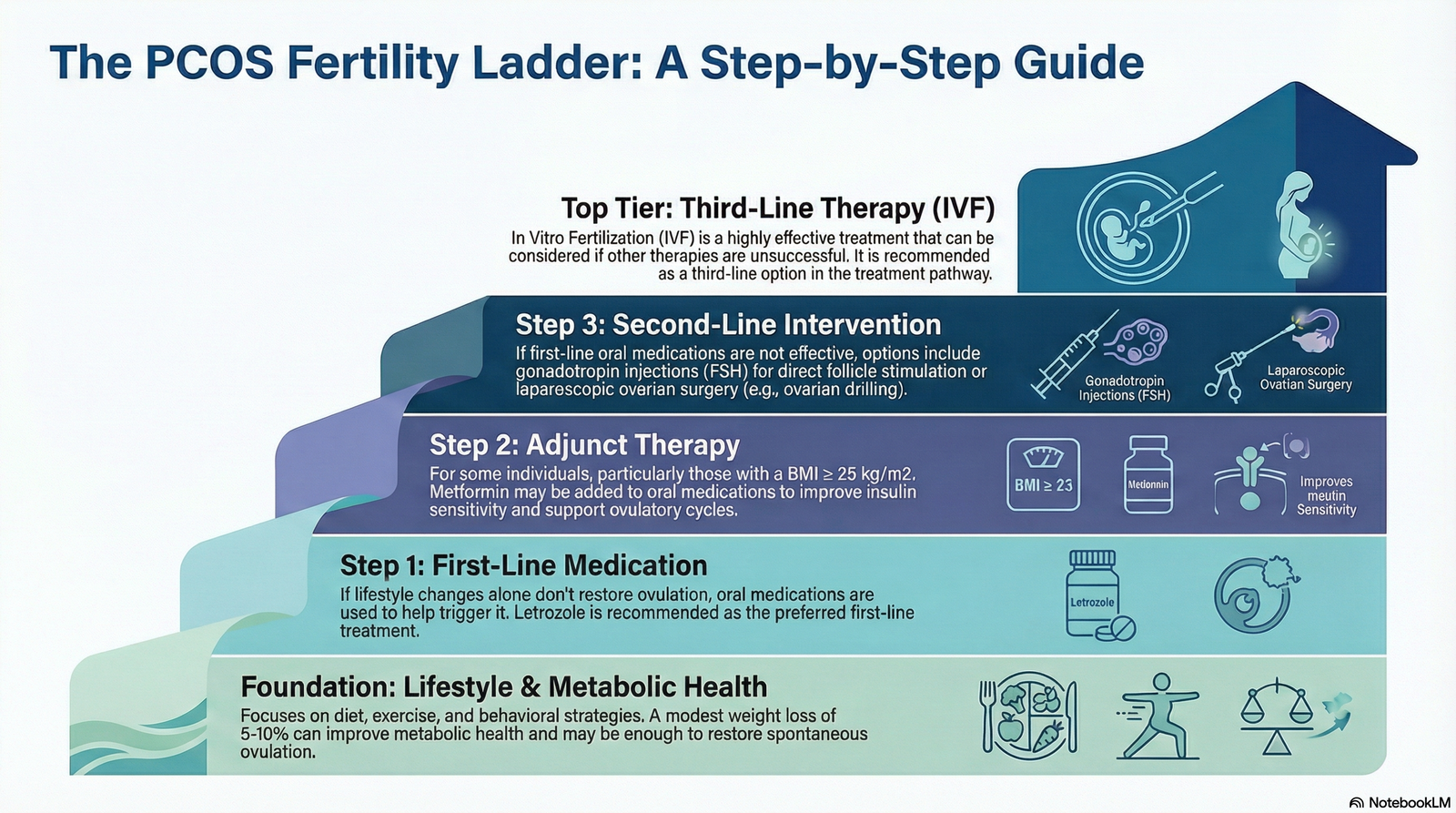
PCOS fertility roadmap, from diagnosis through medication to IVF if needed.
The Metabolic Connection: Why Insulin Matters
You might sit in your fertility consult and wonder why your doctor is talking about blood sugar and cholesterol when you just want to know how to get pregnant. The reason is that PCOS is both a reproductive and a metabolic condition.
Insulin resistance sits at the center of the picture for many women. When your cells do not respond properly to insulin, your pancreas produces more insulin to keep blood sugar in range. High insulin then acts on your ovaries and pushes them to make more testosterone. That extra testosterone blocks normal ovulation and forces you to gain extra weight. You end up in a loop: higher insulin, higher androgens, more cycle problems, and more weight struggle.
Studies show that women with PCOS who have very irregular or absent cycles, such as no period for three months or more, have stronger insulin resistance than women with milder cycle changes. Without treatment, your long-term risk of Type 2 Diabetes goes up. In one group, women with a high testosterone PCOS pattern had about a 14.2% cumulative rate of diabetes, compared with 1.3% in women without PCOS.
The encouraging part is that the system also responds when you support it. When you improve your metabolic health, even small changes help. Modest weight loss, better sleep, more movement, and medications such as metformin can rebalance insulin and testosterone levels, helping your body resume regular ovulation.
PCOS Across Your Lifespan
PCOS does not just affect the years when you are trying to have children. It shows up differently at different ages, ranging from skin and hair changes in your teens to metabolic health in your later years, and your needs change over time.
Adolescence
Diagnosis in your teen years is tricky. Irregular periods and acne are common in normal puberty. In the first year after your first period, up to 85% of cycles do not include ovulation. Because of this, guidelines recommend caution before labelling a teenager with PCOS. Doctors usually consider a firm diagnosis only when a girl is at least two years past her first period and has both irregular cycles and clear clinical or blood test signs of high testosterone.
Your Reproductive Years
During your 20s and 30s, symptoms often feel the most intense. You might notice unwanted hair on your face or body, acne, scalp hair thinning, weight gain, and problems with fertility. Stress, sleep, food choices, and activity often change the pattern of your symptoms. Some months feel better than others.
Perimenopause and Menopause
As you move into your late 30s and 40s, some features of PCOS ease. Cycles can become more regular, and hormone swings calm down. Women with PCOS often reach menopause about two years later than women without PCOS. One reason is that they start adulthood with more resting follicles that did not ovulate for years.
At this stage, the focus shifts. You may think less about getting pregnant and more about your heart, your blood vessels, your sleep, and the lining of your uterus. Your care plan centers on lowering long term-risks such as cardiovascular disease and endometrial problems rather than on ovulation alone.
Racial and Ethnic Differences in PCOS
PCOS does not look the same in every woman. Your background can shape both your symptoms and your risks in pregnancy, and it is important for you and your care team to know this.
- Symptoms: Women of Middle Eastern, Mediterranean, and South Asian origin often report more severe hirsutism. East Asian women often have a lower BMI and milder extra hair growth but still carry important metabolic risks.
- Metabolic risk: In the United States, Black and Hispanic women with PCOS face higher rates of obesity and have a higher risk of high blood pressure and insulin resistance than white women with PCOS.
- IVF outcomes: In a large review of more than 128,000 records, white women with PCOS had the highest IVF live birth rate at about 49.5%. Rates were lower in Hispanic (42.7%), Asian (41.6%), and African American women (36.0%).
- Pregnancy loss: Studies found higher pregnancy loss rates in African American and Hispanic women with PCOS than in white women with PCOS.
These numbers matter because they justify more tailored screening and follow-up. Your team should factor in your background when they talk with you about screening for diabetes, blood pressure problems, and pregnancy risks.
Beyond Fertility: Heart and Mental Health
PCOS is not just an “ovary problem”. It affects your whole body, including your heart and your mind, and you deserve care that respects both.
Heart and Blood Vessel Health
The same issues that affect fertility, such as insulin resistance, higher cholesterol, and increased weight, also affect your cardiovascular system. Pregnant women with PCOS have about twice the risk of complications such as gestational diabetes and high blood pressure compared with pregnant women without PCOS. Even when you are not pregnant, PCOS can increase the risk of early signs of heart and vascular disease. Doctors can monitor this through specialized tests that check the health and flexibility of your arteries. This monitoring allows you and your healthcare team to take proactive steps, such as managing blood pressure or cholesterol, long before these signs become serious problems.
Mental Health and Quality of Life
If you feel that PCOS steals some part of how you see yourself as a woman, you are not imagining it. Unwanted hair growth, acne, weight changes, fertility struggles, and repeated medical appointments take a real emotional toll. Body image and self-esteem often suffer.
Data shows a clear pattern. Women with PCOS have a much higher risk of depression and anxiety. One study found that the odds of depression were about four times higher in women with PCOS than in women without it. These feelings are not a personal failing. They are a recognized part of the condition. Current guidelines recommend that all women with PCOS be screened for mental health concerns at diagnosis and over time.
If you feel low, anxious, or hopeless, you deserve support just as much as you deserve medical treatment for your cycles.
Supporting Evidence on PCOS Pregnancy Outcomes
21,820 Pregnancies – Early and Late Loss: An analysis of more than 21,000 IVF and ICSI pregnancies found that women with PCOS had more early and late miscarriages than women without PCOS. The pattern remained even after other risk factors were considered. This supports closer monitoring of your early and mid-pregnancy if you have PCOS. Source: BJOG (PMID: 33142019).
Frozen vs Fresh – Fewer Obstetric Problems: In women with PCOS, a randomized trial found that frozen embryo transfer led to fewer pregnancy complications than fresh transfer, while keeping birth rates high. Risks such as preeclampsia and low birth weight were lower in the frozen group. Choosing a freeze-all approach can help your doctor balance strong IVF success with a safer pregnancy. Source: Fertility and Sterility (PMID: 29338857).
Higher BMI – More Pregnancy Problems: In women with PCOS having frozen transfers, those with higher BMI had more pregnancy and newborn complications than women with a healthy weight. Outcomes such as gestational diabetes and high blood pressure problems were more frequent. Working on weight and metabolic health before transfer can improve your pregnancy safety. Source: BMC Pregnancy and Childbirth (PMID: 31823750).
Double the Risk – Pregnancy Complications in PCOS: A large review showed that pregnant women with PCOS had about double the risk of problems such as gestational diabetes and high blood pressure compared with women without PCOS. The higher risk remained even when weight was taken into account. This is why pregnancy care for PCOS should include early glucose testing and close blood pressure monitoring. Source: Medicine (PMID: 28002314).
Global Guideline – Safer Fertility Pathway: The 2023 international PCOS guideline brings together evidence and expert opinion to recommend safer and more effective fertility care. It supports letrozole as the first line for ovulation induction, careful metabolic screening, and stronger pregnancy monitoring for women with PCOS. This means your care plan should follow clear guidance rather than trial and error. Source: International PCOS Guideline 2023.
These studies help you and your doctors weigh benefits and risks. They do not replace individual medical advice, but they show that thoughtful planning can improve both success and safety for you.
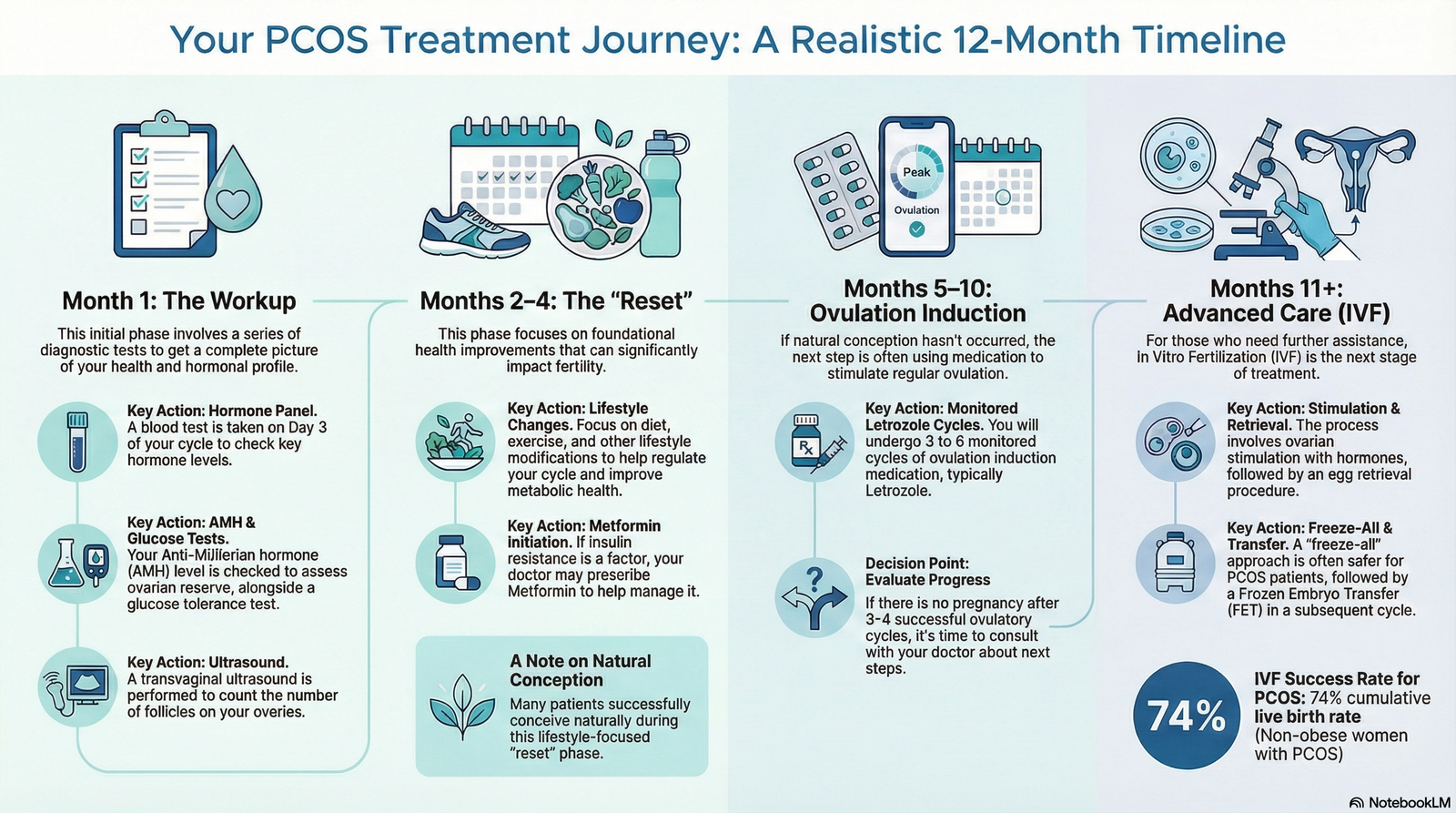
Example timeline: from PCOS workup to ovulation induction and, if needed, IVF.
Diagnosis and Testing: What to Expect
Getting a clear diagnosis used to be slow and frustrating. Women often bounced between doctors for years. One study showed a median delay of about five years. Updated criteria have made this process faster and more consistent.
The “2 out of 3” Rule
In adults, doctors diagnose PCOS as per the Rotterdam criteria for PCOS when you meet two of these three features, once other conditions are ruled out:
- Irregular or absent periods that reflect ovulatory dysfunction.
- Clinical or biochemical signs of high androgens, such as unwanted hair growth, acne, or high testosterone in blood tests.
- Polycystic ovaries on ultrasound.
If you have both irregular periods and clear evidence of high testosterone, your doctor can diagnose PCOS without an ultrasound or AMH test.
Key Tests You Will Probably See
- Hormone panel: Your doctor will check total and free testosterone. They will also measure FSH and LH around cycle day 2 or 3 if you have cycles to rule out other causes of stopped periods.
- AMH (Anti Müllerian Hormone): AMH comes from the cells around your eggs. Many labs call 1 to 4 ng/mL a typical range, but women with PCOS often show levels 2 to 4 times higher. An AMH above about 3.2 ng/mL strongly suggests polycystic ovarian morphology in adults, especially when it fits with your symptoms.
- Ultrasound: If needed, the ultrasound tech will look for a follicle number per ovary of at least 20 or an ovarian volume of over 10 mL.
- Metabolic screening: Because of the increased risk of diabetes, doctors recommend a 75g oral glucose tolerance test (OGTT) or an HbA1c test at the time of diagnosis. Some clinics also order a detailed insulin curve, which can catch early insulin resistance before a standard blood sugar test shows a problem. Identifying these shifts early allows you to start targeted lifestyle or medical changes that can prevent the progression to type 2 diabetes.
Treatment Options: The Fertility Ladder
Treating PCOS-related infertility works like a ladder. You start with the simplest steps and only move up if you need to. This approach protects your health, your time, and often your budget.
Step 1: Lifestyle Changes
For every woman with PCOS, especially if your BMI is above 25, doctors recommend lifestyle changes as the base of care. Losing even 5% to 10% of your body weight can improve metabolic markers, lower testosterone, and often trigger the spontaneous return of ovulation.
There is no single “PCOS diet” that beats all others. Plans that are realistic, balanced, and match general healthy eating guidelines are usually the most helpful. The goal is to support your long-term health by stabilizing blood sugar, cholesterol, and blood pressure levels. This approach helps manage PCOS symptoms and prevents further weight gain over time.
Step 2: Letrozole as First-Line Medication
If lifestyle changes alone do not bring back regular ovulation, the usual first-line fertility drug for PCOS is letrozole.
- Why letrozole: Trials show higher ovulation and live birth rates with letrozole than with the older drug clomiphene citrate.
- Success rates: In a PCOS trial, 27% of women who took letrozole had a live birth, compared with 19% on clomiphene.
- Typical regimen: Many doctors start at 2.5 mg for five days, usually beginning shortly after a period starts. If your body needs more support to ovulate, evidence shows that increasing to 5 mg or extending to a 10-day course is effective and does not significantly increase the chance of having twins.
Step 3: Metformin as a Helper
Metformin is an insulin-sensitizing medication. It is not a pure fertility drug, but it can support ovulation and pregnancy in PCOS.
- On its own, metformin can restore ovulation in some women, especially if you have clear insulin resistance.
- When doctors combine metformin with letrozole, clinical pregnancy rates often rise, particularly in women with a BMI under 30.
You and your doctor can weigh side effects, such as stomach upset, against the potential benefits.
| Treatment Step | Goal | Typical Impact on Fertility |
|---|---|---|
| Lifestyle changes | Stabilize insulin level, weight, and blood pressure | Can restore spontaneous ovulation in some women |
| Letrozole | Trigger ovulation in predictable cycles | Higher live birth rate than clomiphene in PCOS |
| Letrozole + metformin | Stabilize both hormones and insulin level | Higher clinical pregnancy rates, especially with BMI under 30 |
Step 4: Gonadotropins or Ovarian Surgery
If oral medications are not enough to induce ovulation, the next steps usually include injections or surgery.
- Gonadotropins: These are injectable hormones, often FSH, that directly stimulate your ovaries to grow follicles. While they are very effective, they increase the chance of conceiving twins or more (triplets and higher-order multiples) and the risk of Ovarian Hyperstimulation Syndrome (OHSS). Because of this, you will have frequent ultrasounds and blood tests to closely monitor your body’s response and ensure the cycle stays safe.
- Laparoscopic ovarian surgery: Often called “ovarian drilling,” this keyhole surgery uses tiny punctures in the ovarian surface. In some women, it resets hormone signaling and restores ovulation for 6 to 12 months.
Before choosing a treatment bundle and starting your care, you will have a consultation with your doctor. Together, you will discuss your health profile, including factors like age and metabolic health, your medical history, and your personal timeline to decide which option is the best fit for you.
Step 5: IVF and IVM
When simpler treatments do not lead to pregnancy, In Vitro Fertilization (IVF) becomes a very strong option.
- Egg numbers in PCOS: Women with PCOS usually produce more eggs in an IVF cycle than women without PCOS. One analysis reported an average of 18.9 retrieved oocytes in PCOS patients versus 16.8 in others.
- Safety: PCOS raises the risk of OHSS if you use older stimulation protocols. Modern clinics often use a GnRH antagonist protocol plus a “freeze all” approach, where they freeze all embryos and transfer in a later cycle. This strategy has made severe OHSS extremely rare while keeping success rates high.
- IVM (In Vitro Maturation): In selected cases, doctors can retrieve immature eggs and mature them in the lab. This reduces or removes the need for strong stimulation drugs and almost eliminates the risk of OHSS. It is more specialized and not available everywhere, but it is an important option to know about.
Want help comparing clinics and treatment paths?
If researching all of this feels like a full-time job, you are not imagining it. Our advisors can gather clear, itemized quotes from trusted clinics, explain your options in plain language, and help you map out next steps at no cost to you.
Frequently Asked Questions
Can I get pregnant naturally with PCOS?
Yes. Many women with PCOS still ovulate occasionally and conceive without treatment. The challenge is that because ovulation is unpredictable, it can take longer to catch that window. Identifying your fertile signs (the days leading up to ovulation) and having intercourse every one to two days during that time improves your odds.
Is there a “perfect” AMH level if I have PCOS?
There is no single perfect AMH number. AMH depends on age, test method, and your ovarian reserve. In PCOS, very high AMH can signal a larger follicle pool and a different response to medication. Some research suggests that an AMH above about 11.18 ng/mL can predict a tougher response to standard ovulation drugs, and you might need a more tailored approach.
Do many follicles mean my eggs are of poor quality?
Not by default. PCOS does bring a high androgen environment, and some studies link that to lower egg quality in some women. But large IVF datasets show that when you compare embryos, the implantation potential in women with PCOS is similar to that in women without PCOS. Current research also suggests that the rate of chromosomally normal embryos is not directly tied to having PCOS.
Will metformin help me lose weight?
Metformin is primarily used to manage insulin levels, not as a dedicated weight-loss medication. On average, people lose about 1.1 kg (roughly 2.4 lbs) while taking it. The primary benefits for PCOS are improved insulin sensitivity and better hormone balance, which can help ovulation return. By making your body more responsive to insulin, it may also make your healthy eating and exercise efforts more effective.
What pregnancy risks should I know about?
PCOS counts as a high-risk condition in pregnancy. You have higher odds of gestational diabetes, gestational hypertension, preeclampsia, and preterm delivery. Because of this, many providers screen you for diabetes at your first prenatal visit and then again later in pregnancy. You should also expect closer monitoring of blood pressure and fetal growth.
Should my partner get checked too?
Yes. In roughly one-third of infertility cases, male factors play a role. Male obesity and other health issues can lower sperm count and quality and increase DNA damage. It is better for both of you to be evaluated early so you have a full picture of what you are working with.
Does PCOS cause miscarriage?
The answer is nuanced. Some studies report higher miscarriage rates in women with PCOS, for example, 26% versus 15% in certain IVF groups. Other studies show that once you adjust for age, BMI, and other conditions, the difference shrinks. The most important step for you is to optimize your health before conception. Good blood sugar control, healthy weight, balanced thyroid and prolactin levels, and careful selection of stimulation and transfer protocols all reduce miscarriage risk, regardless of PCOS.

Why trust this guide? The OVU commitment
You are probably juggling hope, timelines, and a lot of tabs open in your browser. And you deserve clear, current, human advice. At OVU, we review clinic protocols, compare real quotes, and talk to people who have done this - intended parents and gestational carriers - so we can give you practical steps, not just theory. If you want help comparing options without sales pressure, we will gather itemized quotes and success data that match your exact situation. You decide, we will bring the info to your table.
Reference List 8 sources
Journal Article (Research): Liu S, Zhou X, Jie H, Zheng Z, Cai B, Mai Q, Zhou C. Higher cumulative live birth rate but also higher late miscarriage risk in non obese women with polycystic ovary syndrome undergoing the first IVF/ICSI cycle. International Journal of Women's Health. 2024;16:289–298. PMID: 38415060. Available from: https://pubmed.ncbi.nlm.nih.gov/38415060/
Journal Article (Research): Liu S, Mo M, Xiao S, Wan X, Yang X, Kuang Y, Cai R. Pregnancy outcomes of women with polycystic ovary syndrome for the first in vitro fertilization treatment: a retrospective cohort study with 7,678 patients. Frontiers in Endocrinology. 2020;11:575337. PMID: 33101210. Available from: https://pubmed.ncbi.nlm.nih.gov/33101210/
Journal Article (Research): Cai H, Mol BW, Gordts S, Steures P, McLernon DJ, Bhattacharya S, et al. Early and late pregnancy loss in women with polycystic ovary syndrome undergoing IVF/ICSI treatment: a retrospective cohort analysis of 21,820 pregnancies. BJOG. 2021;128(7):1160–1169. PMID: 33142019. Available from: https://pubmed.ncbi.nlm.nih.gov/33142019/
Journal Article (Systematic Review & Meta Analysis): Matorras R, Pijoan JI, Lainz L, Rodríguez Escudero FJ, Hernández J, Prieto B, et al. Polycystic ovarian syndrome and miscarriage in IVF: systematic revision of the literature and meta analysis. Archives of Gynecology and Obstetrics. 2023;308(2):363–377. PMID: 36058943. Available from: https://pubmed.ncbi.nlm.nih.gov/36058943/
Journal Article (Research): Zhang B, Wei D, Legro RS, Shi Y, Li J, Zhang L, et al. Obstetric complications after frozen versus fresh embryo transfer in women with polycystic ovary syndrome: results from a randomized trial. Fertility and Sterility. 2018;109(2):324–329. PMID: 29338857. Available from: https://pubmed.ncbi.nlm.nih.gov/29338857/
Journal Article (Research): Lin J, Huang J, Wang N, Kuang Y, Cai R. Effects of pre pregnancy body mass index on pregnancy and perinatal outcomes in women with PCOS undergoing frozen embryo transfer. BMC Pregnancy and Childbirth. 2019;19(1):487. PMID: 31823750. Available from: https://pubmed.ncbi.nlm.nih.gov/31823750/
Journal Article (Systematic Review & Meta Analysis): Yu HF, Chen HS, Rao DP, Gong J. Association between polycystic ovary syndrome and the risk of pregnancy complications: a PRISMA compliant systematic review and meta analysis. Medicine. 2016;95(51):e4863. PMID: 28002314. Available from: https://pubmed.ncbi.nlm.nih.gov/28002314/
Committee Opinion (Guidance): Teede HJ, Tay CT, Laven J, Dokras A, Moran LJ, Piltonen TT, Costello MF, Boivin J, Redman LM, Boyle JA, Norman RJ, Mousa A, Joham AE; International PCOS Network. Recommendations from the 2023 international evidence based guideline for the assessment and management of polycystic ovary syndrome. The Journal of Clinical Endocrinology & Metabolism. 2023;108(10):2447–2499. PMID: 37580314. Available from: https://pubmed.ncbi.nlm.nih.gov/37580314/
Final Thoughts
A PCOS diagnosis can feel like falling into a deep tunnel of lab tests, scans, and online advice. It is easy to feel lost or broken. You are neither. You are dealing with a real medical condition that many women share, and there are clear ways to respond.
The numbers are on your side. Most women with PCOS who want children will have them, often with straightforward treatments, such as lifestyle changes and letrozole. Others need more advanced support, such as IVF. Each step is still part of a clear, evidence-based plan.
You are allowed to ask questions, push for clear explanations, and look for a team that listens to your goals. With the right information and support, you can make decisions that fit your body, your values, and your timeline.