


Dr. Sony Sherpa (MBBS)
In addition to her clinical experience, Dr. Sherpa is a published medical researcher and holistic health advocate. Her dual expertise in emergency care and alternative therapies brings a unique lens to medically reviewed content—ensuring it is both accurate and accessible.
You have already felt the weight of your screaming newborn bundling on your chest, the shock and joy of seeing two lines sparkling on a pregnancy test, and the chaos of those early months. When you decide it is time to grow your family again and the test stays negative month after month, the confusion can hit hard. You want to introduce one more baby into this world but cannot understand what is going wrong and how to cope with it. Unexplained hurdles with conception feel frustrating, especially when you have already proven that your body can get pregnant, so it is natural to think, “What changed?” or “Why is this happening now?” And if you have never received fertility care, the situation may be even more overwhelming.
You are not alone in this situation. Some couples are getting pregnant with their second child within one to four years. However, the others may stay silent and try to hush their feelings of deep frustration, despair, shame, and guilt and just hold their breath tight for longer and have no positive news. Infertility still tends to be hidden, but it affects around 1 in 6 adults globally. Large clinic studies now show that secondary infertility, when you have trouble getting pregnant or carrying a pregnancy after at least one successful birth, is even more common than primary infertility. In fact, some statistical data show that 56% of patients were being seen for secondary infertility, with 44% having never been pregnant.
Doctors and major organizations like the World Health Organization (WHO) and the American Society for Reproductive Medicine (ASRM) describe infertility as a medical condition, not a personal failure. That means there are clear ways to investigate what is going on in your body and your partner’s body, and structure treatment paths you can follow step-by-step.
Secondary infertility means you are struggling to get pregnant or carry a pregnancy after you have already had at least one child. It affects more than half of patients in many infertility clinics. Common reasons include age-related egg changes, scarring from past pregnancies or surgery, ovulation problems like PCOS, endometriosis, and new male factor issues. Most couples need a basic evaluation after 6 to 12 months of trying, and many find a treatable cause or a clear fertility plan.
Next step: If you are under 35 and have tried for 12 months, or 35 and older and have tried for 6 months, book a fertility evaluation for you and your partner.
What recent research shows
New studies from fertility clinics and population research give a clearer picture of secondary infertility. In a referral hospital study, more than half of women seeking care had secondary infertility, and previous surgery and C-sections were much more common in this group. Other work links joint family living and relationship strain with higher odds of infertility and highlights the role of C-section scar defects, PCOS, and tubal damage in preventing a second pregnancy.
All research citations in this article include PubMed IDs or recognized guideline sources so you can review the original work with your doctor.
In This Guide
About 1 in 6 adults will face infertility.
In some clinics, 56% of patients have secondary infertility.
Under 35: after 12 months of trying.
35 or older: after 6 months of trying.
IVF under 35: around 40% birth rate per cycle start.
Egg donation: often above 50% per transfer.
What secondary infertility means and how common it is
Secondary infertility is defined as the inability to get pregnant or carry a pregnancy to live birth after you have already had at least one child. That earlier pregnancy could have ended in a healthy birth, adoption after birth, or even in loss, but the key point is that you have been pregnant before.
In a recent study from a large infertility clinic in Saudi Arabia, 56% of women seeking care had secondary infertility, and 44% had primary infertility. Many of the women with secondary infertility were older and had been married longer than those with primary infertility, which matches what a lot of people experience in real life. Life gets busy, careers build, years pass, and by the time you are ready for another baby, your biology has quietly shifted.
Global research also shows that it often takes years before you receive specialty fertility care. One study found that women had been living with infertility for an average of around five years by the time they reached a referral clinic. That is a long time to live with unanswered questions, especially when you already have a child at home and feel pressure from yourself or others to add to your family.
Latest research insights on secondary infertility
56% vs. 44% – Secondary infertility is more common in clinics: In a large Saudi referral hospital, 56 out of 100 women seeking infertility care had secondary infertility, and 44 had primary infertility. Those with secondary infertility were older and had been married longer, which fits what you might feel when you try for a second baby later in life. Source: SAGE Open Medicine (PMID: 40620330).
47% vs. 21% – Surgery and C-sections matter: In the same study, almost half of the women with secondary infertility had a past surgery, often a C-section, compared with about 1 in 5 women with primary infertility. Scars and internal adhesions from these procedures can quietly interfere with pregnancy. This means your delivery story from your first child is an important part of your current fertility workup. Source: SAGE Open Medicine (PMID: 40620330).
About 1 in 6 – Infertility is common, not rare: The World Health Organization estimates that about 1 in 6 adults of reproductive age will face infertility at some point. If you feel like everyone else gets pregnant easily, remember that a lot of people simply do not talk about their struggles. You are far from alone. Source: World Health Organization Infertility Fact Sheet.
About 5 years – A long wait for answers: In several clinic-based studies, women had been trying to conceive for around five years on average by the time they saw a specialist. This long delay increases emotional strain and can reduce the window of time for easier treatments. Knowing this helps you permit yourself to ask for help earlier rather than later. Source: SAGE Open Medicine (PMID: 40620330).
These findings come from peer-reviewed research. Your own situation will be unique, so use them as a starting point for discussion with your doctor.
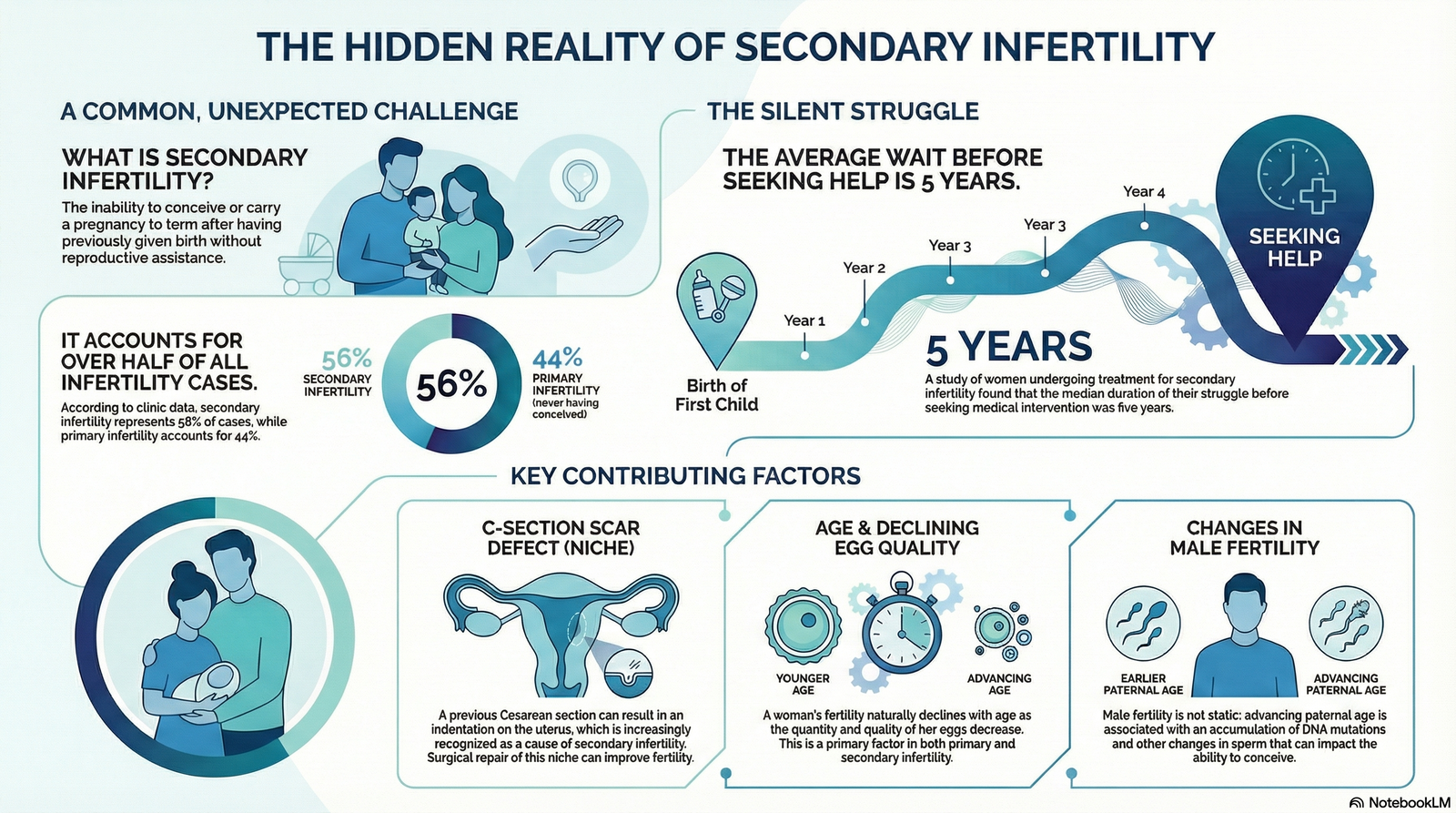
Secondary infertility at a glance, from how common it is to when to seek help.
| Factor | How It Relates To Secondary Infertility |
|---|---|
| Age at second pregnancy | Egg number and quality decline, especially after 37 years of age. |
| Previous C-section or pelvic surgery | Scars and adhesions can affect the uterus and tubes, making implantation or egg pick up and transportation harder. |
| Ovulation disorders such as PCOS | Irregular ovulation means fewer chances each year for an egg and sperm to meet. |
| Endometriosis | Inflammation and scarring can damage eggs, tubes, and the pelvic environment. |
| Male factor changes | Sperm count, movement, and DNA quality can shift over time due to age, lifestyle, or health issues. |
Hidden medical causes after a previous birth
It can feel strange to be told that something is “wrong” with your fertility when you already have a child. In many couples with secondary infertility, the picture is not one single problem but a mix of subtle changes in age, anatomy, hormones, and sperm quality that add up.
The impact of C-sections, uterine niches, and adhesions
If you had a C-section, your scar sits in the lower part of the uterus. In some women, this scar heals with a small pocket or defect, called a uterine niche or isthmocele. This pocket can collect menstrual blood and fluid, which may cause spotting, pelvic pain, or a constant trickle of fluid into the uterine cavity.
In a recent review of women with uterine niches after C-section, between 27% and 75% of them had secondary infertility. Researchers found that thin muscle at the scar, chronic inflammation, and collected fluid can interfere with sperm movement and embryo implantation. The good news is that hysteroscopic or laparoscopic repair often improves symptoms and pregnancy rates.
Any previous pelvic surgery can also create adhesions, thin strands of scar tissue that form between organs. These can wrap around the ovaries, kink the fallopian tubes, or pull the uterus into an awkward position. Even an old appendectomy or surgery for an ectopic pregnancy can matter.
Ovulation disorders and the role of PCOS
Polycystic ovary syndrome, or PCOS, is one of the most common reasons women struggle with ovulation. It affects about 5% to 10% of women and is caused by hormone imbalances that prevent the regular release of mature eggs. Many women with PCOS also have insulin resistance and tend to gain weight more easily.
You might not have noticed PCOS symptoms before your first pregnancy, or you may have had mild signs that became more obvious with age or weight changes. In some regions, about 3 in 10 infertile women have PCOS. Typical signs include irregular or absent periods, increased facial or body hair, persistent acne, and sudden weight gain.
Treatment often starts with lifestyle changes to improve insulin sensitivity and reach a healthier weight range. Medications such as clomiphene citrate or letrozole can help trigger ovulation in many women with PCOS who still have good ovarian reserve.
Endometriosis as an invisible barrier
Endometriosis happens when tissue similar to the uterine lining grows outside the uterus, most often on the ovaries, fallopian tubes, and pelvic surfaces. It tends to progress over time. You could have had mild disease, or no disease, during your first pregnancy and more advanced disease now.
Between 30% and 50% of women with endometriosis also face infertility. Endometriosis can change the shape of the pelvic area, cause scar tissue that traps eggs, release harmful chemicals into pelvic fluid that can hurt eggs and sperm, and lower the quality of eggs, especially if there are ovarian cysts called endometriomas.
If your periods have become more painful or longer, or if you have deep pain with intercourse that you did not have before, this is worth mentioning to your doctor. Diagnosis often combines a pelvic exam, ultrasound, and sometimes a laparoscopy to look directly inside the pelvis and remove or burn endometriosis deposits.
Supporting evidence on causes and risks
27% to 75% – C-section scar niche and infertility: A 2025 review of women with uterine niches after C-section found reported secondary infertility rates ranging from 1 in 4 to 3 in 4. Thin muscle at the scar, inflammation, and trapped fluid all played a role. Surgical repair often improved bleeding, pain, and pregnancy rates. Source: BMC Pregnancy and Childbirth (PMID: 40361079).
3 in 10 – PCOS among infertile women in Gulf countries: A pooled analysis across Gulf Cooperation Council countries found that roughly 3 out of 10 infertile women had PCOS. Older age and higher weight were linked with higher PCOS rates. This shows how common PCOS is when you look closely at clinic data. Source: Heliyon (PMID: 39759288).
Up to one third – Tubal factor infertility: A large review from African settings reported that damage or blockage in the fallopian tubes accounted for up to about one third of female factor infertility. This is especially important when you have had a pelvic infection, previous surgery, or endometriosis. Source: Fertility Research and Practice (PMID: 33292584).
More than half – Causes that can be treated: Across multiple studies, more than half of infertility causes fall into categories with at least partially effective treatments. Knowing this can help you shift from feeling helpless to focusing on the tests and treatments that match your situation. Source: Clinical guidance from primary care and fertility specialists.
These findings give context, not a diagnosis. Your own test results will shape your exact treatment plan.
Male factor changes after your first child
Male fertility is often treated as fixed, but sperm quality can change over time. Age, weight gain, smoking, alcohol, heat exposure, and certain medications can all reduce sperm count, movement, and DNA quality, even in men who fathered a child easily in the past.
As men age from their 30s into their 50s, semen volume and sperm motility gradually fall, and the proportion of normally shaped sperm also drops. Some medications, such as low-dose finasteride for hair loss, have been linked with higher levels of sperm DNA damage, which can lead to miscarriages even when a standard semen analysis looks normal.
Tests such as semen analysis, scrotal ultrasound, hormone testing, and sperm DNA fragmentation index can reveal these changes and help guide treatment, which might include lifestyle changes, surgery for varicoceles, or the use of ICSI during IVF.
When to seek help and what testing looks like
One of the hardest questions in secondary infertility is, “When do we stop trying on our own and see someone?” Guidelines give clear time frames. If you are under 35 and have been having regular unprotected intercourse for 12 months without pregnancy, you should have an infertility evaluation. If you are 35 or older, that window shortens to 6 months.
If you already know you have risk factors, such as very irregular cycles, previous pelvic infection, known endometriosis, repeated miscarriages, or a history of C-section with new bleeding patterns, it is reasonable to seek help even earlier.
Testing for you
Your doctor will start with a detailed history and exam, then order tests that usually include:
- Cycle day 3 to 5 hormone tests: Blood levels of FSH and estradiol help estimate how hard your brain is working to stimulate your ovaries.
- Anti-Müllerian hormone (AMH): This blood test reflects your ovarian reserve. Values under about 1.2 ng per ml suggest a lower egg supply.
- Transvaginal ultrasound: This looks at your uterus and ovaries and allows an antral follicle count, a simple count of your small resting follicles.
- Hysterosalpingography (HSG): This X-ray with dye checks whether your fallopian tubes are open and whether the uterine cavity looks normal.
- Hysteroscopy: A small camera through the cervix lets your doctor see and treat polyps, fibroids, uterine scars, or C-section niches.
Testing for your partner
It is essential that your partner be tested at the same time you are. It is much easier on both of you to look at the full diagnostic picture from the start, avoiding the frustration of focusing solely on one person only to discover a different hurdle months later.
- Semen analysis: This measures sperm count, movement, and shape. A traditional normal result is more than 20 million sperm per ml, at least 50% moving, and over 30% normal shapes, though newer lab standards can differ.
- Scrotal ultrasound: This looks for varicoceles, enlarged veins that are the most common reversible cause of male factor infertility.
- Sperm DNA fragmentation index (DFI): When the DFI is around or above 27% to 30%, the chances of miscarriage and failed IVF cycles rise. This test is especially helpful if you have had several losses.
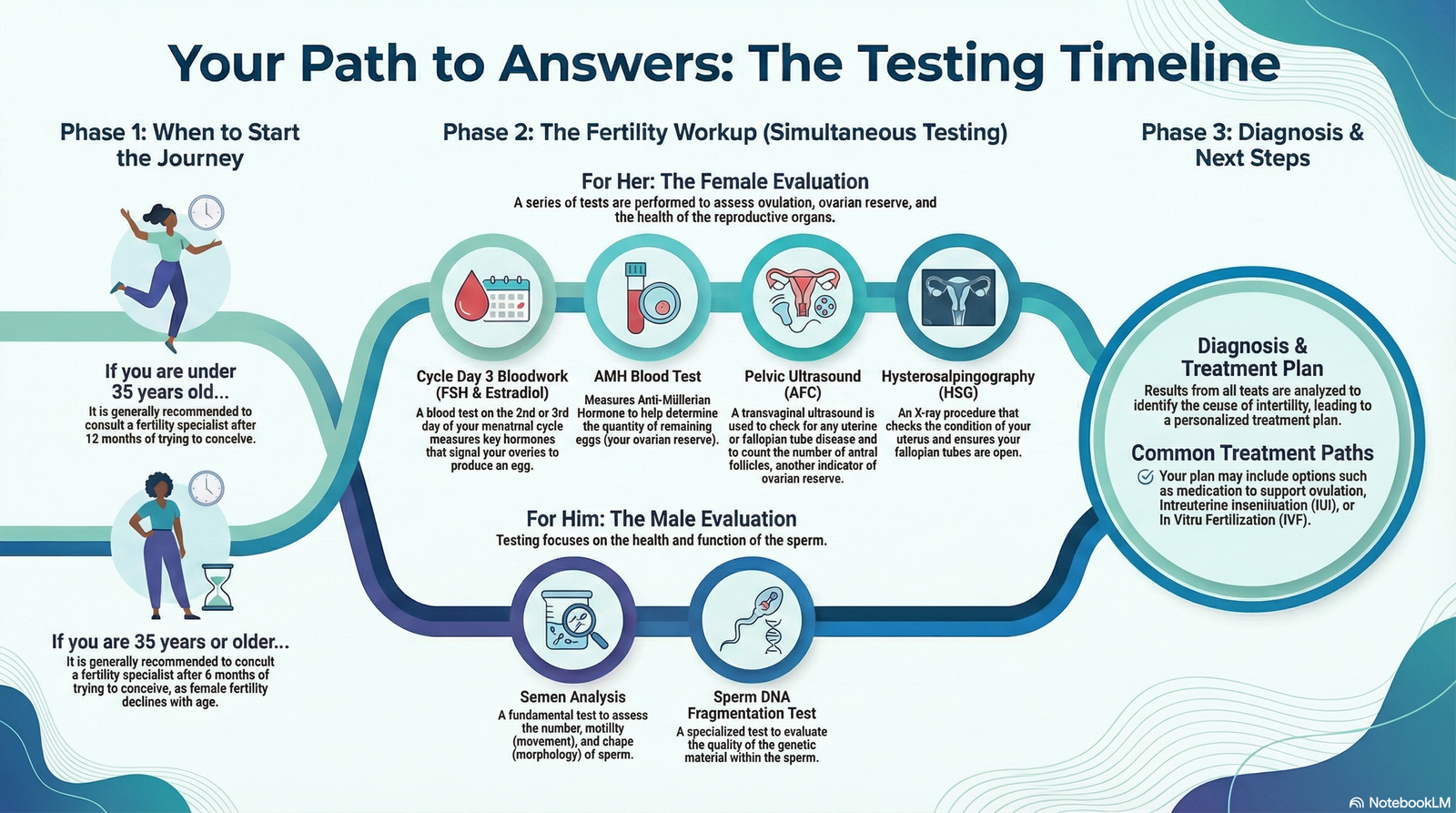
Typical timeline from trying on your own to full infertility workup for you and your partner.
Treatment options and how to choose a clinic
Once your evaluation is complete, your doctor will sit down with you and outline the main reasons for your secondary infertility and the tools that make the most sense for your situation. Treatment decisions blend medical facts, your age, your unique case, your budget, and your support system.
Lifestyle and low-intervention steps
Sometimes the first steps are simple. If either of you smokes, quitting will improve general health and sperm quality. Reducing alcohol intake, getting enough sleep, moving your body regularly, and adjusting your diet can all help. Aiming for a healthy weight supports ovulation in women and testosterone production in men.
Your doctor might start you on oral medications such as clomiphene citrate or letrozole to stimulate ovulation, especially if you have PCOS or irregular cycles. Timed intercourse or intrauterine insemination (IUI) can be paired with ovulation induction when your tubes are open and sperm counts are in a mild to moderate range.
IVF, ICSI, egg donation, and surrogacy
When tubes are blocked, endometriosis is advanced, sperm problems are severe, or age is a major factor, IVF and related techniques often offer the highest success.
- IVF: You take medications to grow multiple follicles, eggs are retrieved, fertilized in the lab, and embryos are transferred into the uterus. For women under 35, birth rates per cycle start can reach about 41.5% in some programs.
- ICSI: In intracytoplasmic sperm injection, an embryologist injects a single sperm directly into each mature egg. This is especially helpful when sperm count, motility, or shape are very low.
- Egg donation: If your ovarian reserve is very low or repeated IVF cycles with your own eggs have not worked, using eggs from a younger donor often gives the best chance of success. Many donor egg programs report live birth rates above 50% per transfer.
- Surrogacy: When carrying a pregnancy yourself is not safe or possible, surrogacy allows another woman to carry your embryo. Costs vary widely by country. In the United States, total surrogacy costs often fall between about 160,000 and 250,000 dollars. In some countries, such as Cyprus, program costs can be under 69,000 dollars.
Expert guidance on making treatment choices
One in three – Male factor infertility is common: Roughly one-third of infertility cases are mainly related to the male partner. This is why guidelines from groups like ASRM and ACOG stress that both partners should be evaluated together. If you only focus on your own body, you might miss a major piece of the puzzle.
Primary care first – Do not wait years: Guidance for family doctors explains that much of the initial fertility workup can start in primary care. That includes hormones, ultrasound, and semen analysis. If you feel stuck on a wait list, it is reasonable to ask your regular doctor which tests you can begin now.
More than half – Treatable causes: Across research and guidelines, more than half of infertility causes fall into categories with clear treatments or workarounds. That could mean surgery, medications, IVF (in vitro fertilisation), or donor options, which involve using eggs or sperm from another person. You are not starting from zero. You are starting from a place where medicine already has tools.
Use this information to ask focused questions at your consult. For example: “Given our age and test results, which option gives us the best chance in the next 12 months?”
How to compare clinics and countries
If you end up needing IVF, egg donation, or surrogacy, you might look at clinics in your own country and abroad. It is easy to become overwhelmed by glossy websites and confusing price quotes when making such a significant decision.
Key things to compare include:
- Success rates for your age group and diagnosis: Ask for live birth rates per embryo transfer and per cycle started, not just pregnancy rates.
- What is included in the quoted price: Some clinics exclude medications, lab tests, and embryo freezing from the initial fee.
- Experience with cases like yours: Ask how often they treat secondary infertility, uterine niches, endometriosis, or severe male factors.
- Travel, legal, and emotional support: If you travel abroad, consider travel time, logistics, the current legal framework surrounding egg donation or surrogacy, and how much support the clinic provides.
OVU expert insight: focusing your energy where it counts
Comparing clinics and treatment paths can feel like a full-time job. Instead of trying to research every country or every program, start from your specific medical profile. Once you know your age, ovarian reserve, male factor status, and any uterine or tubal issues, you can cross entire categories of clinics off your list and focus only on the ones that actually fit your needs.
This is where a structured clinic comparison, itemized cost breakdowns, and honest discussion of success rates make a real difference. You do not need to become an expert in global fertility law. You need clear options that match your reality.
Want help comparing clinics and costs?
If this feels like a full time job, which it often does, our advisors can collect clear, itemized quotes from verified clinics and map your likely timeline at no cost to you.

Why trust this guide? The OVU commitment
You are probably juggling hope, timelines, and a lot of tabs open in your browser. And you deserve clear, current, human advice. At OVU, we review clinic protocols, compare real quotes, and talk to people who have done this - intended parents and gestational carriers - so we can give you practical steps, not just theory. If you want help comparing options without sales pressure, we will gather itemized quotes and success data that match your exact situation. You decide, we will bring the info to your table.
Frequently Asked Questions
Is it my fault that we cannot get pregnant again?
No. Infertility is a medical condition that does not reflect on you as a person or a parent. Approximately one-third of cases are primarily caused by males, one-third by females, and one-third by a combination of the two. Blame causes pain but does not alter the plan. The most beneficial step is to obtain a comprehensive evaluation for both of you and work from there.
I conceived my first child easily. Does that mean I am still fertile?
A previous pregnancy shows that you and your partner were fertile at that time, but biology keeps moving. Age, surgery, infection, new medical conditions, medications, and lifestyle changes can all shift fertility. Think of your first pregnancy as a helpful piece of history, not a guarantee for the future.
Does paternal age really matter for secondary infertility?
Yes, it matters, though in a different way than it does for women. Men do not have a clear endpoint like menopause, but sperm quality and genetic safety change over time. As men age, sperm counts and motility tend to drop, and certain single-gene and neurodevelopmental risks increase. It does not mean an older man cannot father a healthy child, but age should be part of the conversation when you discuss risks and options.
What is a uterine niche, and could I have one?
A uterine niche is a small pocket or defect at the site of a previous C-section scar. It can collect blood and fluid and may cause spotting, pelvic pain, or trouble with embryo implantation. If you have secondary infertility and your bleeding pattern changed after a C-section, mention this to your doctor. Specialized ultrasound or hysteroscopy can detect a niche, and in many cases, it can be repaired.
How does weight affect our chances of a second pregnancy?
Higher body weight, especially a body mass index above about 30, is linked with more insulin resistance and inflammation. In women, this can disrupt ovulation and increase pregnancy complications. In men, it can lower testosterone and reduce sperm quality. Small, steady changes in nutrition, movement, and sleep can improve your overall health and sometimes your fertility outlook too.
Is stress causing my infertility?
Stress by itself does not usually create infertility, but infertility certainly creates stress. Heavy, ongoing stress can disturb hormone balance, sleep, sex drive, and appetite, and it can make treatment feel harder to continue. Supportive therapy, support groups, and simple daily practices that bring you small moments of relief can help you cope while you pursue medical care.
When should we stop “just trying” and see a doctor?
If you are under 35 and have had regular unprotected sex for 12 months without a pregnancy, it is time for an infertility evaluation. If you are 35 or older, make that appointment after 6 months. If you already know you have irregular cycles, endometriosis, previous pelvic infection, or repeated miscarriages, it makes sense to ask for a referral even sooner.
Reference List 11 sources
Journal Article (Research): AlShamlan NA, AlOmar RS, Alfryyan AA, et al. Primary versus secondary infertility: epidemiology and characteristics from a referral hospital in Saudi Arabia. SAGE Open Medicine. 2025;13:20503121251352065. PMID: 40620330. Available from: https://pubmed.ncbi.nlm.nih.gov/40620330/
Journal Article (Research): Fatima W, Akhtar AM, Hanif A, et al. Predicted risk factors associated with secondary infertility in women: comparison of artificial neural network and logistic regression models. Frontiers in Medicine. 2024;10:1327568. PMID: 38590911. Available from: https://pubmed.ncbi.nlm.nih.gov/38590911/
Journal Article (Systematic Review): Jayasundara D, et al. Exploring uterine niche: a systemic review on secondary infertility rates, pathophysiological correlations, impact on assisted reproduction technology and the efficacy of surgical interventions. BMC Pregnancy and Childbirth. 2025;25:7638. PMID: 40361079. Available from: https://pubmed.ncbi.nlm.nih.gov/40361079/
Journal Article (Systematic Review & Meta-Analysis): Alam Z, Alseari S, Alameemi M, et al. Prevalence of polycystic ovary syndrome among infertile women in the Gulf Cooperation Council (GCC) countries: a systematic review and meta analysis. Heliyon. 2024;10(24):e40603. PMID: 39759288. Available from: https://pubmed.ncbi.nlm.nih.gov/39759288/
Journal Article (Systematic Review & Meta-Analysis): Abebe MS, Afework M, Abaynew Y. Primary and secondary infertility in Africa: systematic review with meta analysis. Fertility Research and Practice. 2020;6(1):20. PMID: 33292584. Available from: https://pubmed.ncbi.nlm.nih.gov/33292584/
Journal Article (Research): Makwe CC, Ugwu AO, Sunmonu OH, et al. Hysterosalpingography findings of female partners of infertile couples attending fertility clinic at Lagos University Teaching Hospital. Pan African Medical Journal. 2021;40:223. PMID: 35145585. Available from: https://pubmed.ncbi.nlm.nih.gov/35145585/
Committee Opinion (Guidance): Practice Committee of the American Society for Reproductive Medicine. Fertility evaluation of infertile women: a committee opinion. Fertility and Sterility. 2021;116(5):1255 1265. PMID: 34607703. Available from: https://pubmed.ncbi.nlm.nih.gov/34607703/
Website/Report: World Health Organization. Infertility: a public health issue. WHO Fact Sheet. 2023. Available from: https://www.who.int/news-room/fact-sheets/detail/infertility
Journal Article (Guidance): Thable A, Duff E, Dika C. Infertility management in primary care. The Nurse Practitioner. 2020;45(5):48 54. PMID: 32332233. Available from: https://pubmed.ncbi.nlm.nih.gov/32332233/
Journal Article (Guidance): Phillips K, Olanrewaju RA, Omole F. Infertility: evaluation and management. American Family Physician. 2023;107(6):623 630. PMID: 37327165. Available from: https://pubmed.ncbi.nlm.nih.gov/37327165/
Journal Article (Systematic Review & Meta-Analysis): Nik Hazlina NH, Norhayati MN, Shaiful Bahari I, et al. Worldwide prevalence, risk factors and psychological impact of infertility among women: a systematic review and meta analysis. BMJ Open. 2022;12(3):e057132. PMID: 35354629. Available from: https://pubmed.ncbi.nlm.nih.gov/35354629/
Final thoughts
Secondary infertility sits in a painful space between gratitude and grief. You love the child you already have, and at the same time, you ache for the baby who is not here. That feeling is valid, even if people around you do not fully understand it.
Understanding the likely reasons behind your struggle, from C-section scars and adhesions to egg quality and sperm DNA, can help you step out of the fog. You and your doctor can then build a plan that fits your body, your age, your history, and your values. That plan might be simple timed intercourse with ovulation pills, or it might mean IVF, donation, or surrogacy. None of these paths makes you less of a parent or less deserving of support.
Imagine holding another baby, not as a fantasy you punish yourself with, but as a real possibility you are actively working toward. Then choose one clear next step, whether that is booking testing, asking for a second opinion, or meeting with a counselor. You are allowed to want another child, and you are allowed to ask for all the help you need.