


Dr. Sony Sherpa (MBBS)
In addition to her clinical experience, Dr. Sherpa is a published medical researcher and holistic health advocate. Her dual expertise in emergency care and alternative therapies brings a unique lens to medically reviewed content—ensuring it is both accurate and accessible.
If you are considering frozen embryo transfer, you are joining over 75% of IVF patients who choose this path. We understand the mix of hope and anxiety you are feeling — it is completely normal. Your chances of success with FET range from 40% to 50% if you are under 35, with frozen blastocyst transfers often showing even better results. Let’s walk through what you can realistically expect from your FET journey, including honest success rates based on the latest 2024 research, costs, and how to optimize your chances.
Frozen embryo transfer (FET) involves thawing and transferring your previously frozen embryos into your uterus. Your success rates depend on age — up to 50% if you’re under 35, decreasing gradually with age. Your FET cycle will take 6–8 weeks and cost $3,000–$6,000 per transfer.
Next step: Consult with a fertility specialist to evaluate if FET is right for you.
Recent studies from leading journals, including Human Reproduction, Fertility and Sterility, and The Lancet, have provided new insights into optimizing FET outcomes. This guide incorporates findings from over 300,000 IVF cycles analyzed between 2020 and 2024.
All research citations include PMID numbers for verification. Click any PMID link to view the original study on PubMed.
In This Guide
- What is Frozen Embryo Transfer (FET)?
- Frozen Blastocyst Transfer Explained
- The FET Cycle Process
- FET Success Rates 2025
- Frozen Embryo Transfer Costs
- Fresh vs Frozen Transfer
- FET Medications & Protocols
- Preparing for Your FET
- Transfer Day Experience
- The Two-Week Wait
- FET with Donor Embryos
- When FET Fails
- Frequently Asked Questions
Under 35: 40–50%
35-37: 33–40%
38-40: 25–33%
Over 40: 15–20%
Transfer procedure: $2,000–$3,500
Medications: $500–$1,500
Monitoring: $500–$1,000
Total: $3,000–$6,000
Preparation: 2–4 weeks
Medication: 2–3 weeks
Transfer to test: 2 weeks
Total: 6–8 weeks
What is Frozen Embryo Transfer (FET)?
You have likely heard about frozen embryo transfer (FET) from your doctor, but what does it really mean for you? Simply put, it is when we thaw embryos that were frozen during your IVF cycle and transfer them into your uterus. We know this decision feels overwhelming — you are not alone in wondering if freezing affects your embryos’ potential. The good news? Research shows frozen transfers often have equal or even better success rates than fresh transfers.
Your embryos were frozen using a technique called vitrification — think of it as flash–freezing that protects every cell. You might worry about how long they can stay frozen, but her is reassuring news: your embryos can be safely stored for years. Studies show no decrease in success rates for embryos frozen up to 10 years, so you have time to make the right decision for your family.
Why Choose Frozen Embryo Transfer?
- Better endometrial receptivity: The uterine lining can be optimized without the effects of ovarian stimulation medications
- Reduced OHSS risk: Eliminates the risk of ovarian hyperstimulation syndrome associated with fresh transfers
- Time for genetic testing: Allows time for PGT–A testing results without rushing the transfer
- Flexibility in timing: Transfer can be scheduled at the most convenient time
- Multiple attempts: Multiple embryos can be frozen for future transfer attempts
You are in good company — according to the latest SART data, over 75% of embryo transfers in the United States are now frozen transfers, up from just 30% a decade ago. This shift happened because we have learned that giving your body time to recover from egg retrieval often leads to better outcomes. A 2022 study in Clin Obstet Gynecol (PMID: 35179015) confirmed this. Many patients tell us they feel more in control with FET since they can plan the timing around their lives.
Latest Research Finding
A 2024 study analyzing ongoing pregnancy rates in single euploid frozen embryo transfers found that female age at transfer doesn’t significantly affect success when using genetically tested embryos. This means if you're using PGT–tested embryos, your current age matters less than embryo quality. PMID: 38865782
Frozen Blastocyst Transfer Explained
You might be wondering what makes frozen blastocyst transfer special. A blastocyst is your embryo after it’s grown for 5–6 days — at this point, it has 100–200 cells, and we can clearly see which cells will become your baby (the inner cell mass) and which will become the placenta (trophectoderm). We understand you want the best chances possible, and that’s why blastocyst transfer has become the gold standard.
Understanding Blastocyst Development
Let’s break down what happens to your embryo during those important first days — it is actually quite fascinating how much development occurs:
- Day 0: Egg retrieval and fertilization
- Day 1: Fertilization check (2PN stage)
- Day 2–3: Cleavage stage (4–8 cells)
- Day 4: Morula stage (16–32 cells)
- Day 5–6: Blastocyst stage (100–200 cells)
Blastocyst Grading System
You have probably seen grades like “4AA” or “3BB” on your embryo report and wondered what they mean. Don’t worry — we will decode this for you. The grading looks at three key things about your embryo:
| Grade Component | What It Measures | Best Grade | Success Rate Impact |
|---|---|---|---|
| Expansion (1–6) | Blastocyst size and expansion | 4–6 (Expanded/Hatching) | Major factor in success |
| Inner Cell Mass (A–C) | Quality of cells forming baby | A (Many tightly packed cells) | Critical for live birth |
| Trophectoderm (A–C) | Quality of placenta cells | A (Many cells forming cohesive layer) | Important for implantation |
A top–quality blastocyst might be graded as “4AA” or “5AA”, indicating good expansion with excellent inner cell mass and trophectoderm. However, even lower–graded blastocysts like “3BB” or “4BC” can result in successful pregnancies, with success rates of 30–40% for these “fair” quality embryos.
Frozen Blastocyst Transfer Success Rates by Grade
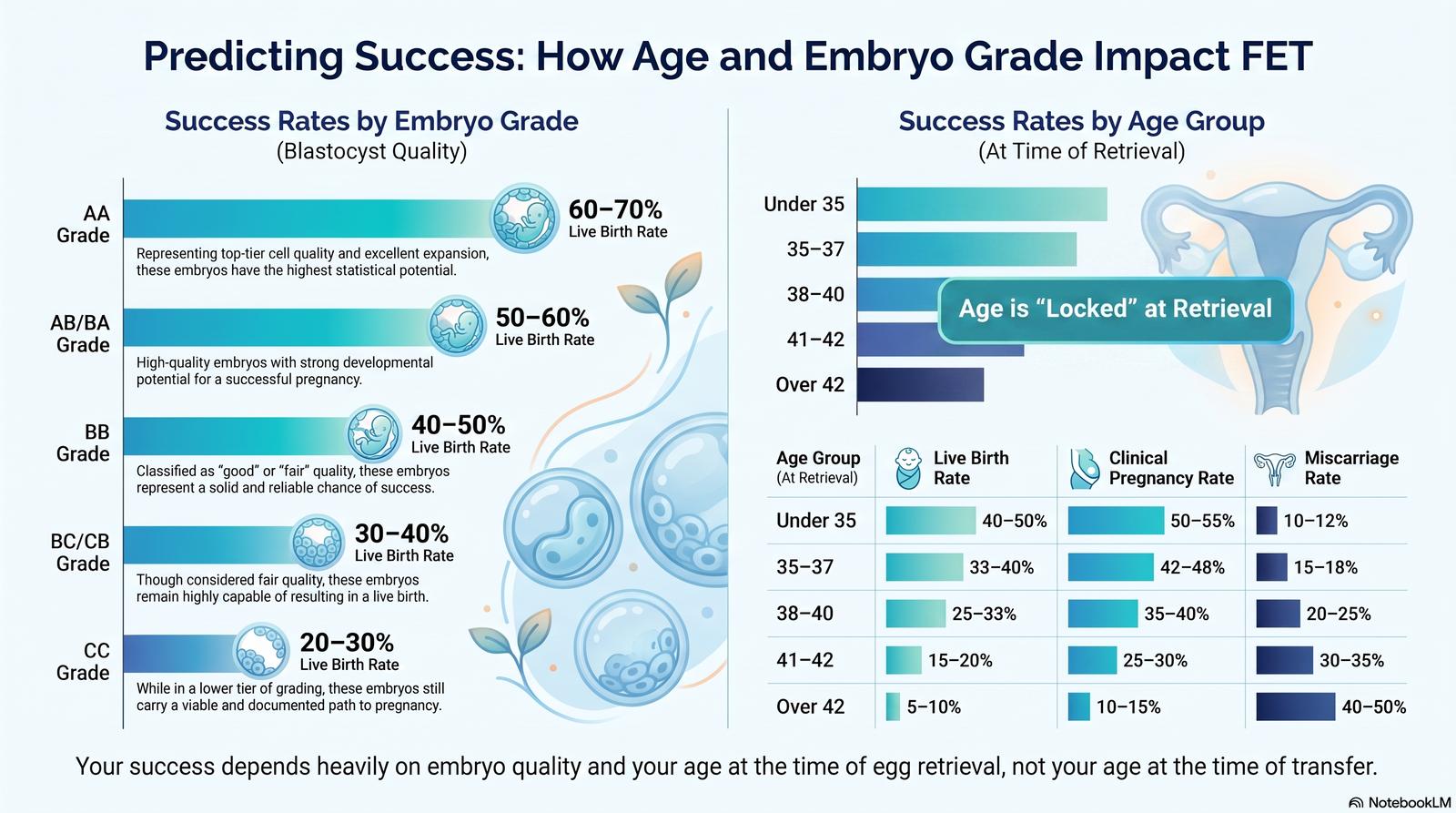
FET Success Rates by Age & Embryo Grade
The advantage of frozen blastocyst transfer over day 3 embryo transfer is clear. Blastocysts have already demonstrated their developmental competence by reaching this advanced stage, and the extended culture period allows for natural selection of the most viable embryos. Studies show that frozen blastocyst transfer results in 15–20% higher implantation rates compared to day 3 embryo transfers.
The FET Cycle: Step-by-Step Process
Your FET cycle will involve carefully preparing your uterine lining to receive your thawed embryo. There are three main protocols your doctor might recommend, and we will help you understand which one might be best for your situation. Remember, you are not alone in navigating these choices.
Natural Cycle FET Protocol
If you have regular cycles, you might be a good candidate for natural cycle FET. This approach works with your body’s natural ovulation — less medication, more like nature intended. Here is how your timeline would look:
Natural Cycle Timeline:
- Day 1–3: Baseline ultrasound and bloodwork
- Day 10–12: Begin monitoring for LH surge
- Day 14–16: Ovulation confirmed
- Day 19–21: Embryo transfer (5–7 days post–ovulation)
- Day 33–35: Pregnancy test (14 days post–transfer)
Medicated Cycle FET Protocol
Most patients use the medicated protocol — it gives your doctor precise control over timing and ensures your lining is perfect. Yes, it means more medications, but it also means more predictability. Here is what you can expect:
Medicated Cycle Timeline:
- Day 1–3: Begin estrogen (Estrace, patches, or injections)
- Day 10–14: Lining check ultrasound (target 8mm+)
- Day 15–16: Begin progesterone when lining is optimal
- Day 20–22: Embryo transfer (5–6 days after progesterone)
- Day 34–36: Pregnancy test
Modified Natural FET Cycle
Think of this as the “best of both worlds” approach — we follow your natural cycle but add just enough medication to optimize conditions. Many patients love this option because it feels more natural while still giving good control. Research shows it works just as well with fewer side effects.
Research Update: Modified Natural Cycle Success
A 2023 analysis comparing fresh versus frozen embryo transfers found that cumulative live birth rates were similar between the fresh transfer (95.7%) and frozen transfer (93.1%) cumulative live birth rates reached 38.8% for FET cycles. PMID: 37522692
What is encouraging for you is that frozen transfers showed better neonatal outcomes and reduced risk of preterm birth. Your doctor can help determine which approach gives you the best chances.
FET Success Rates 2025: Complete Data Analysis
We know you are probably searching for your exact chances of success — it is one of the first things every patient wants to know. While we can’t predict your individual outcome, understanding the real statistics helps you set realistic expectations. Let’s look at the honest data from thousands of FET cycles.
FET Success Rates by Age Group
| Age Group | Live Birth Rate per Transfer | Clinical Pregnancy Rate | Miscarriage Rate |
|---|---|---|---|
| Under 35 | 40–50% | 50–55% | 10–12% |
| 35–37 | 33–40% | 42–48% | 15–18% |
| 38–40 | 25–33% | 35–40% | 20–25% |
| 41–42 | 15–20% | 25–30% | 30–35% |
| Over 42 | 5–10% | 10–15% | 40–50% |
Here is something that might give you hope: these success rates are based on your age when your eggs were retrieved, not your current age. If you froze embryos at 35 and you are now 45, your success rates are still based on that younger age. Your embryos don’t age while frozen — they are waiting for you whenever you are ready.
Factors Affecting FET Success
Positive Factors (Increase Success):
- Blastocyst transfer (vs day 3): +15–20% success
- PGT–A tested embryos: +10–15% success
- Optimal endometrial thickness (9–14mm): +10% success
- First transfer attempt: +5–10% success
- BMI 18.5–25: +5–8% success
Negative Factors (Decrease Success):
- Endometrial thickness <7mm: –20% success
- Previous failed transfers (3+): –15% success
- Smoking: Can reduce success significantly
- BMI >35: –10% success
- Uncontrolled thyroid issues: –8–10% success
Frozen Embryo Transfer Cost Breakdown
Let’s talk about the financial side — we know cost is a major concern, and you deserve transparent pricing information. While FET does add to your overall IVF costs, it is much less expensive than starting a completely new cycle. Here is exactly what you can expect to pay.
Detailed FET Cost Components
| Cost Component | Price Range | What’s Included | Insurance Coverage |
|---|---|---|---|
| Transfer Procedure | $2,000–$3,500 | Embryo thaw, transfer procedure, facility fee | Sometimes covered |
| Medications | $500–$1,500 | Estrogen, progesterone, other hormones | Often covered if the procedure is covered |
| Monitoring | $500–$1,000 | Ultrasounds, blood work, consultations | Usually covered |
| Embryo Storage | $500–$1,000/year | Annual storage fees | Rarely covered |
| Additional Testing | $300–$800 | ERA, mock transfer, additional labs | Varies |
Total FET Costs by Location
United States Regional Pricing:
- Northeast (NY, MA, CT): $4,500–$6,000
- West Coast (CA, WA, OR): $4,000–$5,500
- Midwest (IL, MI, OH): $3,000–$4,500
- South (TX, FL, GA): $3,000–$4,000
- Mountain West (CO, UT, AZ): $3,500–$4,500
Hidden Costs to Consider
Many patients are surprised by additional expenses not included in quoted FET prices:
- Cancelled cycle fees: $500–$1,000 if the cycle is cancelled after starting
- Additional embryo thaw: $500–$800 if the first embryo doesn’t survive
- Travel expenses: Variable based on clinic location
- Time off work: 2–3 days minimum for transfer and recovery
- Acupuncture: $75–$150 per session (optional but common)
Fresh vs. Frozen Embryo Transfer: Complete Comparison
The debate between fresh and frozen embryo transfer has evolved significantly, with mounting evidence favoring frozen transfers for many patients. Understanding the differences helps in making an informed decision with your fertility team.
| Factor | Fresh Transfer | Frozen Transfer | Winner |
|---|---|---|---|
| Success Rate | 45–50% | 50–65% | Frozen |
| Cost | Included in the IVF cycle | Additional $3,000–$6,000 | Fresh |
| OHSS Risk | 2–5% severe risk | 0% risk | Frozen |
| Time to Transfer | 5–6 days after retrieval | 6–8 weeks minimum | Fresh |
| Endometrial Receptivity | May be compromised by stim meds | Optimized conditions | Frozen |
| Birth Weight | Slightly lower average | Normal range | Frozen |
| Flexibility | Must proceed immediately | Can schedule conveniently | Frozen |
Latest Evidence on Fresh vs. Frozen
A recent 2025 study specifically looked at women with low prognosis for IVF treatment (poor responders) and found that while fresh transfers showed slightly higher live birth rates in this specific group, frozen transfers still offered good outcomes with the added benefit of reducing your OHSS risk to zero. This shows that even if you have challenging circumstances, FET remains a viable option for you. PMID: 39880462
FET Medications and Protocols
The medication protocol for frozen embryo transfer is designed to prepare the endometrium for optimal receptivity. Understanding these medications, their purpose, and potential side effects helps manage expectations and improve compliance.
Starting with Estrogen
Here is how it works: You will start estrogen on day 2–3 of your cycle. This suppresses your natural ovulation and helps build that perfect lining for your embryo.
Estrogen Options:
- Estrace (oral): 2 mg 2–3 times daily — most common, convenient
- Estrogen patches: Changed every 3 days — steady levels, fewer GI side effects
- Delestrogen (injection): Every 3–4 days — most consistent levels
- Vaginal estrace: 2 mg twice daily — direct endometrial effect
Adding Progesterone
Now comes the important part: progesterone transforms your lining to welcome your embryo. You'll start this 5-6 days before your transfer date.
Progesterone Options:
- PIO (Progesterone in Oil): 50 mg daily IM injection — Gold standard, best absorption
- Crinone gel: 8% twice daily vaginal — convenient, no injections
- Endometrin: 100 mg 3x daily vaginal — alternative to gel
- Prometrium: 200 mg 3x daily oral — supplemental only
Sample Medication Calendar
| Cycle Day | Medication | Purpose | Monitoring |
|---|---|---|---|
| 1–3 | Start Estrace 2mg 3x daily | Begin lining development | Baseline ultrasound |
| 10–12 | Continue Estrace | Thicken endometrium | Lining check (target 8mm+) |
| 14–15 | Add Progesterone | Transform endometrium | Final lining check |
| 19–20 | Continue both | Maintain receptivity | Transfer day |
| 20–34 | Continue both | Support implantation | Beta HCG day 34 |
Preparing for Your FET: Optimization Strategies
You are probably wondering what you can do to improve your chances — and yes, there are things within your control. We know the waiting and preparation can feel endless, but research shows that what you do in the weeks before transfer really can make a difference. Let’s focus on what you can actively do to help your body be ready.
Endometrial Preparation
Your uterine lining needs to reach the right thickness (8–14mm) for your embryo to implant successfully. Many patients worry about their lining — if that is you, know that there are proven ways to help it develop properly.
Strategies to Improve Endometrial Lining:
- L–arginine: 6 g daily — may improve blood flow (discuss with your doctor)
- Vitamin E: 400–800 IU daily — Enhances endometrial thickness
- Aspirin: 81 mg daily — increases blood flow (with doctor approval)
- Acupuncture: 2x weekly — shown to improve endometrial thickness by 1–2mm
- Pomegranate juice: 8 oz daily — may help blood flow (limited evidence)
Recommended Supplements
| Supplement | Dosage | Benefit | Start Timing |
|---|---|---|---|
| Prenatal Vitamin | 1 daily | Overall nutrition | 3 months before |
| Vitamin D | 2000–4000 IU | Improves implantation | 2 months before |
| CoQ10 | 200–600mg | Mitochondrial support | 3 months before |
| Omega-3 | 1000–2000mg | Reduces inflammation | 2 months before |
| Probiotic | 10–30 billion CFU | Improves microbiome | 1 month before |
Lifestyle Modifications
Evidence–based lifestyle changes that improve FET success:
Do’s:
- Maintain BMI between 18.5 and 25 (ideal: 20–24)
- Get 7–9 hours of sleep nightly
- Practice stress reduction (yoga, meditation, counselling)
- Stay hydrated (64–80 oz water daily)
- Eat a Mediterranean diet rich in whole foods
- Moderate exercise (150 minutes/week)
Don’ts:
- No smoking (reduces success by 50%)
- Limit alcohol (none is ideal)
- Avoid excessive caffeine (under 200 mg/day)
- No hot tubs or saunas
- Avoid BPA plastics
- Limit intense exercise
Transfer Day: What to Expect
The embryo transfer day is the culmination of weeks of preparation. Understanding the process helps reduce anxiety and ensures everything goes smoothly.
Pre-Transfer Instructions
Day Before Transfer:
- Confirm transfer time with the clinic
- Arrange transportation (you may feel groggy)
- Prepare comfortable clothes
- Stay well–hydrated
- Get a good night’s sleep
- Take prescribed medications on schedule
Day of Transfer:
- Eat a normal breakfast (unless instructed otherwise)
- Arrive with a moderately full bladder
- Take any prescribed Valium 30 minutes before
- Bring a partner or support person
- Plan for 2–3 hours at the clinic
The Transfer Procedure
The frozen embryo transfer procedure itself takes only 10–15 minutes and is similar to a Pap smear in terms of discomfort.
Step-by-Step Process:
- Embryo Thaw (1–2 hours before): Embryologist thaws and assesses embryo viability
- Identity Verification: You will confirm your name and embryo details
- Speculum Placement: Similar to gynecological exam
- Cervical Cleaning: Gentle cleaning with saline
- Catheter Insertion: Soft catheter guided by ultrasound
- Embryo Loading: Embryo is loaded into the catheter by the embryologist
- Transfer: Embryo gently deposited in optimal location
- Catheter Check: Verified empty under microscope
- Rest: 10–15 minutes lying down
Post-Transfer Protocol
The bed rest debate has been definitively settled by research–extended bed rest does NOT improve success rates and may actually decrease them.
Evidence on Bed Rest After Transfer
A 2022 systematic review and meta–analysis comparing bed rest with early ambulation after embryo transfer found that live birth rates were slightly higher in the early ambulation group (52.5%) than in those advised bed rest (43.6%), although this difference was not statistically significant. (PMID: 35621274)
- The theory is that normal activity promotes healthy blood flow while prolonged bed rest may cause blood pooling. Walking immediately after transfer is now standard protocol.
The Two-Week Wait After FET
The two–week wait (TWW) between transfer and pregnancy test is often the most challenging part of the FET process. Understanding what is happening and what symptoms are normal helps manage anxiety.
Implantation Timeline
Day–by–Day After 5–Day Embryo Transfer:
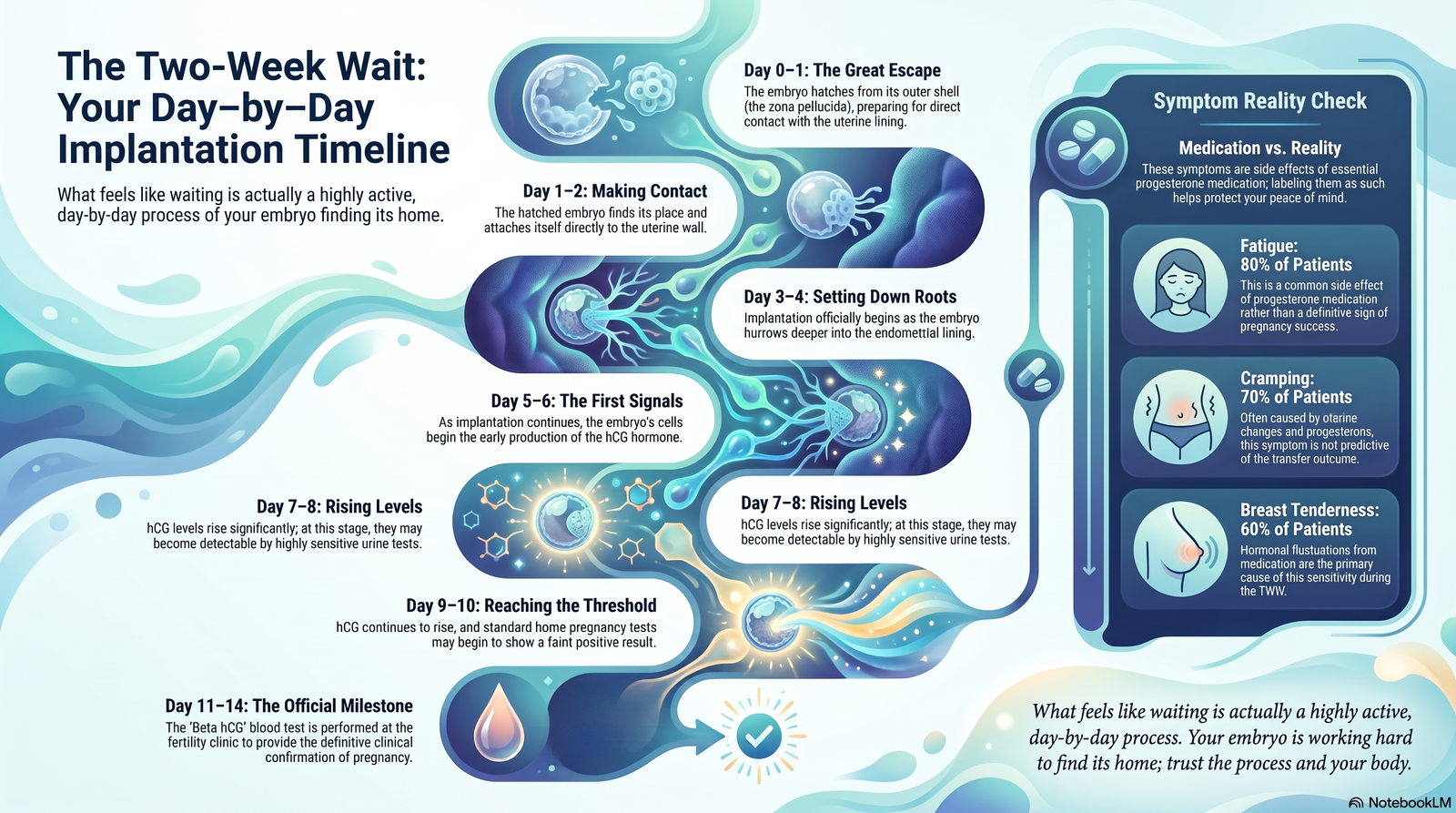
The Inside Story of the Two–Week Wait (TWW)
What You Might Feel During the Two-Week Wait
We know you will analyze every twinge and symptom — it is impossible not to! But here is what you need to know: most symptoms during the two–week wait are caused by your progesterone medication, not pregnancy. Try not to read too much into them (easier said than done, we know).
| Symptom | Frequency | Cause | Significance |
|---|---|---|---|
| Cramping | 70% of patients | Uterine changes, progesterone | Not predictive |
| Spotting | 30% of patients | Implantation or irritation | Not predictive |
| Breast tenderness | 60% of patients | Progesterone | Not predictive |
| Fatigue | 80% of patients | Progesterone | Not predictive |
| Nausea | 20% of patients | Rising HCG or progesterone | Slightly positive |
FET with Donor Eggs or Embryos
If you are considering donor eggs or embryos, you are making a brave decision that opens up wonderful possibilities. We understand this path might not have been your first choice, but the success rates with donor material are encouraging — often higher than with your own eggs if you are over 40.
What About Success Rates with Donor Material?
Here is something encouraging if you are using donor eggs or embryos:
Live Birth Rates per Transfer:
- Donor eggs (fresh): 65–70%
- Donor eggs (frozen): 60–65%
- Donor embryos: 55–60%
- Double donor (egg + sperm): 60–65%
Note: Success rates are based on donor age (typically under 30), not recipient age
When FET Fails: Next Steps and Options
We need to talk about something difficult — what happens if your transfer doesn’t work. We know this isn’t easy to think about, but understanding why transfers sometimes fail can help you feel more prepared and less alone if you face this challenge. Remember, even with the best embryos and perfect conditions, not every transfer results in pregnancy, and it’s not your fault.
Why Do Some Transfers Fail?
Let’s be honest about why transfers sometimes don’t work — understanding this helps you prepare:
Embryo Factors (60% of failures):
- Chromosomal abnormalities (most common)
- Poor embryo quality
- Damage during freeze/thaw
Uterine Factors (30% of failures):
- Thin endometrium (<7 mm)
- Endometrial receptivity issues
- Undiagnosed pathology (polyps, fibroids)
- Immunological factors
Other Factors (10% of failures):
- Transfer technique issues
- Infection
- Blood clotting disorders
Testing After Failed FET
If you have experienced 2–3 failed transfers with good quality embryos, your doctor may recommend additional testing. We know each failed transfer is heartbreaking, but these tests can provide answers and guide your next steps:
| Test | What It Evaluates | Cost | When Recommended |
|---|---|---|---|
| ERA (Endometrial Receptivity Analysis) | Optimal transfer timing | $800–$1,200 | After 2+ failures |
| ReceptivaDx | Endometriosis markers | $600–$800 | Suspected endometriosis |
| Hysteroscopy | Uterine cavity abnormalities | $1,500–$3,000 | After 2+ failures |
| Immunological panel | Immune factors | $500–$1,500 | Recurrent failure |
| Thrombophilia panel | Blood clotting disorders | $300–$600 | History of clots/loss |
Your FET Questions Answered
We have gathered the questions you are probably asking right now — because every patient wonders about these things:
How many embryos should I transfer?
This is probably the biggest decision you will face. If you are under 38 with good-quality blastocysts, your doctor will likely recommend transferring just one. This reduces the risk of twins while maintaining excellent success rates. Women over 40 or those with lower-quality embryos may consider transferring two, but this should be carefully discussed with your doctor given the risks of multiple pregnancy.
Can I travel after FET?
Light travel is generally safe 24–48 hours after transfer. Avoid heavy lifting, stay hydrated during flights, and move around every hour to prevent blood clots. International travel should ideally wait until after the pregnancy test. Always consult your clinic for specific guidance.
When can I resume sex after embryo transfer?
Most clinics recommend avoiding intercourse until after the pregnancy test (about 2 weeks). This is primarily to prevent uterine contractions from orgasm and reduce infection risk. Once pregnancy is confirmed, follow your doctor’s specific guidelines regarding this aspect.
Natural vs medicated cycle — which is better?
Both have similar success rates (50–55%). Natural cycles work well for women with regular periods and require less medication but more monitoring. Medicated cycles offer more control over timing and are better for women with irregular cycles. The choice depends on your individual situation.
How long can embryos stay frozen?
Embryos can remain frozen indefinitely. Successful pregnancies have been reported from embryos frozen for over 20 years. The duration of freezing does not affect success rates — a 10–year–old frozen embryo has the same potential as one frozen for 1 year.
What is the success rate with lower–quality embryos?
Even “fair” quality embryos (BB or BC grades) have reasonable success rates of 30–40%. Many healthy babies come from lower–grade embryos. The grading system isn’t perfect, and embryos can surprise us. Don’t lose hope if you only have lower–graded embryos.
What exercise is safe after transfer?
Light to moderate exercise is safe and beneficial. Walking, gentle yoga, and swimming are excellent choices. Avoid high–impact activities, heavy lifting over 25 pounds, and exercises that significantly raise core body temperature. Listen to your body and don’t start new intense routines.
When does implantation occur after FET?
For a day 5 blastocyst transfer, implantation typically begins 1–2 days after transfer and is completed by day 4–5. You might experience light cramping or spotting during this time, though many women feel nothing. HCG production starts around day 4–5 post–transfer.
Can I work after the transfer?
Most women can return to work the day after transfer unless their job involves heavy physical labor or extreme stress. Desk jobs are perfectly fine. Some prefer to take 1–2 days off for emotional reasons, but this isn’t medically necessary.
What if I miss a progesterone dose?
Take it as soon as you remember. If you are on once–daily progesterone and remember within 12 hours, take it immediately. If it has been longer, take your next dose on schedule. One missed dose won’t ruin your cycle, but consistency is important. Contact your clinic if you miss multiple doses.
Is cramping normal after FET?
Yes, mild to moderate cramping is very common and affects about 70% of patients. It is caused by progesterone, uterine changes, and potentially implantation. Severe pain or heavy bleeding should be reported to your clinic immediately.
When should I take a pregnancy test?
Wait for your official beta HCG blood test, typically 10–14 days post-transfer. Home tests may show positive as early as 5–7 days post-transfer but can also give false negatives if taken too early. Early testing often increases anxiety without providing reliable information.
Want help comparing FET success rates and costs?
If researching clinics feels overwhelming (and honestly, it can), our advisors can collect clear, itemized quotes from verified clinics and map your FET timeline — at no cost to you.
Talk to a Patient Advisor
Why trust this guide? The OVU commitment
You are probably juggling hope, timelines, and a lot of tabs open in your browser. And you deserve clear, current, human advice. At OVU, we review clinic protocols, compare real quotes, and talk to people who have done this - intended parents and gestational carriers - so we can give you practical steps, not just theory. If you want help comparing options without sales pressure, we will gather itemized quotes and success data that match your exact situation. You decide, we will bring the info to your table.
Final Thoughts on Frozen Embryo Transfer
Your decision to pursue frozen embryo transfer puts you on a path that’s helped thousands of families. While we have shared realistic success rates (40–50% for under 35, decreasing with age), remember that you are not just a statistic. Your unique circumstances, your determination, and the right medical support all matter.
What makes the difference? Proper preparation, finding the right protocol for your body, and working with a team that truly understands your needs. Whether you are transferring a single frozen blastocyst or considering other options, having clear information helps you feel more in control during this emotional journey.
We want to leave you with this: your journey is uniquely yours. Yes, the statistics matter, but so does your story. Take care of yourself — emotionally and physically. Follow your protocol, ask every question that comes to mind (there are no silly questions), and remember that whatever happens, you are doing something incredibly brave. You are not alone in this.
Related articles

Male Fertility Surgery: TESE, Micro-TESE, and Sperm Retrieval
Male Fertility & Andrology Your guide to male fertility surgery and sperm retrieval options Last Updated: 03 July 2026 Medically Reviewed 16 min read Evidence-based The road to fatherhood often feels steep when you hear the word “infertility”. It is frustrating, lonely, and sometimes scary. At the same time, modern fertility medicine now gives many men a real chance to have a biological child, even when the semen analysis shows no sperm at all. Non-obstructive azoospermia (NOA) means there is no sperm in the ejaculate because the testicles are not making enough mature sperm. This affects about 1% of men
19 min read
Fertility Surgery for Women: Techniques to Improve IVF Success
IVF & Fertility Surgery Your guide to fertility surgery and IVF success Last Updated: 01 July 2026 Medically Reviewed 17 min read Evidence-based For many women, the path to motherhood through in vitro fertilization (IVF) is full of hope and pressure at the same time. You invest money, time, and energy, and you still wonder if your body is truly ready to support an embryo. Think of your uterus as a first home for your baby. Before moving in, you would check the structure and clear out anything that might cause harm. Fertility surgery works in a similar way; it
16 min read
What is Time-Lapse Imaging? Watching Embryo Development 24/7
IVF & Fertility Treatments Your guide to time-lapse embryo imaging in IVF Last Updated: 30 June 2026 Medically Reviewed 14 min read Evidence-based Wondering if watching your embryos grow around the clock is worth the extra money? You are not the only one asking that. For years, your clinic could only check embryo growth a few times a day, like peeking at single snapshots in a photo album. Time-lapse imaging (TLI) changes that. Instead of a few snapshots, your embryos get their own continuous movie. A small camera inside the incubator records images every few minutes while your embryos stay
17 min read